✳ Days Out
Cheap Family Days Out in the UK (Under £10 Each)
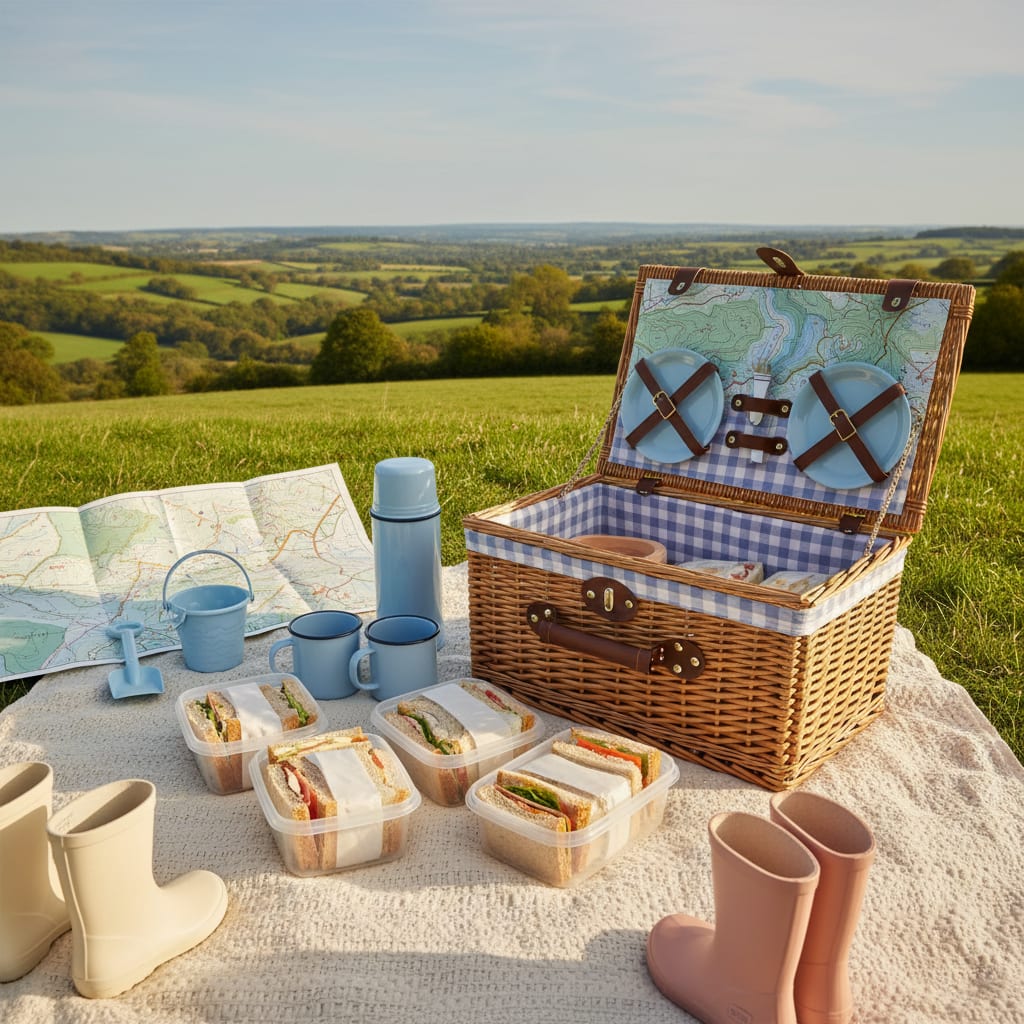
The cheapest family days out in the UK are the free-entry ones where you only pay for getting there: national museums (free in London, York, Liverpool, Cardiff, Edinburgh and beyond), beaches, country parks, city farms, library events and forest trails. Add a packed lunch and a pocket-money ceiling and a full day out lands comfortably under £10 (~$13) a head — often under £5 (~$6.50). The trick isn’t finding cheap attractions; it’s refusing to let a free venue quietly become an expensive one via the café, the car park and the gift shop.
We do this on one income, so “day out” can’t mean “£100 (~$130) theme park or nothing”. Here’s the full national list — because I know plenty of you reading aren’t in London — plus the maths that keeps it honest.
Free-entry museums aren’t just a London thing
London gets the fame (my free London museums rundown covers those), but free national museums are scattered right across the country:
- York — the National Railway Museum: full-size locomotives, free entry, and small children lose their minds at it.
- Liverpool — a whole family of free National Museums Liverpool venues, including the World Museum with its aquarium and dinosaurs.
- Cardiff — National Museum Cardiff (dinosaurs again — a theme) and the open-air St Fagans National Museum of History, which is essentially a free village to explore.
- Edinburgh & Glasgow — the National Museum of Scotland and Kelvingrove are both free and both genuinely great with kids.
- Everywhere else — most council-run local museums are free or a couple of pounds, and they’re usually deserted and delighted to see children.
The outdoor free tier
- Beaches. The all-day, all-ages banker. A bucket-and-spade set costs a couple of pounds once a summer and the sea has never charged admission. Off-peak, even the car park behaves.
- Country parks. Almost every part of the UK has a council country park with trails, a playground and ducks of dubious temperament. Entry free; parking sometimes a few pounds — check, because a free park with a £7 (~$9) car park isn’t a free park. A pub backing onto one is the cheapest lunch-plus-playground combination going — see pubs with play areas near you.
- Forest trails. Forestry England and the woodland trusts run free waymarked family trails, often with sculpture or activity elements. Take snacks, wellies and low standards for mud.
- City farms. Free-entry farms exist all over the country, not just the London city farms — goats, pigs and ponies for the price of a donation tin contribution.
The under-a-tenner paid tier
Some paid things genuinely earn their fee: local lidos and leisure-centre swims (family swim sessions are often only a few pounds a person off-peak), pick-your-own farms where the entry is cheap and the “ticket” is fruit you were going to buy anyway, and small local attractions — miniature railways, boating lakes, castle ruins — where the whole family gets in for less than one theme-park child ticket. The pattern: pay for small and local, not big and branded. The kids’ memory of the day doesn’t scale with the ticket price. Mine still rank “the steam train that cost about £3 (~$4)” above days that cost twenty times that.
The extras are the real enemy
Free venues lose you money in the margins, so this is the system:
- Packed lunch, always. A family café stop is easily £20 (~$26); the same lunch from home is about £4 (~$5). Over a summer of weekly days out that one habit saves serious money.
- Set the souvenir rule in the car. Ours: £2 (~$2.60) max, or save it toward something bigger. Agreed in advance, zero negotiation on site.
- Check parking before choosing the venue. Between two similar country parks, the free-parking one wins.
- Eat out only on purpose. If the day includes a meal out, make it a planned kids eat free deal rather than a fold at 1pm in front of the dearest café in the county.
- Keep a weather-flip list. Every outdoor plan needs an indoor twin (museum, library event, leisure-centre swim) so rain doesn’t panic you into soft-play-plus-café money.
Building your own local list
The honest secret of cheap days out is that they’re mostly near you already. One evening with a cuppa: search your council’s “parks and open spaces” page, your nearest free museums, your local library’s events calendar (school-holiday craft sessions are free and weirdly good), and any city farm within reach. Write the best ten on a list on the fridge. That list is the difference between “what shall we do today” costing £40 (~$52) and costing a bus fare — it’s the days-out version of a meal plan, and it works for exactly the same reason.
FAQ
What’s genuinely the cheapest family day out?
A beach or country park day with a packed lunch — the day itself costs nothing, so your only spend is travel. If the weather’s against you, a free museum plus library visit does the same job indoors for the price of getting there.
How do I keep a “free” day out actually free?
The four leaks are café, car park, gift shop and ice-cream van. Packed lunch, checking parking costs before you pick the venue, a pre-agreed pocket-money ceiling, and carrying your own treats plugs all four. The venue being free was never the hard part.
Are UK national museums free everywhere?
The big national museum groups — in London, York, Liverpool, Cardiff, Edinburgh and elsewhere — have free general entry, with charges only for special exhibitions. Local council museums are usually free or very cheap too. Always check the specific venue, but “museum = expensive” is one of the great myths of family days out.
What about days out that cost more than £10?
Save them for occasions and make them count — one properly chosen big day beats four mediocre mid-price ones. Sign up to the attraction’s mailing list first for offers, look for railcard or supermarket-voucher entry deals, and go off-peak. The under-a-tenner days are what make the occasional big one affordable.