Baby Sleep When Sick: Keeping the Routine Through Colds
When your baby is sick, the sleep rule is simple: drop the expectations, keep the anchors. Comfort comes first — extra cuddles, extra wakings, feeds at 3am, all fine and all temporary. But keep the shape of the night intact: the same bedtime routine (even a shortened version), the same sleep space for at least part of the night, and the same rough morning wake-up. Do that, and once the cold clears you’re a few consistent nights from normal — not back at square one. And anything beyond an ordinary snuffle gets checked: NHS 111 exists precisely so you’re never guessing alone at 2am.
That last bit matters double when you’re the only adult in the house. There’s no one to tag in, no one to say “you sleep, I’ll take this one”. Sick nights solo are a genuine endurance event, so this is the system that got us through — the comfort bit, the routine bit, the money bit, and the knowing-when-to-call bit.
Comfort first, guilt nowhere
A baby with a cold sleeps badly because being bunged up and feverish feels horrible, not because you’ve “undone your progress”. So for the duration: respond quickly, cuddle freely, feed if feeding helps (milk feeds also keep them hydrated, which is the actual job during illness). The fear that a few sick nights of extra comfort will permanently wreck sleep is overblown — babies distinguish “being looked after while poorly” from “the new normal” faster than we give them credit for, provided the familiar structure comes back when they’re well.
What I stopped doing after the first brutal cold: inventing elaborate new sleep arrangements at 1am. Every new prop you introduce mid-illness — the motion nap that never ends, a whole new co-sleeping setup you didn’t choose deliberately — is something to unwind later. Comfort within your normal setup as far as you can: cuddle, resettle, stay in the room until they’re calm, rather than rebuilding the entire night from scratch on no sleep.
Keep the anchors: the three things not to drop
- The bedtime routine, shortened. A miserable baby may not tolerate the full bath-book-bed production, so run the compressed version: warm flannel wash, sleeping bag, one story or song, lights out. The sequence is the signal, and the signal is what survives the illness.
- The sleep space. Start the night in the usual cot or room even if the night later dissolves into you dozing upright in the chair like a Victorian nightwatchman. Starting in the familiar place keeps it “home base”.
- The morning anchor. Keep wake-up within roughly the same hour, curtains open, normal breakfast rhythm. It’s the cheapest way to stop one bad week drifting the whole schedule.
Daytime naps will go strange — shorter, earlier, more of them, possibly on you. Let them. Sick sleep is about total rest, not schedule purity.
Surviving the nights when it’s just you
- Lower the whole week’s bar. Dinners come off the meal plan’s laziest page or out of the freezer; a picky tea buffet counts for any older kids. Nobody’s reviewing your cooking during plague week.
- Sleep when they first do. The 8pm washing-up can lose to your first sleep cycle. It’s the same rule as normal solo baby sleep, just more so.
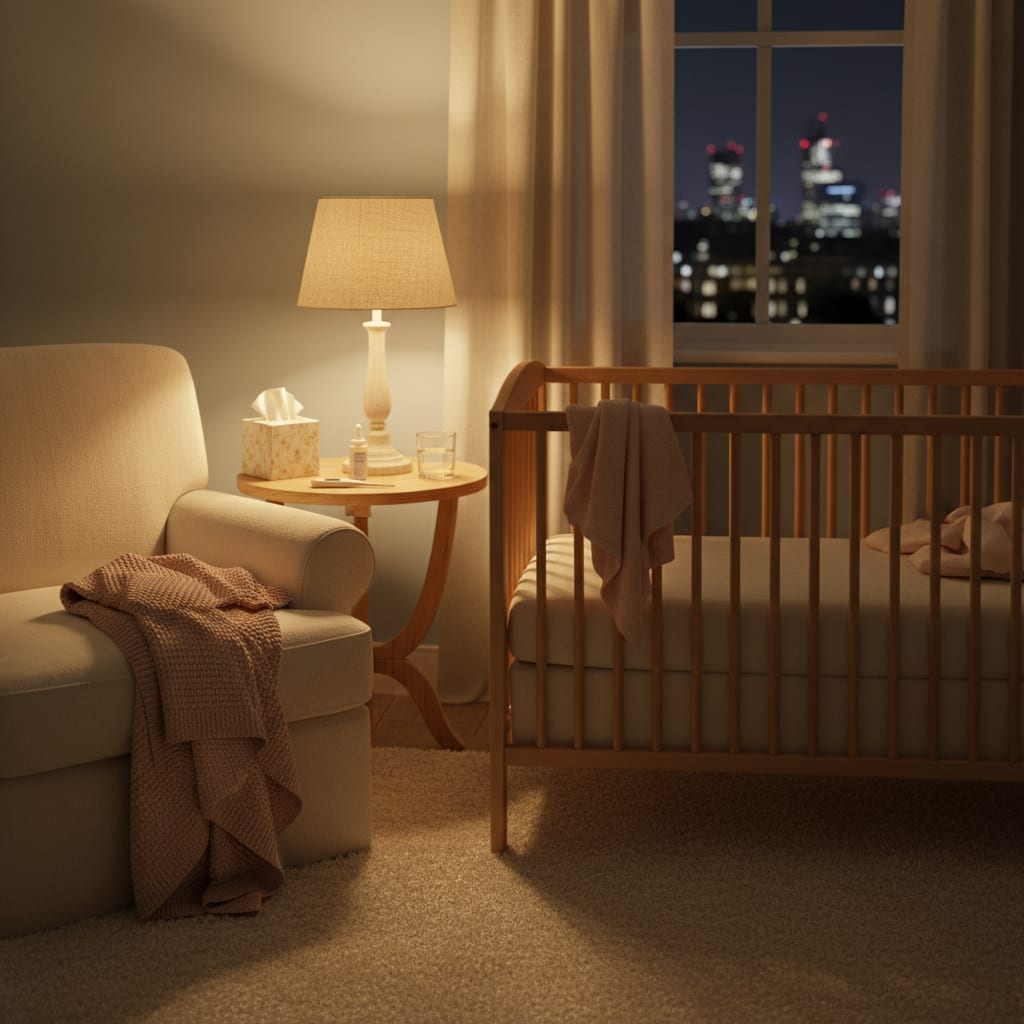
- Set up the night station before bed. Water for you, tissues, saline drops, the thermometer, a dim lamp — everything findable at 2am without switching on big lights and fully waking everyone.
- Text a friend the state of play. Someone asking “how was the night?” the next morning isn’t a partner, but it’s not nothing either.
The sick-kit on a budget (and the medicine hedge)
Money blog, so: the sick-kit doesn’t need the branded aisle. Own-brand infant paracetamol suspension is the same active ingredient as Calpol at roughly half the price — typically around £2 (~$2.60) versus around £4 (~$5) — but check age suitability and dosing with your pharmacist and the packet, always, and when in doubt ask before dosing. Saline nasal drops (a few pounds) and a decent digital thermometer — around £10 (~$13), a one-off buy — cover most of the rest. Pharmacists are free to talk to and criminally underused; they’ll also tell you what not to waste money on for a baby cold, which is most of the shelf.
The other thing worth having ready before anyone’s ill: a plan for the recovery week. After a cold, sleep is usually left in a heap — bedtime has drifted, naps are chaos, and you’re too tired to remember what the schedule even was. This is where I lean on the Betteroo app: because the plan adjusts to your baby’s current age and sleep, it gives you a concrete “here’s tonight, here’s tomorrow” path back to the routine instead of you improvising one at your lowest ebb. It’s not magic and it won’t shorten the cold — nothing does — but having the rebuild pre-planned is exactly the kind of structure solo parents otherwise have to be their own consultant for. At roughly £15–£20 (~$20–$26) a month, cancel-anytime, it’s the cheap end of sleep help; the free version of the same idea is writing your normal schedule down now, while it exists, so future shattered you has something to steer back to.
 A plan for after the cold
Betteroo builds a gentle, personalised sleep plan that adapts to your baby — so when illness knocks the routine over, you've got a day-by-day path back instead of a guess.
Take the 2-minute sleep quiz →
A plan for after the cold
Betteroo builds a gentle, personalised sleep plan that adapts to your baby — so when illness knocks the routine over, you've got a day-by-day path back instead of a guess.
Take the 2-minute sleep quiz →
When it’s more than a cold: use 111
None of this post is medical advice — it’s routine-and-comfort advice, and the line between them matters. Ring NHS 111 (or use 111 online) whenever you’re worried: feeding much less than usual, fewer wet nappies, a fever you’re unsure about, breathing that looks like hard work, a baby who’s unusually drowsy or just wrong in a way you can’t name. Mum-alone-at-2am instinct counts as a symptom — 111 would far rather take that call than not. Anything that feels like an emergency is 999, no hesitating, and the GP is the right stop for anything lingering. Under-12-week fevers and rashes are always same-day advice, no waiting to see.
Getting back to normal (the bit everyone skips)
Once they’re properly well — eating normally, cheerful by day — give it a night or two of grace, then go back to your usual routine and respond the way you did before the illness. Expect protest on night one or two; hold steady, because this is the same baby who had the routine down a fortnight ago, not a new baby. If the cold has genuinely scrambled things — bedtime an hour adrift, naps unrecognisable — rebuild in steps over three or four nights rather than one heroic correction. Slow is fine. Solo, sustainable beats fast every time.
FAQ
Should I sleep train while my baby is sick?
No — pause any active sleep training until they’re fully well. Illness is for comfort and rest. You’re not losing your progress; you’re banking goodwill. Restart the plan a couple of nights after they’re clearly themselves again.
Will a cold permanently ruin my baby’s sleep routine?
Very unlikely. A week of extra wakings and cuddles doesn’t erase months of routine — babies re-find the pattern quickly once they feel well, provided you return to your normal, consistent approach. The drift only becomes permanent if the sick-week arrangements quietly become the new setup.
When should I call NHS 111 about my baby’s sleep or illness?
Whenever you’re worried and it’s not an emergency: poor feeding, fewer wet nappies, fever concerns, laboured breathing, unusual drowsiness, or your own instinct that something’s off. It’s free, it’s 24/7, and being on your own with a sick baby is exactly what it’s there for. If it ever feels like an emergency, that’s 999.
How do I fix the routine after an illness?
Anchor the morning wake-up first, then walk bedtime back to its usual slot over a few nights, running your normal wind-down routine each night. If you want the rebuild mapped out for you day by day, the Betteroo quiz generates a plan matched to your baby’s age — or DIY it from the schedule you wrote down in better times.