£35-a-Week Family Meal Plan (One Adult, Two Kids, Zero Misery)
When I first ran our numbers as a one-income household, the food shop was the line that made me wince. Now we eat well — properly well — on about £35 (~$46) a week for me and two kids. The secret isn’t extreme couponing or sadness pasta: it’s a five-slot dinner rotation (batch night, freezer night, jacket potato night, eggs night, fakeaway Friday) plus a shopping list built by category, not by recipe. A framework instead of winging it in the crisp aisle at 5pm. Here’s the whole system, including the honest bits where it wobbles.
The framework, not the menu
I don’t plan seven unique dinners. Nobody needs that admin, and ambitious meal plans die by Wednesday. I plan five slots:
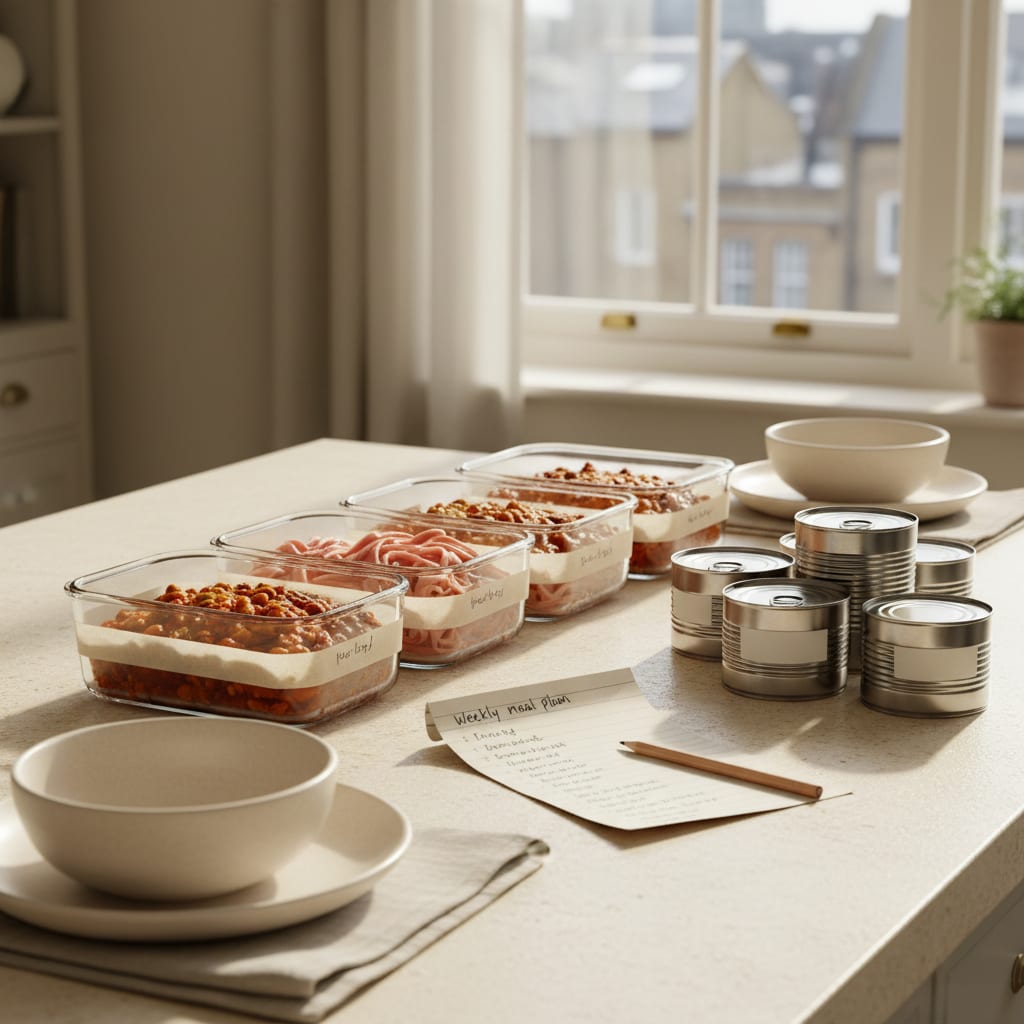
- Batch night — something that makes double: chilli, bolognese built on the secret veg sauce, curry, cottage pie. Cook once, eat twice.
- Freezer night — last week’s batch, reheated. Dinner in 10 minutes, cost already paid. This is the night that saves me when the after-school clubs run long.
- Jacket potato night — the great British budget hero, now upgraded since I cracked air fryer jacket potatoes. Beans, cheese, tuna, whatever’s open. Roughly 40p a head.
- Eggs-or-breakfast night — omelettes, pancakes, eggy bread, beans on toast. The kids think it’s a treat. It’s 90p.
- Fakeaway Friday — homemade pizzas or wraps. This is the boujee-on-a-budget slot and it’s sacred. Friday needs a ritual, and ours costs £3 (~$4) instead of £30 (~$39).
Weekends flex around what’s left, plus one proper cook on Sunday — often a budget roast — that starts next week’s batch with its leftovers. It’s a loop, and loops don’t require willpower.
The £35 (~$46) shopping list logic
I shop by category with rough caps, not by recipe. Recipes demand one tablespoon of something that costs £2.50 (~$3); categories flex around whatever’s on offer.
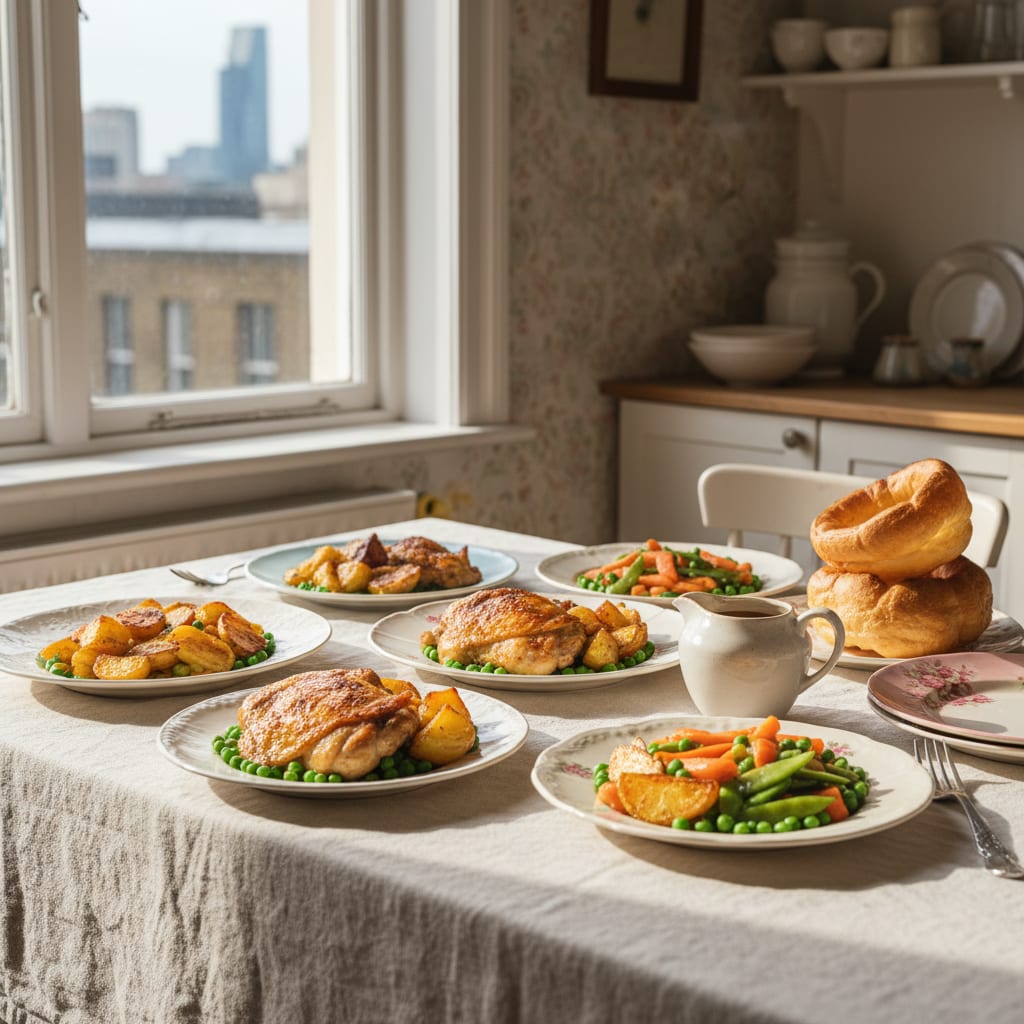
- £10 (~$13) on protein — whatever’s reduced. Chicken thighs over breasts, always: cheaper, tastier, forgiving. Eggs, tinned tuna, a block of cheese, and mince when it’s on offer (frozen straight away, portioned).
- £8 (~$10) on fruit and veg — wonky ranges and frozen veg are identical to posh veg once they’re in a chilli. Frozen peas, sweetcorn and spinach never go slimy in the drawer, which makes them cheaper twice.
- £7 (~$9) on carbs — pasta, rice, spuds, bread (into the freezer immediately, toast from frozen), porridge oats. Own-brand, all of it.
- £6 (~$8) on tins and jars — tomatoes, beans, chickpeas, coconut milk. The workhorses.
- £4 (~$5) of wiggle room — yoghurts, biscuits, the thing a child is currently obsessed with. This line item prevents mutiny and therefore pays for itself.
Own-brand everything unless proven otherwise. My kids blind-tasted the 45p beans against the famous ones. The 45p beans won. I’ve never looked back.
The rules that make it stick
Shop once. Every extra “quick top-up” trip costs a tenner, because nobody has ever entered a supermarket and bought only milk.
Write the list from the plan, shop from the list. Ten minutes on Sunday with a cuppa. The plan lives on the fridge where the children can consult it instead of asking me “what’s for dinner” at 7am.
Eat the freezer before it becomes a museum. Freezer night exists to keep the batch stock rotating. Label everything with masking tape and a date, or enjoy Mystery Brown Dinner roulette.
Fussy-eater-proof it. Every dinner includes one component I know both kids eat, which is the same logic as our lunchbox formula. It means no separate children’s meals, which is where budgets and sanity both go to die.
School holidays get their own plan. Lunches at home add real money — that’s when I lean on the kids-eat-free deals for the odd day out, and batch a bit harder.
The honest bit
Some weeks blow the budget — birthdays, half term, the week everyone had a growth spurt at once. The plan isn’t a purity test; it’s a default to return to. Miss a week, resume the loop. No confession required.
And a default that saves roughly £30 (~$39) a week versus my old chaos-shopping? That’s £1,500 (~$1950) a year. That’s our summer holiday, actually.
FAQ
Is £35 (~$46) a week realistic for a family food budget in the UK?
For one adult and two primary-age kids, yes — with caveats. It assumes own-brand staples, a store-cupboard that’s already got spices and oil in it, and school dinners or packed lunches on weekdays. Feeding teenagers, or covering every lunch at home, push it nearer £45 (~$58)–50. The framework works at any number; the £35 (~$46) is just our number.
How do I start meal planning on a budget?
Don’t design a perfect week — steal the five-slot structure and fill it with dinners you already cook. Week one, just add a batch night and freeze half. That single habit is 80% of the saving; everything else is refinement.
What are the cheapest family meals that aren’t boring?
Jacket potatoes with proper toppings, anything built on a hidden-veg tomato sauce, eggs in every guise, traybake chicken thighs, and homemade fakeaway pizza. The trick is ritual over ingredients — Friday pizza feels like a treat because we’ve decided it is one.
How much money does meal planning actually save?
For us, about £30 (~$39) a week against my old wing-it shopping — mostly from eliminating top-up trips and binned food, not from eating less. The freezer is doing the heavy lifting: cooked-once food never becomes wasted food.