Roast Dinner on a Budget: A Full Family Roast Under £10
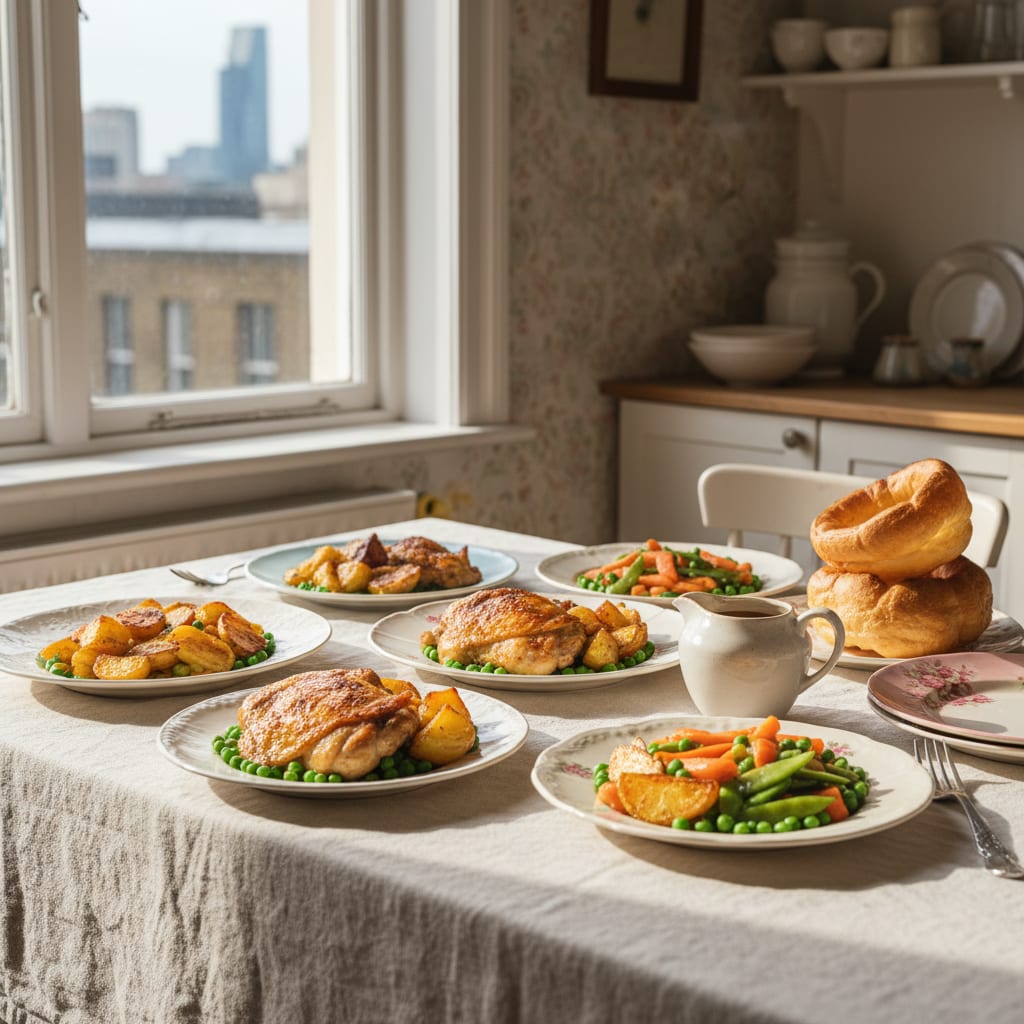
A proper Sunday roast feels like the least single-mum-budget meal there is — until you break it down. A whole roast dinner for a family of three or four comes in under £10 (~$13) if you build it on chicken thighs or a small whole chicken, own-brand trimmings and one honest tray of roast potatoes. Ours usually lands around £8, (~$10) it feeds us twice more in leftovers, and it makes a Sunday feel like a Sunday, which on a hard week is worth more than the food.
Here’s the maths, the cut choices and the timing plan that means everything lands hot at the same time — the actual hard part of a roast.
The under-£10 (~$13) shopping list
Prices bounce around, so treat these as the shape of the thing rather than gospel — but this basket has stayed under a tenner for me all year at the big supermarkets’ own-brand ranges:
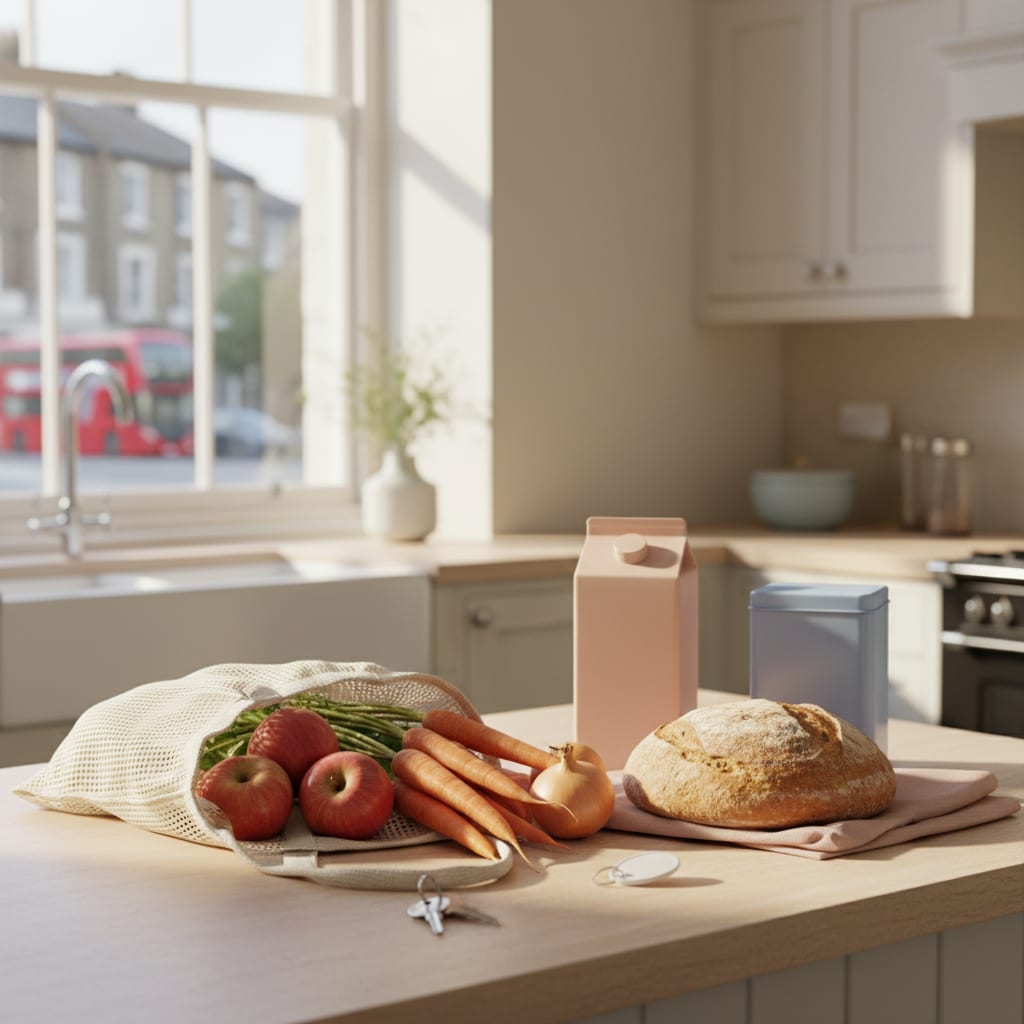
- A small whole chicken (about 1.4kg) or 8 chicken thighs — £4 (~$5)–5. The single biggest line, and where the cut choice matters most (see below)
- 2kg bag of roasting potatoes — about £1 (~$1.5) for more than you’ll use
- Carrots and a swede or parsnips — £1 (~$1.5) or so of whatever roots are cheapest
- Frozen peas — 50p’s worth from the bag that lives in the freezer anyway
- Stuffing mix, gravy granules, a few Yorkshire puddings — £1.50 (~$2) covers all three in own-brand
Add flour and oil from the cupboard and you’re at roughly £8 (~$10)–9 for a full roast with leftovers. The same meal at a carvery is £10 (~$13)+ per person, which is why Sunday lunch out is a birthday event and Sunday roast at home is a habit.
Choosing the cut: where the money is
Chicken thighs are the budget roast’s best friend. They’re roughly half the price of breast meat per kilo, they stay juicy even when a child-related crisis delays dinner by twenty minutes, and roasted skin-on at high heat the skin goes properly crisp.
A small whole chicken costs a little more but wins on theatre and leftovers — cold chicken sandwiches Monday, chicken and leftover-veg soup Tuesday. If the after-roast plan matters to you (it anchors the batch-cooking loop in our £35 (~$46)-a-week meal plan), buy the bird.
Gammon and pork shoulder are the other budget heroes — pork shoulder especially loves long, slow cooking and is often the cheapest roasting joint on the shelf. Beef is the one to skip: any beef joint worth roasting blows the £10 (~$13) ceiling on its own. Save it for someone else’s house.
The timing plan (working backwards from 1pm)
The roast’s real difficulty is air-traffic control. Work backwards from when you want to eat and it’s suddenly calm. For a 1.4kg chicken and dinner at 1pm:
- 11.10 — Oven on at 190°C fan. Chicken seasoned, into a roasting tin.
- 11.25 — Chicken in. It wants about 20 minutes per 500g plus 20 (so ~75–80 minutes), until juices run clear.
- 11.30 — Peel potatoes, cut into golf-ball chunks, and get them into a pan of cold salted water. Peel the roots.
- 12.00 — Boil potatoes 8–10 minutes, drain, and shake the pan until the edges look scuffed and floury. This shake is the entire secret of crispy roasties. Into a tray of hot oil, into the oven around the chicken.
- 12.15 — Roots in, tossed in oil, on the shelf below. Make up the stuffing.
- 12.45 — Chicken out to rest under foil (resting is non-negotiable — it’s what keeps a cheap bird juicy). Oven up to 210°C. Yorkshires and stuffing in; potatoes get their final crisping blast.
- 12.55 — Peas in the microwave, gravy made in the chicken tin with granules plus the roasting juices — this is what makes packet gravy taste homemade.
- 1.00 — Everything out. Sit down. Accept applause.
Doing thighs instead? They want 35–40 minutes at 190°C fan, which shortens the whole plan by half an hour.
Making it stretch (and keeping the fussy one on side)
The roast is quietly the perfect fussy-eater dinner because it’s deconstructed by design — every component sits separately on the plate, nothing touches, and a child can eat the potatoes, chicken and Yorkshire while regarding the swede from a safe distance. Repeated low-pressure exposure to the swede is the long game. We’re in year three.
Leftovers are the real return on investment. Cold cuts on Monday, carcass into stock, odds and ends over an air fryer jacket potato with gravy. And if pudding is happening, a crumble made from whatever fruit is going soft slides into the cooling oven while you eat. One oven-heating, two courses. Boujee on a budget, as ever.
FAQ
What is the cheapest meat for a roast dinner?
Chicken thighs, then a small whole chicken, then pork shoulder or a gammon joint. Per usable kilo, thighs are usually the best value roasting meat in the supermarket — and they’re more forgiving to cook than any of the premium cuts.
How do I make cheap roast potatoes taste amazing?
Floury potatoes (Maris Piper types), boiled 8–10 minutes, drained, then shaken hard in the pan to rough up the edges before they hit hot oil. The scuffed bits become the crunch. Oil is fine; goose fat is lovely but firmly a Christmas expense.
Can I do a roast dinner without an oven?
Mostly, yes. An air fryer handles thighs and roast potatoes brilliantly (in shifts), the microwave does the veg, and gravy happens on the hob. It’s a two-batch juggle rather than one grand landing, but the electricity cost is lower too.
How long should I rest a roast chicken?
At least 15 minutes under loose foil. It won’t go cold — and the juices settle back into the meat instead of running out over the board, which matters double with a budget bird. Use the resting window to crisp the potatoes and cook the Yorkshires.