Crumble Topping Recipe: The 2:1:1 Ratio I Never Write Down
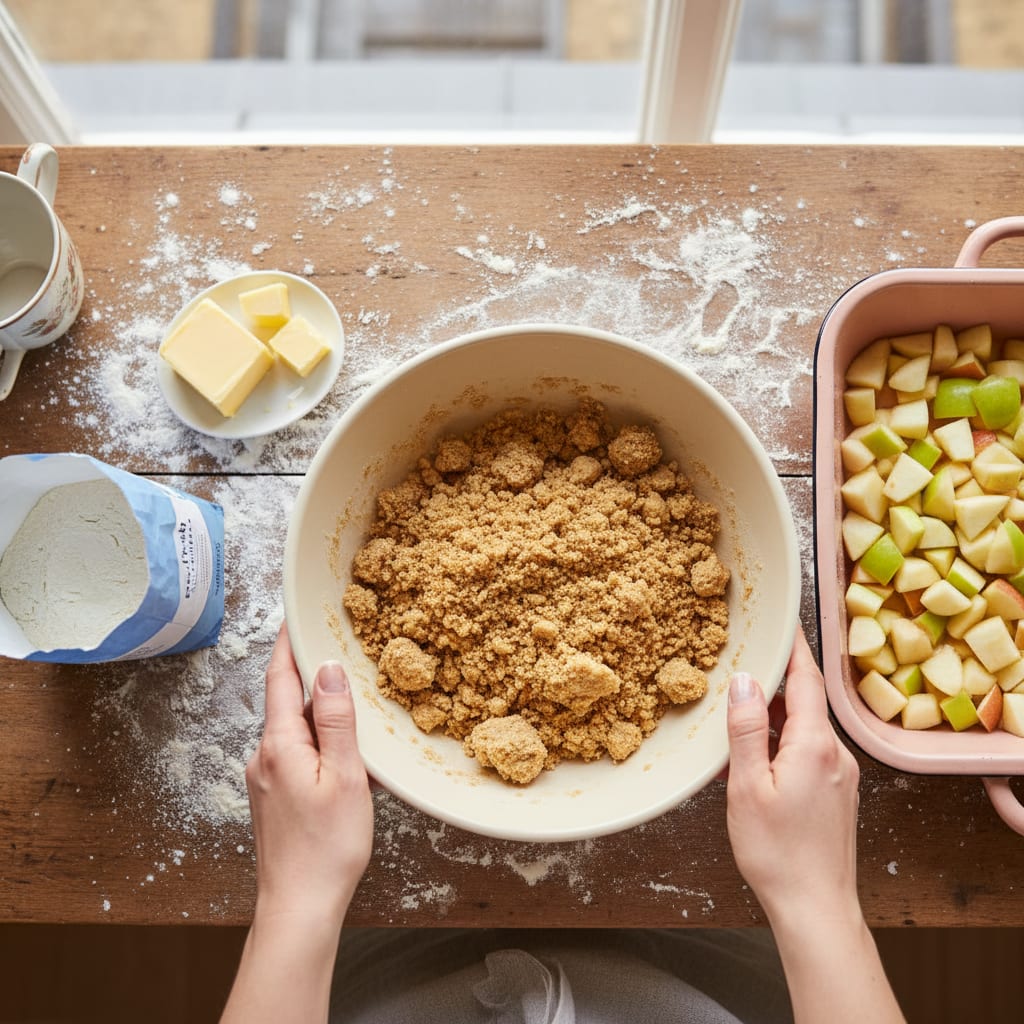
Crumble is the pudding of my childhood, my children’s childhood, and — because it costs about 80p to put over a dish of bruised apples — my budget’s dreams. The recipe is a ratio, not a list: 2 parts plain flour to 1 part cold butter to 1 part sugar, by weight — so 200g flour, 100g butter, 100g sugar tops a family-sized crumble. Rub the butter into the flour until it looks like breadcrumbs, stir in the sugar, scatter over fruit, bake. Once the 2:1:1 is in your head you’ll never look up a crumble recipe again, which is exactly why I’m writing it down.
The 2:1:1 crumble topping ratio
For a standard family crumble (serves 4–6 in a roughly 20cm dish):
- 200g plain flour
- 100g butter, cold, cubed — own-brand block butter, not spreadable
- 100g sugar — caster for a fine topping, demerara for crunch, or half-and-half, which is what I actually do
That’s it. The ratio scales in both directions: 100/50/50 tops two ramekins for a fancy-feeling solo pudding after bedtime (a single mum’s boujee-on-a-budget moment if ever there was one); 300/150/150 feeds a birthday crowd.
Upgrades, all optional: swap 50g of the flour for porridge oats for a nubblier lid, add a teaspoon of cinnamon for apple, or a handful of chopped nuts if the budget’s feeling generous and no school allergy lists are involved.
The rubbing-in method (and what “breadcrumbs” means)
Rubbing in is the only technique here, and it’s one small children can genuinely do — this is our default wet-Sunday kitchen job, alongside the salt dough production line.
- Put the flour in a big bowl and drop in the cold cubed butter.
- Using just your fingertips — not your warm palms — pick up flour and butter together and rub thumb across fingers, letting it fall back into the bowl. Lift, rub, drop. Repeat.
- Stop when it looks like coarse breadcrumbs with a few pea-sized lumps. The lumps are good news: they melt into proper clumpy, cobbled topping rather than sand.
- Stir the sugar through. Done. Do not knead, press or otherwise fuss — overworked crumble turns to shortbread pavement.
Cold matters. Cold butter, cool hands (run wrists under the cold tap if you’re a warm-handed person), and if the kitchen’s hot, ten minutes in the fridge before baking. Warm butter greases the flour instead of studding it, and the topping bakes flat.
Food processor confession: a few pulses does the same job in twenty seconds. I still do it by hand when the kids are helping, because the rubbing is the activity.
Assembling and baking
Fruit underneath wants to be cheap and slightly past its best — this is the pudding that eats the fruit bowl’s mistakes. Apples (peeled, chunked, with a spoon of sugar and a splash of water), apple and frozen berries, rhubarb in season, tinned peaches straight from the tin on desperate days. No need to pre-cook apples if you cut them small.
Scatter the topping loosely over the fruit — don’t press it down — and bake at 180°C fan for 30–35 minutes, until golden on top with fruit bubbling up at the edges like something out of a storybook. If you’ve a roast in the oven, the crumble slides into the residual heat as you sit down to eat, and lands perfectly with custard forty minutes later.
Serve with custard (own-brand tinned or instant, no shame), cream, or a scoop of vanilla. Cold leftover crumble for breakfast is a single-parent household perk I refuse to apologise for.
The freezer batch tip that changed my puddings
Here’s the actual life upgrade: crumble topping freezes raw, for months, and bakes straight from frozen. So I never make one batch. I make triple — 600g flour, 300g butter, 300g sugar — use a third, and freeze the rest flat in two labelled freezer bags.
Future pudding is then a five-minute job: fruit in dish, frozen rubble scattered straight on top (no defrosting — it stays clumpier that way), same 180°C fan, maybe five extra minutes. It’s how a Tuesday-night “there’s nothing nice in the house” turns into hot crumble and custard by 7pm, and it’s the same batch-once-eat-thrice logic that runs our whole budget meal plan.
My fussy eater — a child who treats most new dinners as a personal betrayal — has never once questioned a crumble. Warm, sweet, beige on top: it speaks her language fluently. Sometimes I do a “picky eater special” with the fruit on the side. Whatever gets pudding eaten together at one table.
FAQ
What is the ratio for crumble topping?
2:1:1 by weight — two parts plain flour to one part cold butter to one part sugar. For a family crumble that’s 200g flour, 100g butter, 100g sugar. Swap a quarter of the flour for oats if you like a rougher, nubblier topping.
Why is my crumble topping soggy?
Usually one of three things: the butter was too warm when you rubbed it in, the topping was pressed down flat instead of scattered loosely, or very juicy fruit boiled up into it. Keep everything cold, scatter don’t press, and toss wet fruit with a teaspoon of flour or cornflour before topping.
Can you freeze crumble topping?
Yes — raw, in a freezer bag, for up to three months, and it bakes straight from frozen with about five extra minutes. Freezing the unbaked topping loose (rather than a whole assembled crumble) is more flexible: any fruit, any dish size, five minutes’ notice.
Should crumble topping have oats in it?
Entirely a house-style question. Flour-only is the classic smooth British crumble; oats add chew and make it feel vaguely virtuous. I do 50g oats swapped into the standard 200g flour — enough texture to be interesting, not so much that the fussy one files it under “bits”.