How to Make Bubble Mixture That Actually Works
Shop bubble mixture costs a pound a bottle and gets spilled, on average, ninety seconds after opening. Homemade is better and nearly free — but only if you get the recipe right, because “a squirt of washing-up liquid in some water” makes the sad, instantly-popping bubbles of disappointment. The recipe that actually works: 6 cups of warm water, 1 cup of washing-up liquid and 1 tablespoon of glycerine, stirred gently and — this is the secret — left to rest for at least a few hours, ideally overnight. The resting is what turns mediocre mixture into the good stuff.
After several summers of what I’m now calling research, here’s everything: the exact recipe, which brands genuinely work, and how to build a giant-bubble wand from two sticks and a bit of string.
The bubble mixture recipe
- 6 cups warm water (warm helps everything combine; tap water is fine)
- 1 cup washing-up liquid
- 1 tablespoon glycerine
Pour the water into a big jug or bucket first, then add the washing-up liquid and glycerine and stir slowly — you want it mixed, not foamy. Froth on top is your enemy; skim it off if it forms. Then lid on, and leave it to rest. Overnight is best; even two hours makes a visible difference. Something good happens to the soap film while it sits — the bubbles come out stronger, stretchier and noticeably bigger.
Stored with a lid, it keeps for weeks and, like a questionable cellar wine, arguably improves.
Which washing-up liquid works (brand talk)
This genuinely matters, and it’s the opposite of my usual own-brand-everything gospel from the budget meal plan. Fairy Original is the reliable one — its concentration is what the 1-cup measure is calibrated to, and it’s what every bubble-obsessed parent I know ends up back on. In my testing it made the biggest, longest-lived bubbles by a clear margin.
Own-brand and eco washing-up liquids can work, but they’re less concentrated, so you’ll need up to half as much again, and results wander batch to batch. If you’re using a value brand, start with the standard recipe, test, and add liquid a splash at a time until bubbles hold. For the 50p premium, this is the one place I just buy the Fairy.
Glycerine is with the baking bits in the supermarket (or any chemist) for about £1.50 (~$2) a bottle, and one bottle lasts all summer. It slows the water in the bubble film evaporating, which is what makes bubbles last. No glycerine? A tablespoon of sugar dissolved in the warm water is a decent stand-in — genuinely, it works on the same principle — but glycerine is better for giant bubbles.
The giant bubble wand (two sticks and some string)
This is the upgrade that makes an entire playground stop. You need:
- Two sticks — garden canes, wooden spoons, or literal sticks from the park
- About a metre of cotton string (butcher’s twine; anything absorbent — not nylon, which won’t hold mixture)
- A metal washer or a couple of nuts from the odds-and-ends drawer, for weight
Tie the string to the top of both sticks so it hangs between them in a loop, threading the washer onto the string first so it dangles at the lowest point. You’re aiming for a droopy triangle: roughly 60cm of string along the top between the sticks, and the weighted loop sagging below.
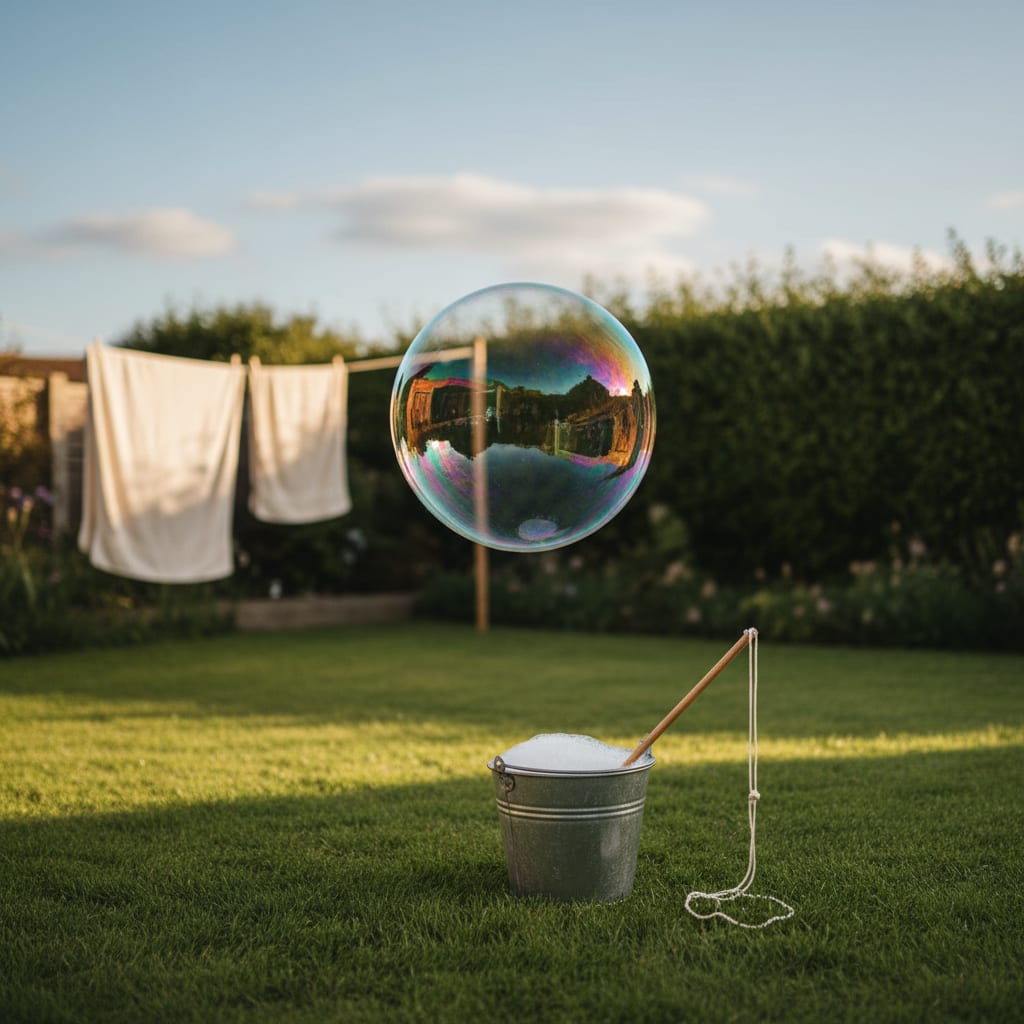
To use: dunk the whole string in a bucket of rested mixture, lift out gently with the sticks together, then open the sticks apart and walk slowly backwards. A shimmering monster of a bubble pours out behind you. Close the sticks to seal it off. The first three attempts fail; the fourth changes your child’s entire summer. Ours is a permanent fixture on the summer bucket list.
Giant-bubble conditions matter: damp, still, overcast days are perfect — humidity keeps the bubble film alive. Hot sunny afternoons with wind are the worst. Yes, this means British weather is optimised for giant bubbles. Take the win.
Small-person logistics
Shallow trays (roasting tins are ideal) beat bottles for little kids — no tipping, easy dipping. Raid the recycling for wands: cut the bottom off a plastic bottle, bend a wire coat hanger into a hoop, or use a slotted spoon, which makes a flurry of tiny bubbles and is weirdly the toddler favourite. Mixture on grass is self-cleaning; mixture on a patio becomes an ice rink, so aim the operation at the lawn. And when the rain arrives mid-session, decant everyone inside for salt dough while the bubble bucket rests for round two.
FAQ
Why do my homemade bubbles pop instantly?
Three usual culprits: no glycerine (the film dries out in seconds), the mixture hasn’t rested, or too much froth was whipped up while stirring. Add the glycerine, stir slowly, rest it overnight and skim the foam — that fixes it nine times out of ten.
What can I use instead of glycerine in bubble mixture?
A tablespoon of sugar dissolved in the warm water works on the same evaporation-slowing principle and costs pennies. Some people use baby oil, but sugar was the clear winner in our garden trials. For giant bubbles, though, glycerine is worth the £1.50 (~$2).
How long should bubble mixture rest before using?
At least 2 hours; overnight is noticeably better. Resting lets the soap fully disperse and the froth settle, which makes stronger, stretchier bubble film. Make it after tea, use it after breakfast — it’s the only recipe where procrastination is the technique.
Is homemade bubble mixture safe for toddlers?
As safe as bubble play ever is — it’s diluted washing-up liquid, so it’ll sting eyes and shouldn’t be drunk, exactly like the shop-bought stuff. Use shallow trays rather than open buckets with very small children, and rinse hands afterwards. Supervision required; delight guaranteed.