3-Ingredient Salt Dough Recipe (And How Not to Ruin It)
It’s raining. It’s been raining since roughly 2019. The children are circling the living room like sharks. This is the moment salt dough was invented for. The recipe is gloriously simple: 2 cups plain flour, 1 cup table salt, and up to 1 cup of water — mix, knead, shape, then bake at 100°C fan for about 3 hours. Three ingredients you already own, an hour of peace, and something to show for it at the end. Salt dough is the great British rainy-day craft for a reason, and after four years of making it (and ruining it in every possible way so you don’t have to), here’s the version that works every time.
The salt dough recipe
- 2 cups plain flour
- 1 cup table salt
- up to 1 cup of water
Mix the flour and salt in a big bowl, then add the water bit by bit until you’ve got a firm, kneadable dough — you might not need it all, and adding it slowly is the difference between dough and wallpaper paste. Knead for a couple of minutes on a floured worktop until smooth. If it’s sticky, more flour; if it’s crumbly, wet hands and keep going.
Use cheap table salt, not flaky fancy stuff — fine grains make smooth dough. Total cost: about 50p. Total mess: containable. These are the ratios I care about.
A quick upgrade for little hands: a teaspoon of vegetable oil in with the water makes the dough softer to knead, and a spoonful of cinnamon makes the whole kitchen smell like December, which we exploit shamelessly (see below).
Shaping ideas
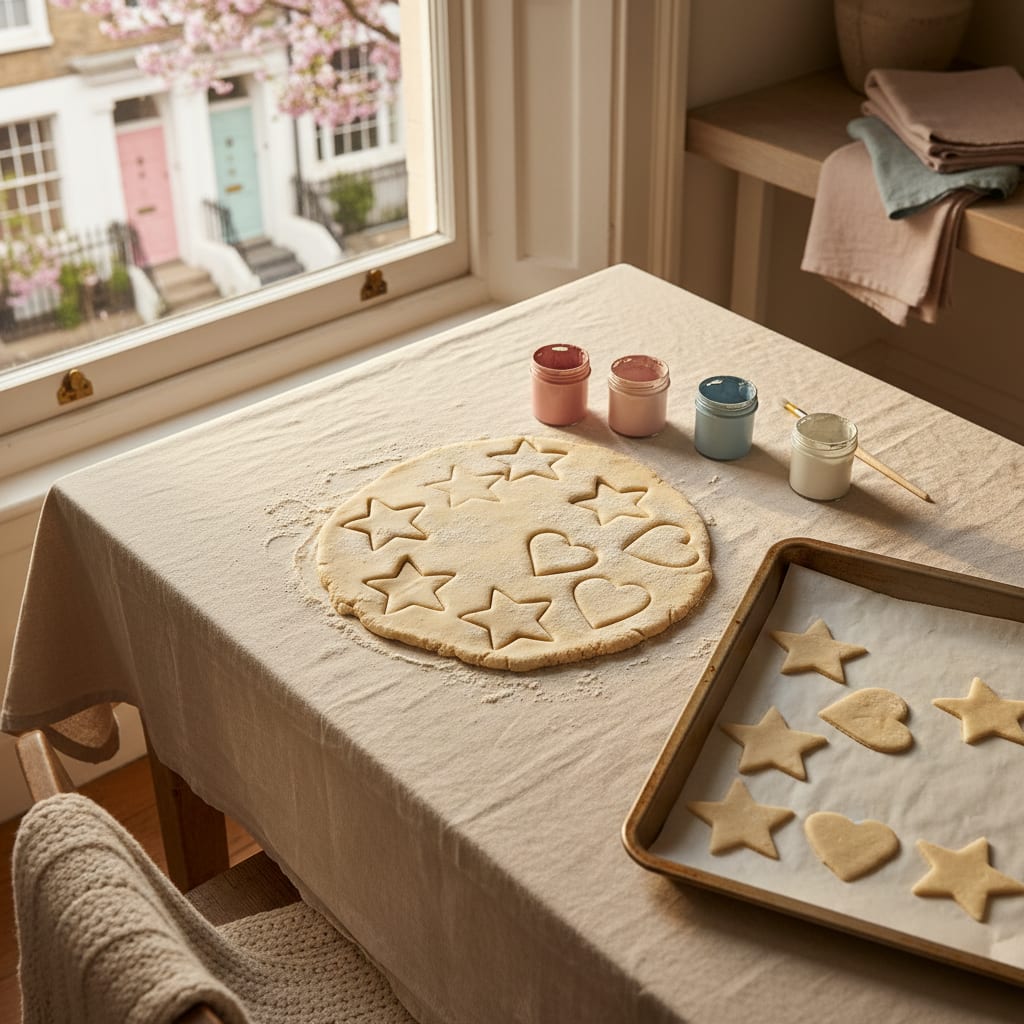
Roll it to about 1cm thick — thinner cracks, thicker takes geological time to dry. Cookie cutters are the easy win, but our greatest hits are:
- Handprints — press, trim round it with a knife, instant grandparent gift
- Christmas decorations in July — we are nothing if not organised; they store flat in a biscuit tin until December
- “Fossils” — press toy dinosaurs’ feet, shells or Lego bricks into discs of dough
- Pinch-pot bowls — for treasures, hair clips and the small plastic tat that otherwise colonises the sofa
- Beads — roll balls, skewer through, thread onto string once painted
Poke a hole with a straw before baking if you want to hang anything. Trying to drill a hole afterwards ends in shards and tears, some of them mine.
How long to bake salt dough (where everyone goes wrong)
Low and slow is the whole game. 100°C fan (120°C conventional) for 3 hours, flipping everything halfway so both sides dry evenly. Thick pieces like handprints can take 4. Blasting it at 180°C because you’re impatient — hello, it’s me — gives you puffed-up, cracked, browned shapes that look like ancient biscuits with regrets.
How to check it’s done: the backs should feel room-temperature and hard, not cool and damp. Cool-and-damp means moisture is still working its way out, and painting over it now traps it in there forever — soggy decorations by Christmas.
Air-drying works too: 2–3 days on a wire rack somewhere warm, flipping daily. Free, but it’s also 2–3 days of “is it ready yet?”, so I usually pay the oven tax. The microwave, for the record, does not work. It makes salt-dough popcorn. Ask me how I know.
Painting and sealing
Once completely cool: poster paint or cheap acrylics, and let the kids go feral. Felt tips work on the pale surface too, for children in their intricate-detail era. The boujee upgrade is a coat of clear varnish or PVA glue mixed 50/50 with water once the paint’s dry — suddenly your 50p craft looks like something from a farmers’ market stall, and it’s sealed against damp, which is what actually kills salt dough long-term.
This is our signature wet-weekend double bill: dough in the oven, bubble mixture resting on the windowsill for the moment the rain stops. And half of these makes end up ticked off our summer bucket list, because I am not above counting one craft twice.
We’ve got salt dough decorations going back four years now. The wonky ones are my favourite. Obviously.
FAQ
How long does salt dough take to dry?
About 3 hours in the oven at 100°C fan (120°C conventional), flipped halfway — up to 4 hours for thick pieces like handprints. Air-drying takes 2–3 days on a wire rack. It’s done when the back feels hard and room-temperature rather than cool and damp.
How long does salt dough last?
Sealed with varnish or watered-down PVA and kept somewhere dry, years — ours are on their fifth Christmas. Unsealed dough slowly absorbs moisture and softens, so the two minutes of sealing is worth it. Uncooked dough keeps 2–3 days wrapped tightly in the fridge.
Why did my salt dough puff up or crack?
The oven was too hot. High temperatures make the dough rise and blister like bread, then crack as it cools. Stick to 100°C fan and accept the three hours — put a film on, it’s raining anyway.
Is salt dough safe for toddlers?
Safe to squish, dangerous to snack on — it’s not toxic, but that much salt in one bite is genuinely bad for small bodies, and it tastes revolting enough that most children only try once. Supervise the eat-everything phase, and save the handprint idea for exactly this age. It’s the best baby craft there is.