Are Expensive Pillows Worth It? Honest Budget Maths
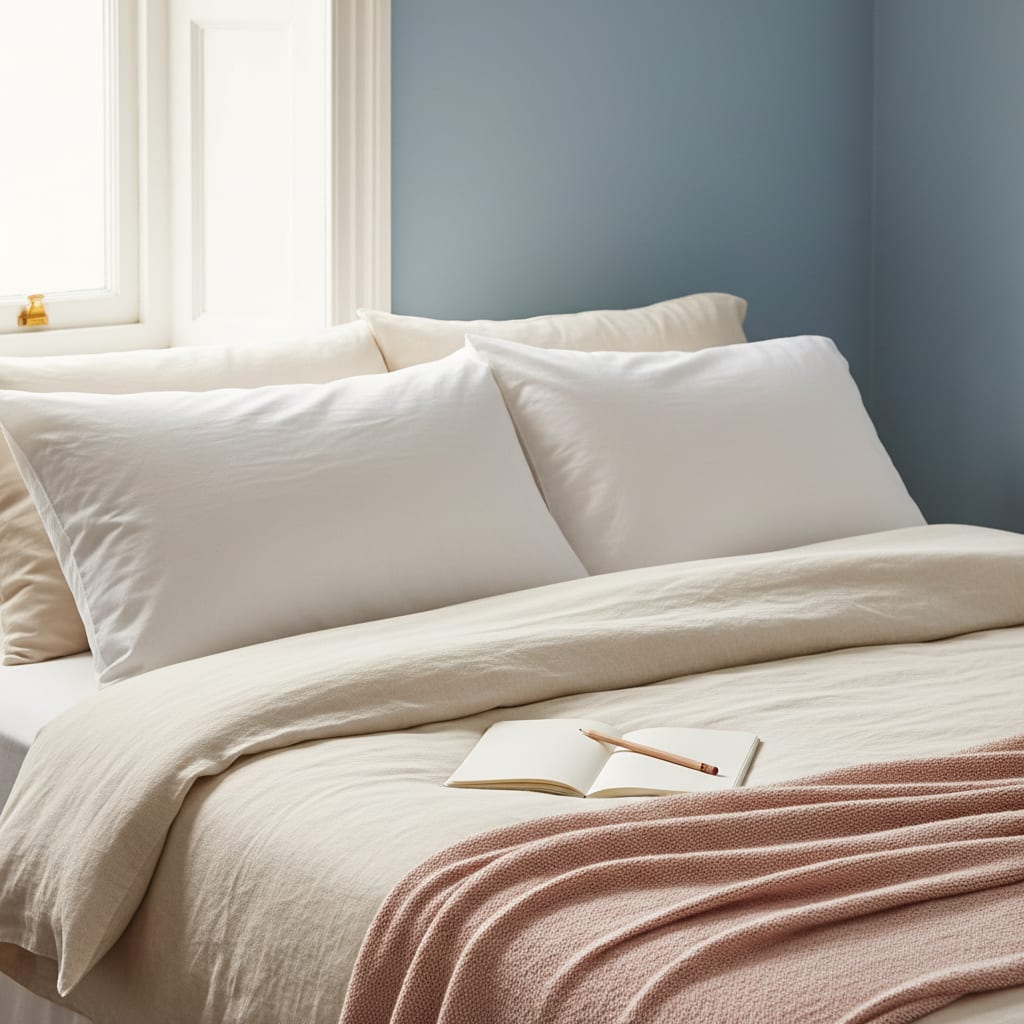
Are expensive pillows worth it? Run the maths and the answer is: usually yes — if you can find the money up front, which is the bit the “investment piece” articles always skip. A supermarket pillow at around £8–15 (~$10–19) goes flat within the year and gets rebought forever; a proper down pillow costs roughly ten times that once and can last many years, so the cost per night ends up surprisingly close. On one income, the real question isn’t “is it better?” — it’s “is this where my next spare £150 goes?” Here’s the honest version of both sides.
The cost-per-night sums
This is the same maths as my £35-a-week meal plan: price divided by how long the thing actually serves you, not how long the packaging implies.
- The cheap lane: a £10 (~$13) pillow replaced yearly is about 3p a night — except it spends its last six months as a sad pancake you fold in half. Realistically you’re paying 3p a night for a good pillow half the time.
- The investment lane: a quality down pillow at roughly £150 (~$188), kept in a zippered protector, is a many-years purchase. Over five years that’s around 8p a night — for a pillow that still plumps in year five.
And the rebuying treadmill isn’t hypothetical: a 2026 study of 13,425 Americans found that 59.2% of restless sleepers had burned through three or more pillows inside three years — and nearly one in five had lost track of how many. That’s the cheap lane’s dirty secret: you never stop paying.
So the premium works out at pennies a night. That’s the honest headline: expensive pillows aren’t a rip-off, but nor is the saving life-changing. What you’re really buying is never sleeping on the dead version — and if you’re a knackered solo parent whose sleep is already rationed by small people (see baby sleep, single-mum edition), that’s not nothing.
What “expensive” actually buys
The good stuff is down or feather-and-down inside a tightly woven cotton shell. Down springs back for years; cotton breathes so you’re not flipping the pillow all night. The benchmark brand I’d point at is Lincove — an American “pillow people” outfit doing hotel-grade down: their Original European Down Pillow is 600 fill power goose down in a 500-thread-count cotton shell at around £150 (~$188), and their Resort down-alternative does a very convincing budget version of the same feel at roughly £55 (~$69) — the sensible entry point, and the right call for allergy-prone kids too. One honest caveat: they’re US-based, so check the shipping situation to the UK before you fall in love. Closer to home, the same rules apply to whatever you buy: real down or a decent alternative, cotton shell, and a firmness you’d actually sleep on — the label matters less than the fill.
When cheap is the right answer (no shame clause)
Boujee on a budget means knowing when the budget wins:
- Tight month? Cheap pillow. Cost-per-night maths is a luxury of cash flow. A £10 pillow tonight beats a £150 pillow you put on a credit card — interest eats the “investment” instantly.
- Kids’ beds. Children need washable more than they need luxurious, and they grow through sizes. Mid-range and machine-washable is genuinely the better buy here.
- The spare room that hosts twice a year. Don’t invest in furniture for guests you see at Christmas.
And whichever lane you’re in: a £10-ish (~$13) zippered cotton protector is the single best pound-per-night purchase in all of bedding. It’s what makes the expensive pillow last years — and it makes the cheap one last longer too.
The buy-once order, if you’re upgrading
If you’ve got a bit put by and fancy doing this properly, upgrade in this order: your own pillow first (you use it eight hours a night — best value in the house), then a protector for everything, then sheets, and only then duvets and toppers. One good piece a season, funded from the same little pots that pay for our cheap family dinners — not one big splurge that wrecks the month. The bed ends up boujee; the bank account never notices a single blow.
FAQ
Are expensive pillows really better than cheap ones?
Generally yes — high-fill-power down in a cotton shell keeps its loft for years and sleeps cooler, while budget fill flattens fast. But “better” arrives at pennies per night, so it only makes sense once cash flow allows the up-front spend.
How often should you replace a cheap pillow?
Roughly every year or two — the fold test tells you: fold it in half, and if it stays folded, it’s done. A protected down pillow can keep going for many years, which is where the cost-per-night maths starts favouring the pricier one.
What should I upgrade first on a budget: pillow, duvet or sheets?
Pillow first — it has the most contact hours and the biggest feel-difference per pound. Then protectors, then sheets. Duvets and mattress toppers are the last stop, not the first.
Are down pillows OK for children?
Once they’re past toddler age and using a pillow anyway, a properly sized one is fine — but for kids I’d still pick washable down-alternative over down, because children are sticky and laundry is real. Babies under one need no pillow at all.