Cheap Family Meals: Two Weeks of Budget Dinners
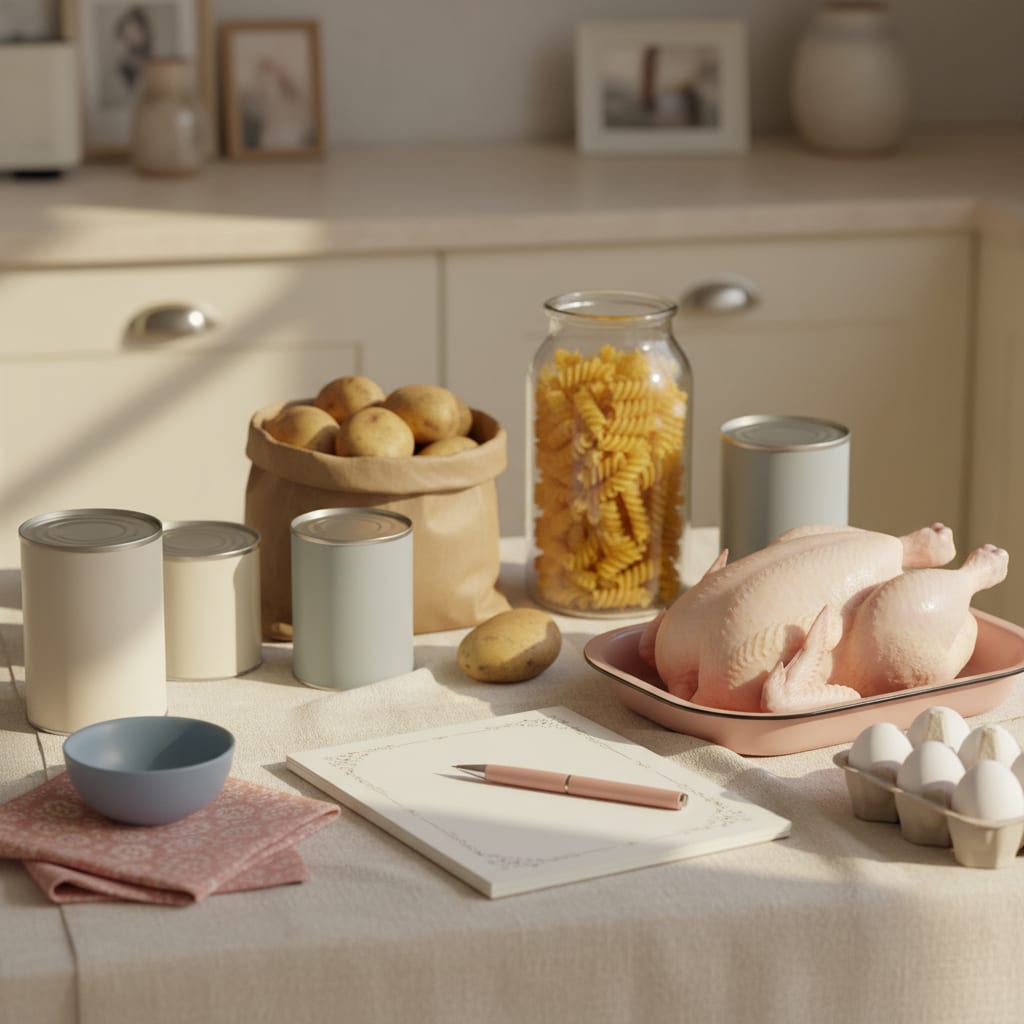
Here’s the direct answer: fourteen dinners built on pasta, potatoes, eggs, tinned fish, sausages, mince and a weekly roast-style anchor, deliberately chained so tonight’s leftovers become tomorrow’s ingredient, will feed a family well for roughly £2.50–3.50 (~$3.30–4.60) per household per night. The trick isn’t fourteen brilliant recipes — it’s the chaining. Cook once, eat twice is how one income covers a fortnight without the last three days turning into beige despair.
Below is the exact two-week rotation this house runs when money’s tight, plus the shopping logic that makes it work. Every dinner has survived contact with real, opinionated children.
The rules that make cheap meals work
- Anchor each week with one “big cook” — a whole chicken, a big batch of mince — and plan two or three dinners off it. The anchor looks expensive on the receipt and cheap by the third meal.
- One storecupboard dinner per week (tins and dried goods only) so a chaotic day never becomes a takeaway.
- One deliberate leftovers night to zero the fridge before the next shop.
- Shop the plan, not the aisles — the full method is in my family meal plan on a budget, but the short version is: plan from what you already have, write the list from the plan, and the list is the law.
- Own-brand by default. Trading down on pasta, tins, and flour is invisible in a finished dinner; save the branded loyalty for the things your kids genuinely clock.
Week one
- Monday — Slow cooker mince bolognese. Double batch, on purpose: half for tonight’s spaghetti, half becomes Wednesday. Full method in slow cooker mince recipes.
- Tuesday — Jacket potatoes with beans and cheese. Pennies each and zero effort.
- Wednesday — Chilli night. Yesterday’s reserved mince plus a tin of kidney beans and a spoon of mild chilli powder, over rice. Same base, officially a different dinner; the children have never once noticed.
- Thursday — Tuna pasta bake. The storecupboard slot: pasta, tinned tuna, tinned tomatoes, cheesy top. Recipe: easy tuna pasta bake.
- Friday — Homemade fakeaway chip night. Air fryer chips, fish fingers, peas. Friday energy, weekday price.
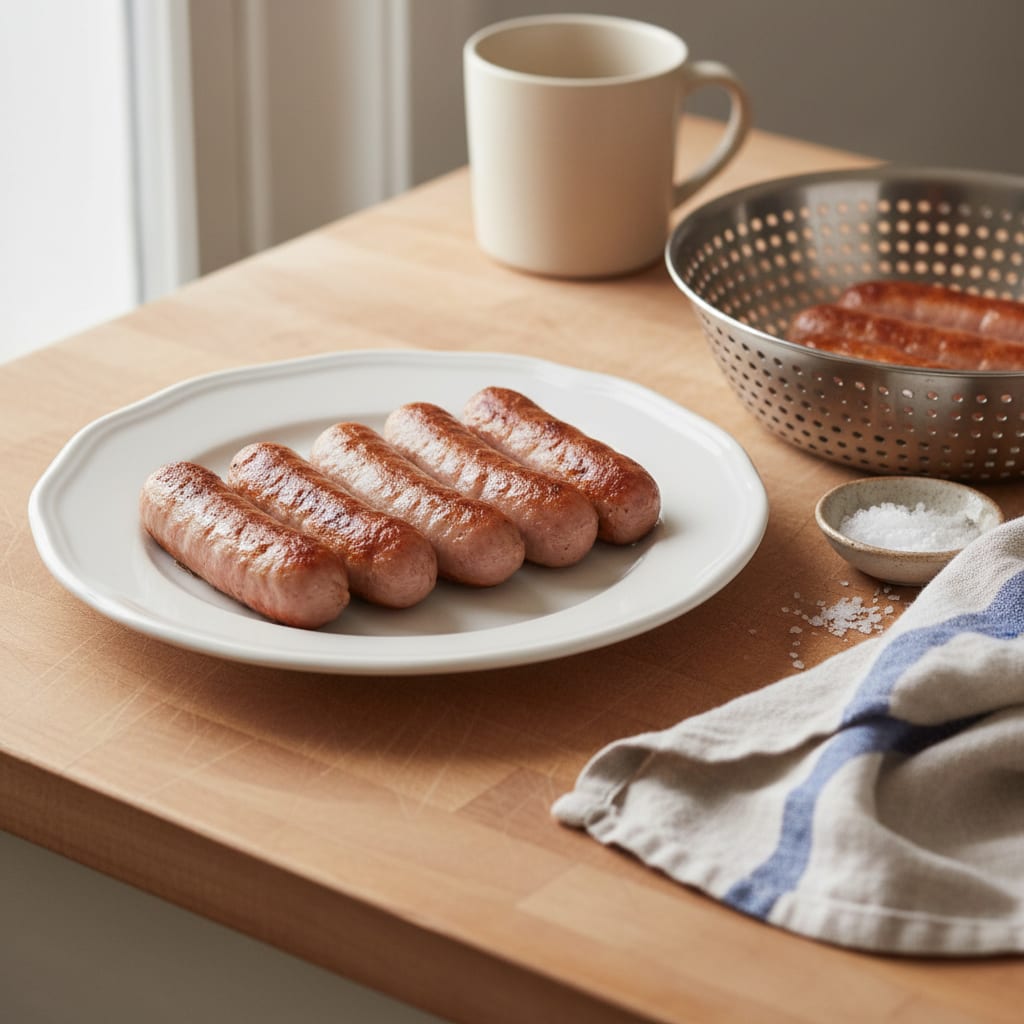
- Saturday — Sausage traybake. Sausages, potato chunks, onion and pepper in one roasting tin — fifteen minutes of effort, total. Cook two extra sausages for Sunday.
- Sunday — “Sunday-lite” roast. A budget roast around a whole chicken — carve, then strip EVERYTHING; the carcass and leftovers set up half of week two.
Week two
- Monday — Leftover chicken pie or wraps from Sunday’s chicken. This is the roast paying rent.
- Tuesday — Eggy night. Omelettes or scrambled eggs on toast with the week-one leftover sausages chopped in. Eggs are still the cheapest protein flexibility in the shop.
- Wednesday — Chicken and sweetcorn soup + toast soldiers from the carcass stock, thickened with a scoop of mash if you have it. A dinner that costs almost literally nothing.
- Thursday — Hidden veg pasta. Blitzed-smooth tomato and veg sauce on pasta with grated cheese — doubles as the week’s veg delivery for the suspicious.
- Friday — Picky tea. The buffet-style fridge-clearing dinner children treat as a party: picky tea ideas. Everything left in the fridge goes on the board.
- Saturday — Homemade pizza night. Cheap kit: flour-based dough (or wraps as bases for speed), passata, cheese, and whatever toppings survived Friday. Making it is the Saturday activity.
- Sunday — Toad in the hole with veg and gravy. Sausages and a Yorkshire batter — flour, eggs, milk — is one of the great British cheap dinners and a properly celebratory end to the fortnight.
What it costs, honestly
Prices move, so treat this as the shape rather than gospel: shopping own-brand at a mainstream supermarket, the dinners above have been coming out at roughly £35–50 (~$46–66) per week for a family of three to four, dinner-only. The chained meals are what hold it down — the roast chicken becomes three dinners, the mince becomes two, and the picky tea and soup nights cost nearly nothing because they’re built from remnants. The same fourteen dinners bought as unconnected recipes would cost noticeably more, which is the entire argument for planning as a fortnight instead of a day at a time.
Where it flexes: swap the roast chicken for a gammon joint or a veggie anchor (a giant batch of dal or veg chilli) and the structure holds. Fussy-eater households can lean on the “plain corner” tactics threaded through every recipe linked above — cheap and eaten beats cheap and refused.
FAQ
What’s the cheapest meal to feed a family?
Jacket potatoes with beans and cheese, eggy nights, and carcass-stock soup are the reliable floor — each comes out around 50–80p (~$0.65–1.05) a head. They’re cheapest when they’re part of a chain using things you already bought.
How do I feed a family of 4 on a tight budget?
Plan a full week before shopping, anchor it with one big cook that becomes two or three dinners, keep one tins-only dinner in reserve, and finish the week with a leftovers-clearing night. The plan matters more than any individual recipe.
Are cheap family meals healthy?
They can be — the fortnight above leans on eggs, fish, chicken, beans and blitzed veg rather than ultra-processed shortcuts. Tinned and frozen veg count just as much as fresh and are usually cheaper.
How many meals should I batch cook?
Doubling two dinners a week (a mince batch and a soup or sauce) is the sweet spot for a normal freezer and a normal life. Full-weekend batch marathons burn people out; two doubles a week compounds quietly.
What if my kids refuse the cheap dinners?
Serve components separately, keep one guaranteed safe food on every plate, and let them build their own where possible — buffet-style dinners and traybakes exist for exactly this. Refused food is the most expensive food there is.