Baby Crying in a Flat: Thin Walls and Neighbours
A crying baby is not a noise complaint, and it is not anti-social behaviour. Citizens Advice puts it in plain words: it isn’t anti-social behaviour “if the problem’s about normal day-to-day living, for example if you don’t like your neighbour’s cooking smells or you can hear their baby crying.” Councils act on statutory nuisance — parties at 2am, thumping bass, dogs barking all day — not on a baby doing the one thing babies are built to do. The dread is real; the risk mostly isn’t. What’s left is practical: soften what carries, tell the neighbours early, and settle your baby in a way you can keep going for more than three nights.
I did newborn nights in a converted flat with a stud wall between me and a man on shifts, and I spent six weeks listening for him instead of my baby. That was the real damage. Not the noise.
What actually goes through a wall
The thing everyone underestimates is gaps. Solid mass — brick, a full wardrobe, a thick rug — takes the energy out of sound. An air path takes none of it. So the letterbox, the gap under your front door and the shared stairwell all carry more than the wall itself.
Two flats that look identical are often built differently. Original party walls in an older terrace are usually solid and heavy, and do their job. Conversion walls — the ones put in when a London house was chopped into flats — are frequently plasterboard on a timber frame. That’s the classic thin wall, and it’s why one neighbour hears everything while the one on your other side hears nothing.
You can’t tell which you’ve got by knocking, and it doesn’t much matter: the fixes are the same and they’re cheap.
A crying baby is not a noise complaint
Your council’s environmental health team deals with statutory nuisance — the gov.uk page on reporting a noise nuisance covers loud music, rowdy parties, noisy pubs and barking dogs. Ordinary domestic life isn’t in that bracket, and Citizens Advice on complaining about a neighbour names a crying baby specifically as an example of what isn’t anti-social behaviour.
Tenancies are a separate question, but the conduct landlords act on is a different category entirely — Shelter’s page on eviction for anti-social behaviour lists what counts, and a newborn isn’t on it. If anything ever lands in writing, that’s a Shelter or Citizens Advice phone call, not a midnight Google search.
Cheap things that genuinely deaden a flat
In rough order of value per pound:
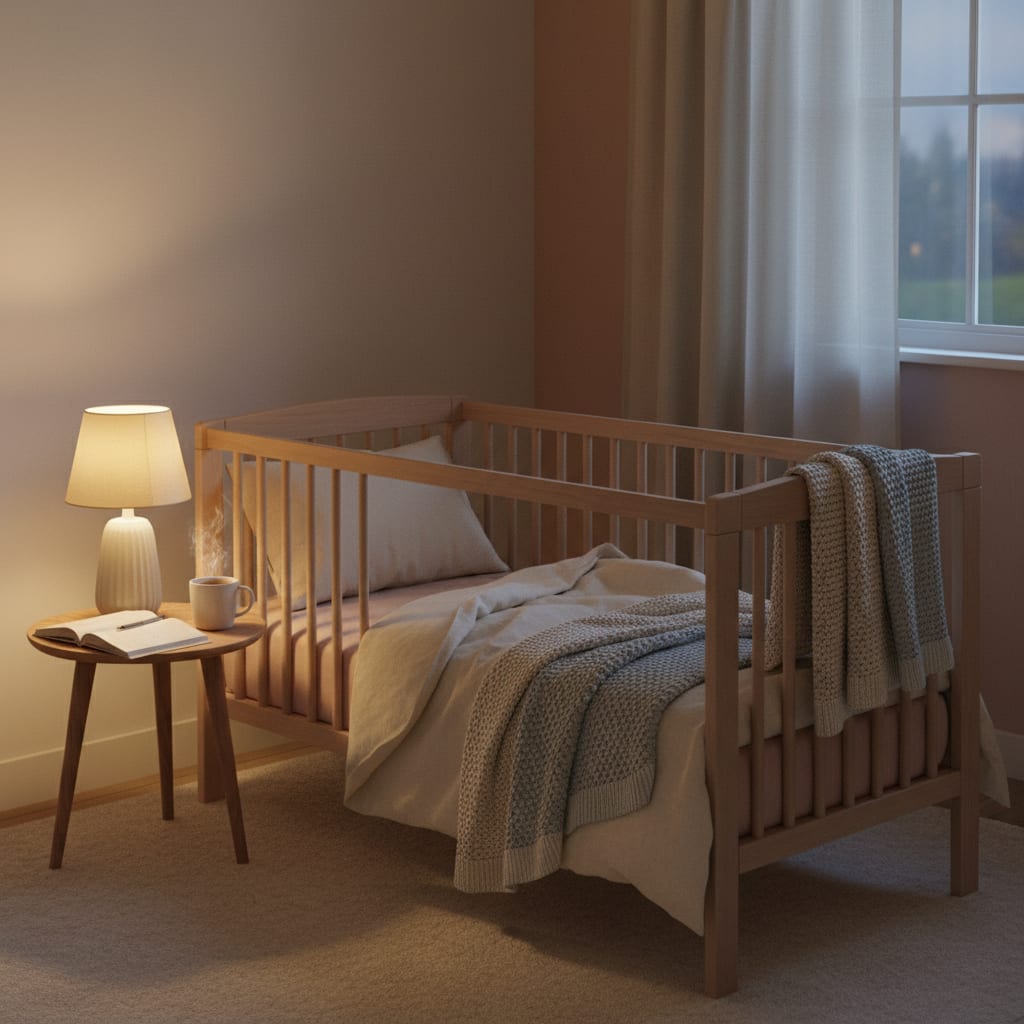
Move the cot off the shared wall. Free, and the biggest single change. While you’re moving it, re-check the basics against The Lullaby Trust’s safer sleep advice: own clear, flat, firm sleep space, nothing loose in the cot, not against a radiator, and no blind or curtain cord within reach.
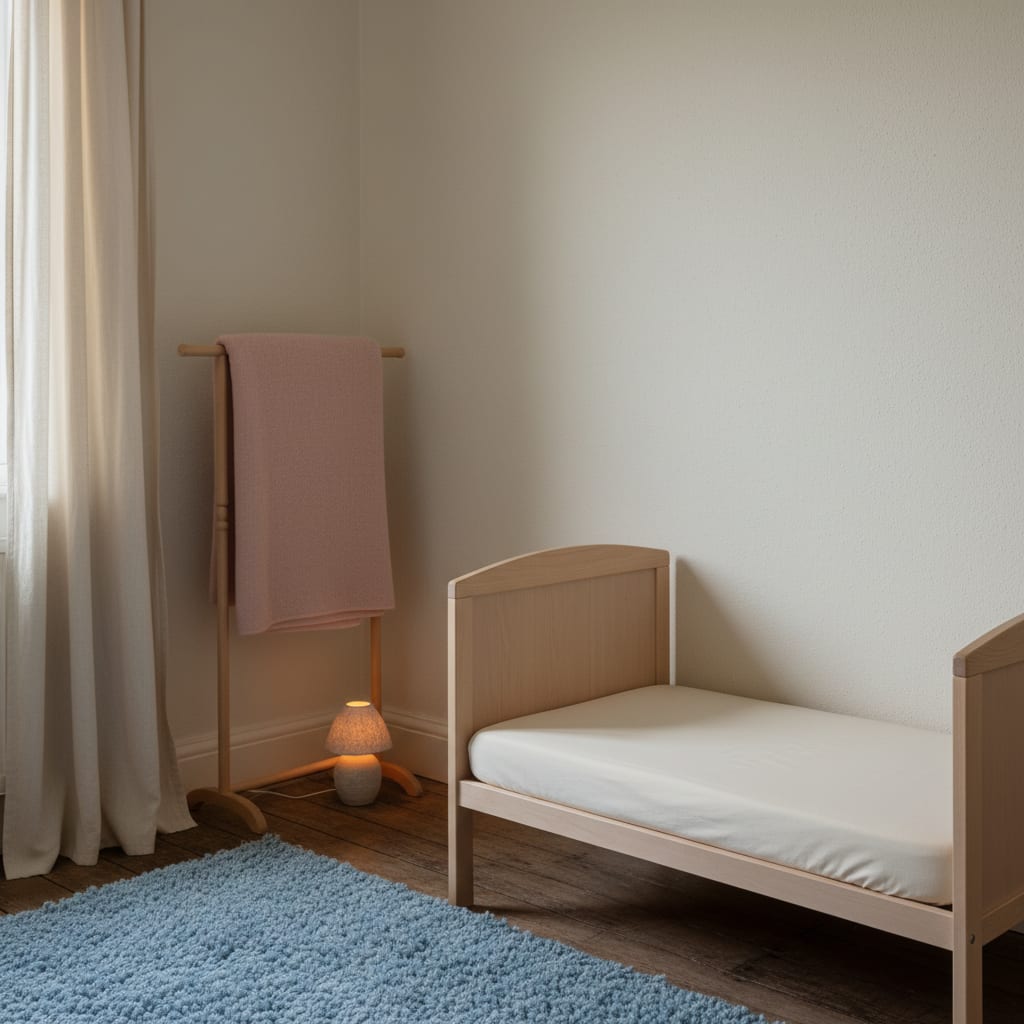
Soft mass against the wall. A wardrobe or stuffed chest of drawers turned against the shared wall works as a baffle and costs nothing if you own one. A thick rug with felt underlay, roughly £20–£40 (~$26–$52), does more for a bare-floorboard conversion than most people expect.
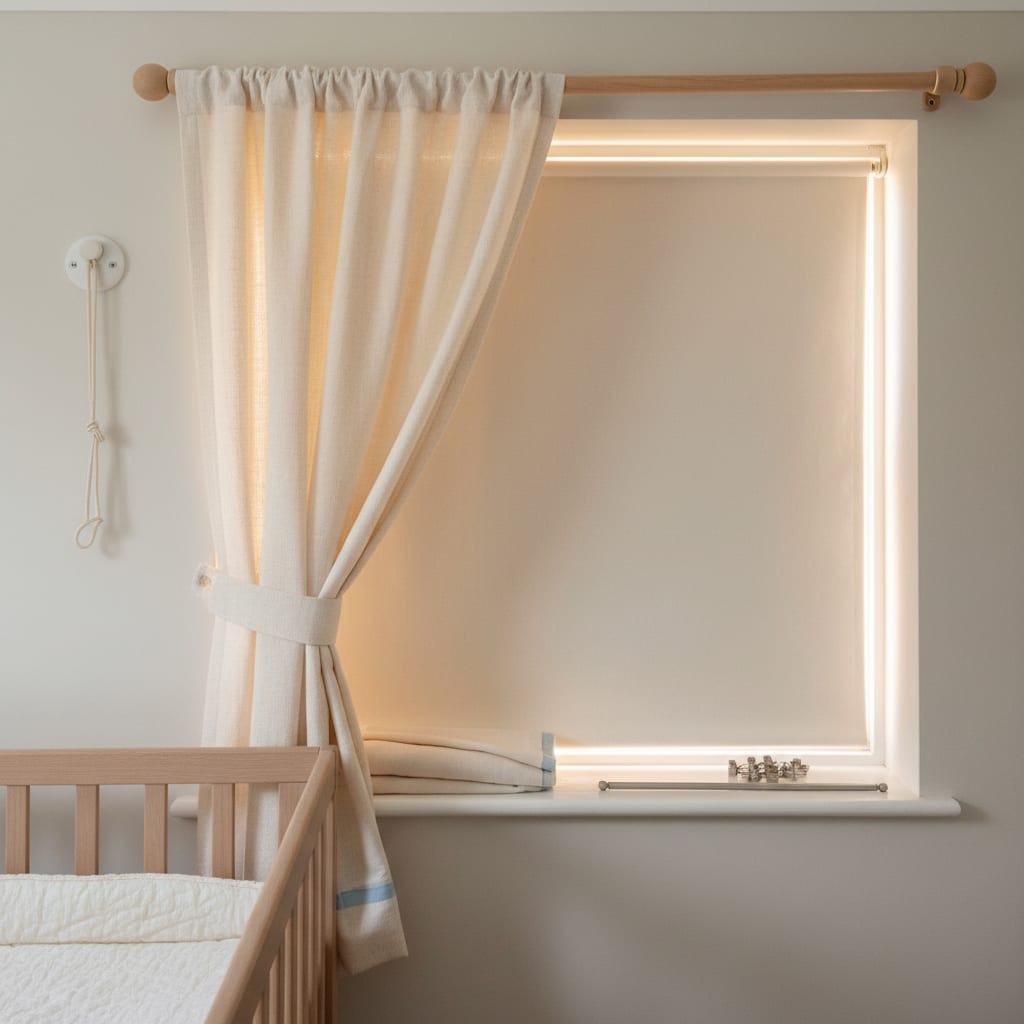
Heavy curtains, floor length. Around £15–£30 (~$20–$39) second-hand or in a sale. Over the window they soften the room; on a tension rail across a thin wall they’re effective, reversible and come down with the tenancy.
Block the gaps. A brush strip or draught excluder on the front and bedroom doors, roughly £5–£10 (~$7–$13), closes the air path carrying stairwell noise in and cot noise out. It pays for itself on the heating.
Steady sound inside your flat, at a sane volume. Masking is for your baby’s ears, not the neighbour’s — turning it up cancels nothing on their side, it just adds a second noise. Roughly the level of a shower running, across the room from the cot rather than beside it, on all night. A fan does the job if you’d rather not buy anything. What I wouldn’t spend on is foam tiles sold as soundproofing.
Telling the neighbours before you need to
The note through the door is the highest-return thing here, and it costs nothing.
Something like: we’ve just had a baby, there’ll be some crying for a while, sorry in advance, here’s my number if it’s ever unbearable. It turns an anonymous noise into a specific person’s baby, and people are remarkably tolerant of a baby they’ve been introduced to.
Give the number — almost nobody uses it, and its job is to prove you’re not hiding. Do it early, while you’re apologising for something in the future rather than something they’ve already lost sleep over. Keep it short: a brief note reads as considerate, a long one as anxious. And if you rent, there’s nothing to hide from your landlord either.
Settling when you’re listening for the wrong thing
Here’s the bit that actually costs you sleep. Thin walls rarely produce a complaint. They produce a mother who goes in at ten seconds every time, because she’s monitoring the neighbour rather than the baby — and inconsistent responses keep nights broken for months.
If crying is what you dread, pick an approach built to minimise it rather than white-knuckling one that isn’t. Betteroo’s rundown of lower-crying settling methods is honest about the trade: gradual approaches are calmer and slower, and minimal crying still isn’t no crying. Knowing that in advance is what stops you abandoning something on night two.
It helps to know what your baby is capable of, because a lot of guilt comes from expecting settling from a baby too young for it. Betteroo’s summary of when self-settling actually starts puts the capacity somewhere around four to six months rather than in the first weeks.
Two practical things: start a harder stretch on a Friday, when a bad night costs less; and count a pause before you go in — thirty seconds is plenty — so the response is yours and not the wall’s.
If the room itself is the problem, my guide to sharing one bedroom with a baby covers dividing the space, and bedtime with nobody to tap in is the solo-parent version of the evening.
If a complaint does land
Don’t answer the same night. Nothing good gets written at 11pm.
Ask what and when, with dates and times — half the time it turns out to be the washing machine on spin, a slammed door, or the flat above yours. Keep your own short log of those nights: Citizens Advice recommends that diary habit to the complainer, and it works just as well in reverse. Then get advice before you agree to anything or start planning a move.

For the wider version of all this — the nights, the money, the doing it alone — start with baby sleep as a single mum.
FAQ
Can neighbours complain about a crying baby?
They can say something, but it isn’t a complaint the council will act on. Citizens Advice gives a crying baby as an example of ordinary day-to-day living rather than anti-social behaviour, and environmental health teams deal with statutory nuisance like loud music and persistent barking. If anything arrives in writing, get advice from Shelter or Citizens Advice rather than assuming the worst.
How do I stop my baby’s crying carrying through thin walls?
Move the cot to the wall furthest from your neighbour, then add soft mass: a wardrobe against the shared wall, a thick rug with underlay, floor-length curtains. Block gaps under doors with a draught excluder, since gaps carry more than walls do. Skip foam acoustic tiles — they change echo inside a room, not what passes through a wall.
Should I tell my neighbours I have a baby?
Yes, and before you need to rather than after. A short note through the door with your phone number turns anonymous noise into a specific baby, and people respond to that far better than to months of silent tiptoeing. If you rent, there’s no reason to keep it from your landlord either.
Is it safe to use white noise in a flat with thin walls?
Keep it at roughly the volume of a shower running and put the machine or fan across the room from the cot, never beside it. Turning it up doesn’t cancel crying on the neighbour’s side, it just adds a second sound. Its job is masking noise coming in, so leave it on steadily all night rather than on a timer.