Baby Sleep in a Heatwave: How to Cool a Hot Bedroom
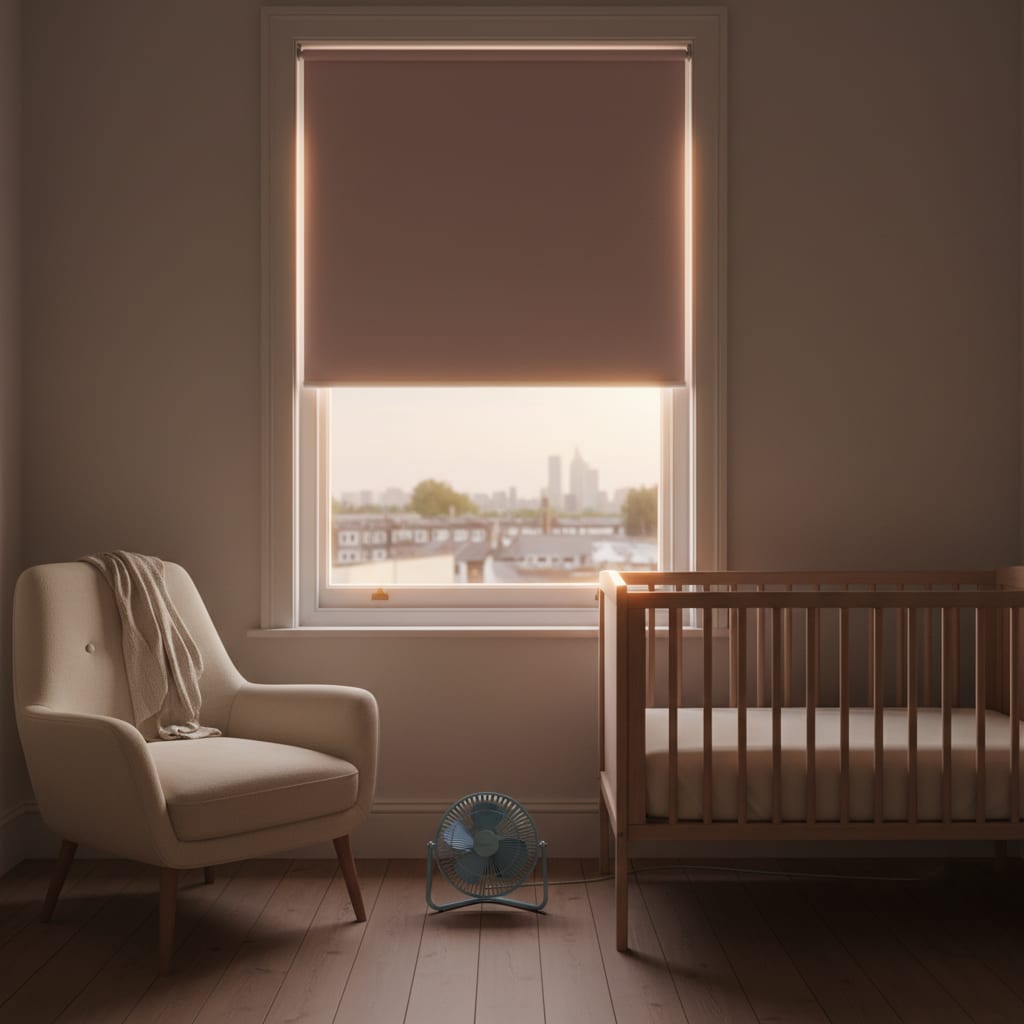
In a heatwave the job isn’t to force the room down to the ideal 16–20°C — in a top-floor British flat that often isn’t possible — it’s to keep the room as cool as you can and take layers off the baby to match. Shut the curtains and windows through the heat of the day, open everything once the outside air is cooler, use a fan to move air around the room rather than blow at the cot, and drop to a low-tog sleeping bag or just a nappy and a vest.
Check their chest rather than their hands. Overheating is the risk you’re managing here, not being slightly too cool.
I say this as someone who spent one July on the floor of a rented flat at 11pm with a fan, a thermometer reading a number I didn’t want to see, and no way to fit anything to a window I didn’t own.
Shut the flat up before the room gets hot
British homes are built to hold heat in — wonderful in February, a design flaw in August. Once it’s in the walls it stays until the small hours, so the whole game is stopping it getting in.
- Close curtains and blinds on the sunny side first thing, before the sun reaches those windows, and leave them shut all day. Blackout lining does double duty: it blocks nap light and reflects a useful amount of heat.
- Keep windows shut while the outside air is hotter than the inside. This feels wrong and is the thing most people get backwards.
- Open up in the evening when it flips, ideally on two sides of the flat so air crosses rather than sits.
- Shut the bedroom door by day to keep the room out of the flat’s general heat, then open it in the evening.
- Turn things off. Oven, tumble dryer, the airer of washing, spare lamps. Cook cold, or cook early.
If another room in the flat is cooler, it’s a perfectly good bedroom for a few nights — what the baby sleeps on matters far more than which room it’s in.
What a fan can and can’t do
A fan doesn’t cool a room. It moves air, which helps the room lose heat once outside air is cooler, and makes skin feel cooler. Useful, but not air conditioning.
Using one around a baby, conservatively:
- Point it at a wall or across the room, not at the cot — you want air circulating, not a draught aimed at a sleeping baby.
- Fan and cable well out of reach. This is the actual risk with fans and small children.
- A bowl of ice in front of it makes a modest difference to the air passing over. Not magic, but free.
- In the evening, put it by an open window facing inwards to pull the cooler outside air in.
A basic fan runs around £15–£25 (~$20–$33) and is the one purchase I’d make in a hot summer, well ahead of anything sold as a nursery gadget — the same logic as setting up a sleep room on a budget.
Dress down rather than cover up
This is where most of the fix happens, because you can change what a baby wears far faster than you can change a room.
As the room warms, layers come off: a lower-tog sleeping bag, then a bag with nothing under it, and in a genuinely hot room a nappy and a thin vest — or just a nappy — with nothing over the top. On the hottest nights no bedding is safer than bedding, since anything loose can end up over a face.
Two things quietly make babies hotter and are easy to miss: a hat indoors, which is never right for sleep, and a muslin draped over a pram for shade, which traps heat inside it. Use a clip-on sunshade or the pram’s own hood.
Because the numbers are confusing when the room won’t behave, Betteroo’s guide to what a safe room temperature actually looks like sets out the ranges and how to dress for each one, which is more useful than staring at a thermometer wondering what to do about it.
How to tell if they’re actually too hot
Hands and feet are the classic red herring — babies’ hands are often cool when they’re perfectly warm. Put a hand on their chest or the back of their neck instead. Warm is fine; sweaty, clammy or damp-haired means take a layer off. Other signs: flushed cheeks, faster breathing, heat rash, unusually floppy or unsettled.
If a baby seems genuinely unwell in the heat — very hot to touch, drowsy, hard to rouse, not feeding, fewer wet nappies — that stops being a sleep question. Ring 111 or your GP, and don’t feel foolish doing it at 2am.
On fluids: babies feed more in hot weather and that’s normal. Under six months, extra milk feeds rather than water; over six months, sips of water alongside feeds are fine. Ask your health visitor about your own baby, and The Lullaby Trust is the source I’d trust on safer sleep.
The rented-flat problems nobody mentions
A few realities, and what actually helps:
You can’t fit anything outside. External shutters are the proper fix and aren’t available to renters. Inside, pale blackout lining beats dark curtains, because dark fabric absorbs heat and radiates it into the room.
Windows that barely open. Restrictors on upper floors are there for good reason and stay. Get what airflow you can with an internal door propped and a fan moving air between rooms.
You can’t open the window at night — busy road, ground floor, no lock. Then the fan and the layer-stripping do all the work, and the coolest room in the flat matters more than the usual one.
A tepid bath before bed, not a cold one; cold water makes the body hold heat in. A damp flannel on the neck is a decent 2am reset for both of you.
When the heat isn’t the whole story
Here’s the bit that saved my sanity. A hot night makes a light sleeper worse; it doesn’t invent a sleep problem from nothing. If the wake-ups started before the heatwave, or carry on a fortnight after the weather breaks, the heat was a passenger rather than the driver.
The usual culprits are timings — naps that have drifted, a bedtime that crept late in the light evenings, or a regression that happened to land in August. Early waking especially gets blamed on temperature when it’s usually light and schedule, which Betteroo’s rundown of why babies wake so early unpicks properly.

And if you’re doing all this alone at midnight with nobody to swap shifts with — that’s its own exhaustion, which is why I’ve written about doing baby sleep as a single mum and bedtime with no one to tap in. A heatwave is three or four bad nights. It ends.
FAQ
What temperature should a baby’s room be in hot weather?
Around 16–20°C is the range given for safer sleep, but in a UK heatwave many rooms won’t get there and worrying won’t move them. Get the room as cool as you reasonably can, then match what the baby wears to the temperature you’ve actually got — fewer layers as it warms, nothing loose over them.
Can I use a fan in my baby’s room at night?
Yes, as long as it isn’t blowing onto the cot and the fan and cable are out of reach. Aim it at a wall so the air circulates, and in the evening point it inwards from an open window to draw cooler air in.
What should a baby wear to sleep in a heatwave?
Less than you think. A low-tog sleeping bag with nothing underneath in a warm room; in a genuinely hot one, a nappy and a thin vest, or just a nappy. No hat, no loose blankets, and nothing draped over the cot or pram — a cover traps heat rather than making shade.
How do I know if my baby is too hot?
Feel their chest or the back of their neck, not their hands or feet. Sweaty or clammy skin, damp hair, flushed cheeks or faster breathing all mean take a layer off. If they’re very hot, drowsy, hard to rouse, feeding poorly or producing fewer wet nappies, ring 111 or your GP.