Too Good To Go Review: Are Magic Bags Worth It?
Too Good To Go is worth it if you live or travel near a bakery, supermarket or café that lists bags, you can collect in the evening window, and your household will eat food you didn’t choose — otherwise it’s a lovely idea that costs you a bus fare and a strop. For me it’s a genuinely good bakery-and-fruit-and-veg supplement, and a bad way to plan a week’s dinners. It has never once replaced a shop, and I’d be lying if I said it had.
That’s the short version. Here’s the long one, including the bits that don’t suit a single-parent evening at all.
How the app works
You download Too Good To Go, it shows shops near you with unsold food at the end of the day, you pay in the app for a Surprise Bag, and you turn up in a set collection window to fetch it. You don’t choose what’s in it. The shop fills it with what hasn’t sold.
The pitch is that a bag contains meaningfully more food than you paid for — commonly framed as around three times the value — and that’s usually about right when the bag is from a bakery. It’s less predictable elsewhere, which is the whole review, really.
What actually turns up
It depends entirely on the type of business, and that’s the single most useful thing to know before you spend anything.
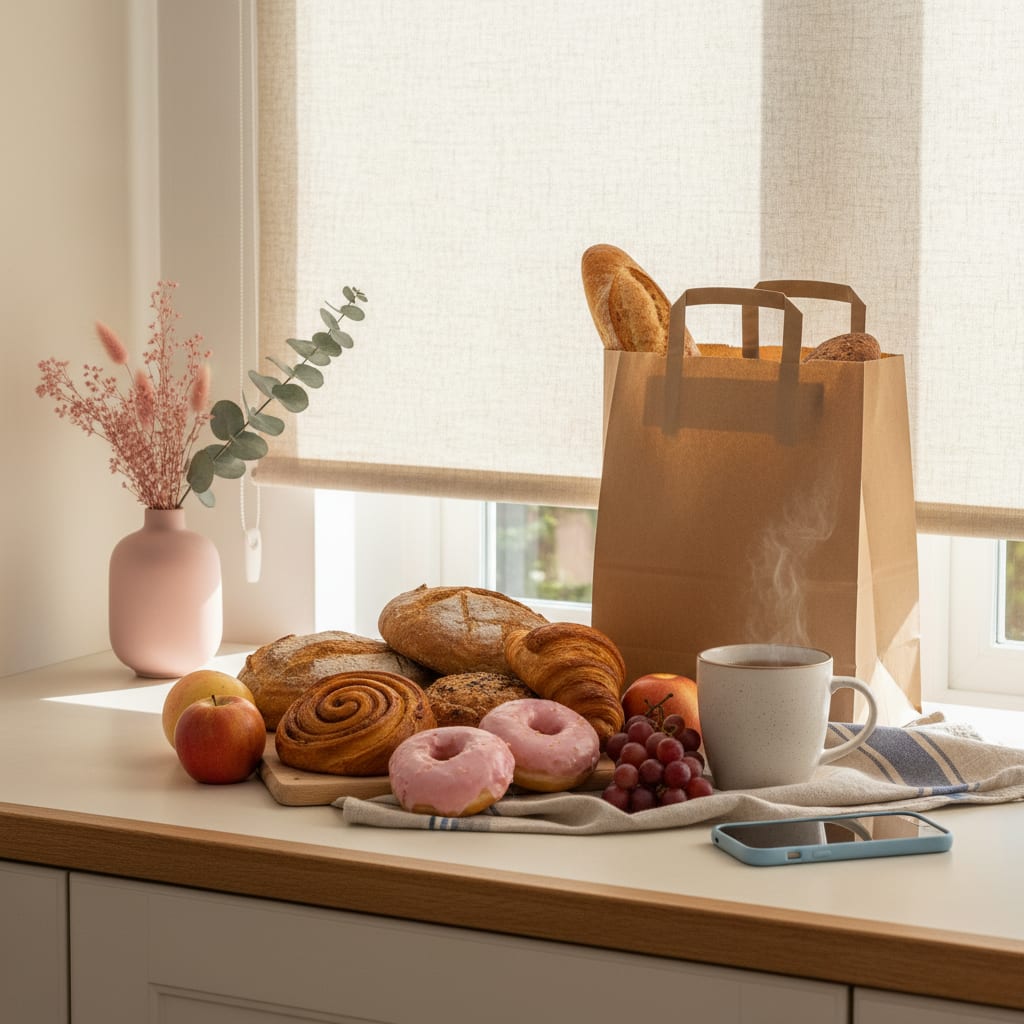
- Bakeries are the most reliable by a mile. Bread, pastries, sometimes cakes. Enormous quantities. This is the category where the maths is never in question — and the category where you need freezer space, because it all goes stale at once.
- Supermarkets and convenience shops vary wildly. A good one is fruit and veg, salad bags, bread, chilled things near their date, occasionally something excellent. A bad one is four bags of salad and a tub of houmous. Both are possible from the same shop on different days.
- Cafés and sandwich shops give you lunch food, which is useful if you can eat it tomorrow and useless if you can’t.
- Restaurants and takeaways are the least predictable and usually the priciest bags. Sometimes a proper meal, sometimes rice and a side.
Bags typically cost somewhere around £3–£5 (~$4–$7) for bakeries and small shops, with supermarket and restaurant bags running higher. Prices vary by business and city, and the app always shows the price before you commit — so there’s no nasty surprise on cost, only on contents.
The maths, honestly
On value alone, it usually wins. A bakery bag has beaten its price nearly every time here, and a good supermarket bag can be the difference between a fruit bowl and no fruit bowl.
But value isn’t the same as saving. A bag only saves you money if it replaces something you would have bought. Four sourdough loaves are astonishing value and a rounding error on your budget if your family eats one loaf a week — the rest is either freezer space or waste, which is the exact problem the app was invented to solve. When I set out what a realistic family food budget looks like, the biggest lever was always planned meals rather than bargains, and this app is a bargain machine, not a planning tool.
Where it genuinely lands on the budget:
- Bread and pastries, if you freeze the same day. Breakfast and packed lunches sorted for a fortnight.
- Fruit and veg you’d otherwise buy, cooked or frozen within a day or two.
- The occasional evening where a restaurant bag becomes tea and you don’t cook.
Where it doesn’t:
- Anything you wouldn’t have bought. That’s spending, dressed up.
- Anything that goes off before you get to it.
Where it falls down for single parents
This is the part the enthusiastic reviews leave out, and it’s the reason my usage is occasional rather than religious.
Collection windows are the killer. They’re usually late afternoon or evening, and often narrow — a slot that lands squarely in the middle of tea, bath and bed. If you can’t leave the house at seven without taking everyone with you, half the listings on your map are theoretically available and practically not.
You have to go and get it. No delivery. If the good bakery is a bus ride away, factor the fare in and the value drops fast.
You can’t plan around it. Bags sell out, get cancelled, or aren’t listed on the day you need one. It cannot be a line in your meal plan.
Fussy eaters are a real constraint. A surprise bag is the opposite of what a picky child wants for tea. Mine has treated an unfamiliar loaf as a personal insult. If your household only eats a narrow list, the value on paper never reaches the table — which is why the honest place for surprise food in our week is alongside a proper plan, like the cheap family meals fortnight I default to.
Refunds work, but they’re admin. If a bag is genuinely poor, the app has a process and in my experience it’s handled reasonably. It still costs you the trip and the evening.
Who I’d actually recommend it to
Yes, if: you pass a listed bakery or shop on a normal route, you have freezer space, your household eats fairly flexibly, and you can collect without building your evening around it.
Maybe, if: you can do it at weekends only. Weekend bakery bags are a nice ritual and a cheap treat.
No, if: collection means a special trip, your freezer is a drawer, or your kids will not eat unfamiliar food. In that case your money goes further on a planned shop and an hour of batch cooking, which delivers the same “there is food and I didn’t cook tonight” feeling with none of the lottery.
Worth knowing there are alternatives with different shapes: apps and community groups that redistribute food for free, and the reduced-to-clear shelf in your own supermarket, which costs nothing extra to check and lets you actually pick what you’re buying.
The verdict
A good app doing a genuinely good thing, and a modest, unreliable line on a tight budget. I’d tell any single mum to install it, look at what’s near her, and judge it purely on this question: is there a bakery or supermarket I already walk past, in a window I can actually make? If yes, it’s free money and less waste. If no, don’t force it — a bargain you had to travel for isn’t one.
FAQ
Is Too Good To Go actually worth it?
For most people near a listed bakery or supermarket, yes on value — the food in a bag is usually worth well more than the price. Whether it’s worth it on budget depends on whether it replaces things you’d have bought anyway. Treat it as a supplement to a planned shop, not a substitute for one.
What do you actually get in a Surprise Bag?
Whatever hasn’t sold. Bakeries give bread and pastries, supermarkets give fruit, veg, bread and chilled items close to their date, cafés give sandwiches and lunch food, restaurants give prepared meals. You can’t choose, and you can’t reliably predict it — the bag type on the listing is the only real clue.
Is the food safe to eat?
Yes — it’s surplus stock being sold at the end of trading, not out-of-date food. Items may be close to a best-before or use-by date, so check the labels when you get home, eat or freeze anything with a use-by promptly, and use your judgement on quality just as you would with a yellow-sticker item.
Can you get a refund on a bad bag?
Yes, there’s a reporting process in the app for bags that don’t reflect what was advertised, and it’s reasonably straightforward. It won’t give you back the trip, though, which is why I’d rather set expectations low than chase refunds — the app is a surplus lottery, and the occasional dud is part of the deal.