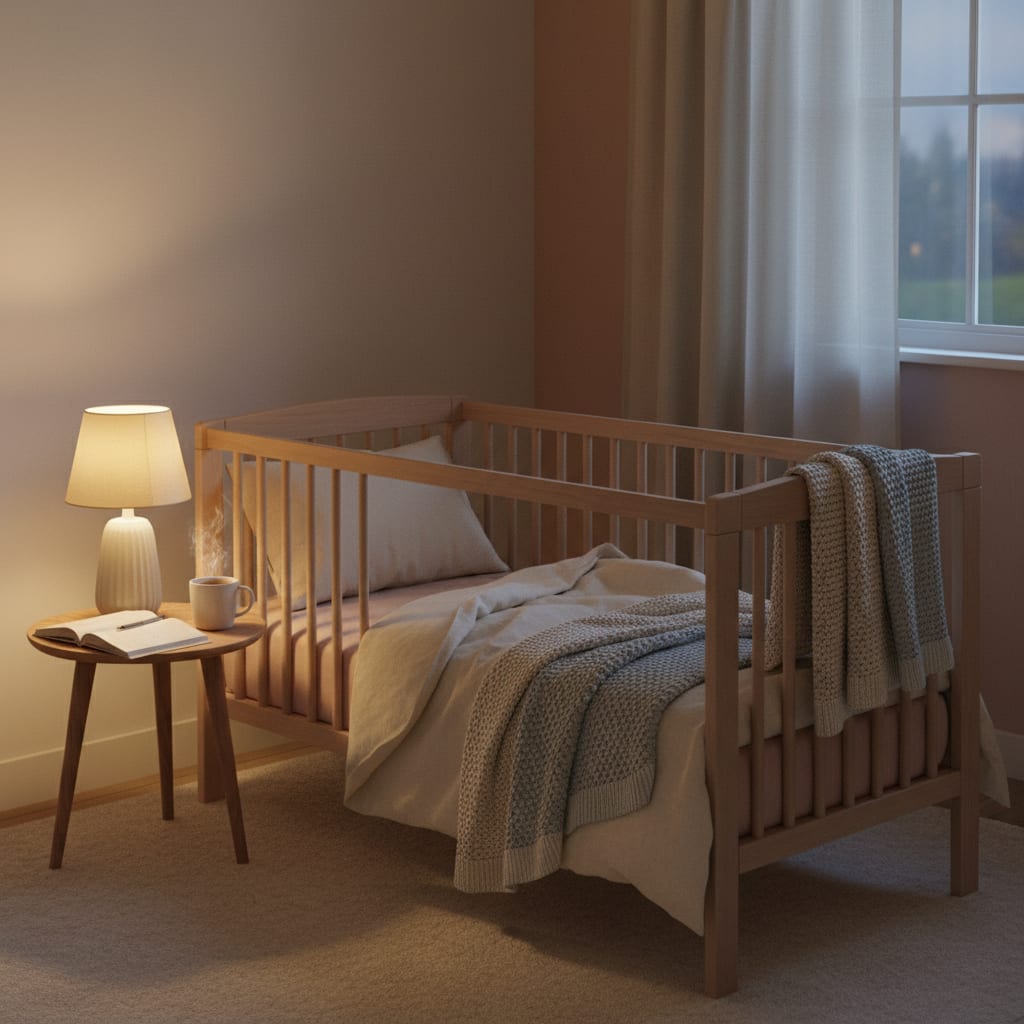
Baby Sleep on a Budget: A Dark, Warm Room for Less
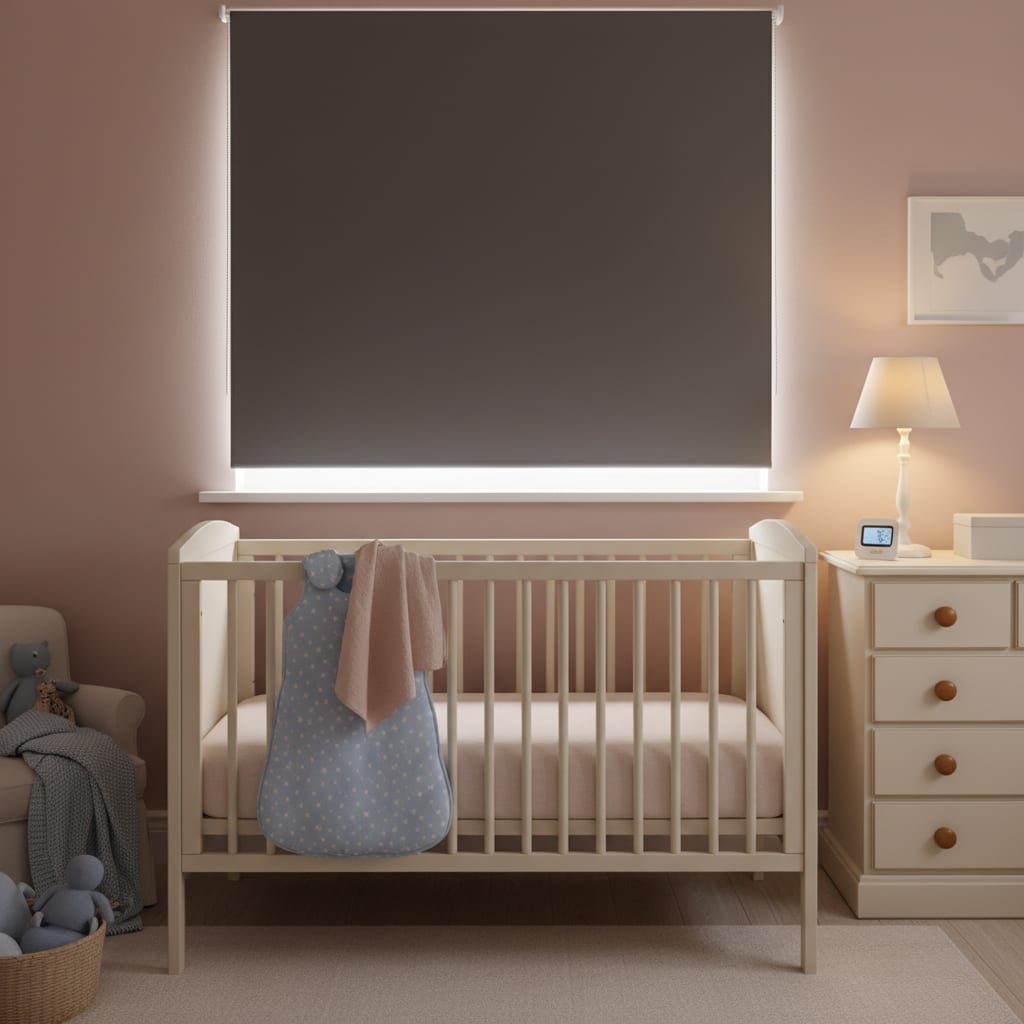
A good sleep room needs three things — properly dark, a steady temperature between roughly 16°C and 20°C, and a bit of boring background noise — and you can get all three for under £30 (~$40) if you shop like a person who has to. Blackout lining pinned behind the curtains you already own, a cheap room thermometer, a sleeping bag in the right tog, and a fan or a free app for sound. That’s it. That’s the whole setup that the four-hundred-pound version is also trying to achieve.
I know how the nursery aisle makes you feel, because I stood in it once with a basket and a growing conviction that I was already failing. So this is the honest list: what actually changes how a baby sleeps, and what is expensive furniture for the internet.
Getting the room properly dark
Darkness is the one that genuinely earns its money, and it’s also the cheapest to fake. British summer evenings are absurdly bright at 7pm and winter mornings arrive through thin curtains at half five, and a room that’s “quite dark” isn’t dark. The test: stand in the room with the door shut in the middle of the day and hold your hand up. If you can see it clearly, it’s a bedroom. If it’s a vague shape, it’s a sleep room.
The ladder, cheapest first:
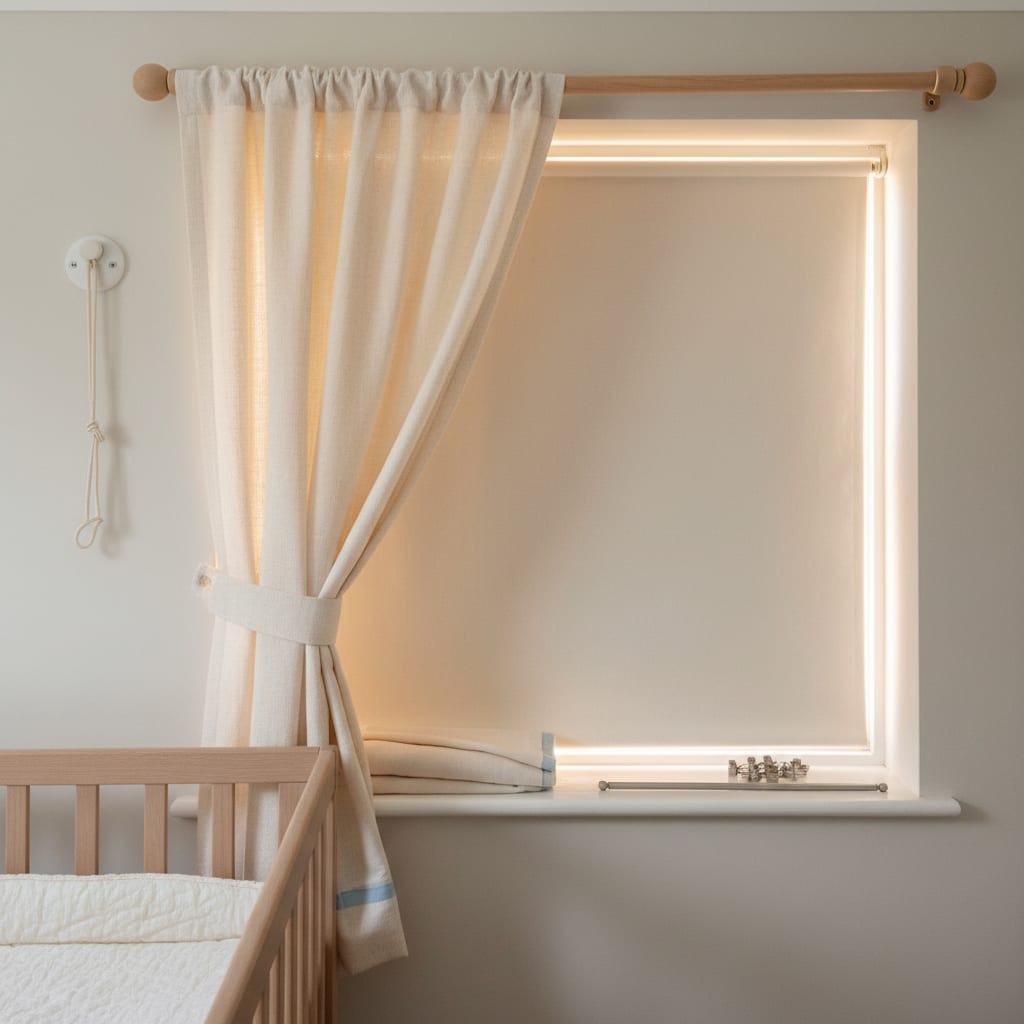
- Blackout lining fabric, cut to size and pinned, clipped or hung behind the curtains you’ve already got. A couple of metres from Dunelm or a market stall does one window. This is the highest-value few pounds in the entire baby-sleep economy.
- A cheap blackout roller blind cut to width — IKEA and the supermarkets both do them for well under £20 (~$26). Fit it inside the recess and the light leak around the edges halves.
- A portable suction-cup blackout blind like the Gro Anywhere blind from Tommee Tippee if you’re renting and can’t drill, or if you need something that packs into a suitcase for nights at your mum’s.
- The genuinely free version: cardboard cut to the window recess, or foil taped to the glass. It looks like a student flat and works better than everything above it.
Two safety notes that override all of it: nothing with a cord goes near the cot, and nothing should be able to fall into it. For which approaches genuinely block light rather than just dimming it, Betteroo’s guide to what makes a room dark enough is a sanity check before you spend.
Temperature — and why “warm” is the wrong word
This is where money and safety intersect, and where the advice gets misunderstood. A baby’s room should be cool-ish and stable, not warm: somewhere around 16–20°C is the range The Lullaby Trust advises, and overheating carries real risk. So the goal isn’t a hot room. It’s a room that doesn’t swing ten degrees between midnight and five o’clock.
Which is excellent news for your gas bill, because holding a room steady is much cheaper than heating it.
- Buy the thermometer. It’s the only bit of kit I’d insist on, and it costs a few pounds. You cannot guess room temperature accurately — I certainly couldn’t — and once you can see the number you stop over-dressing the baby out of anxiety. A simple digital one is fine; the colour-changing egg types are just a friendlier display of the same information. Betteroo’s rundown of the right room temperature for sleep explains the ranges and how to dress for each one.
- Dress the baby, not the room. A sleeping bag in the correct tog for the temperature is far cheaper than heating a whole flat overnight, and it can’t be kicked off at 3am like a blanket. Supermarket baby events and the big discounters do perfectly good ones; second-hand is fine too as long as the zips work.
- Stop the draughts before you add heat. A draught excluder at the door, thermal-lined curtains closed at dusk, and a rolled towel along a rattly sash window will do more for a cold room than an hour of the heating. Thermal curtain lining, usefully, is the same purchase as your blackout.
- Pre-warm, then remove. A hot water bottle in the cot for twenty minutes before bedtime takes the chill off the mattress. It comes out before the baby goes in. Always.
- Don’t run a heater in there overnight. Expensive, drying, and the fastest route to an overheated room.
Background noise, free or nearly
Steady, boring sound covers the door slamming downstairs, the neighbour’s telly and your own creaking floorboards. In a flat, this is often the single thing standing between you and a 10pm wake-up.
The free version is a white-noise track on your phone through any old speaker, or the fan you already own pointed at the wall rather than the cot. The step up, if the phone-in-the-room thing drives you mad, is a dedicated machine — the Yogasleep Dohm is the one that’s been around long enough to have earned its reputation, since it makes a mechanical fan sound rather than a looped recording. Either way: keep the volume at conversation level or below, and put it across the room, not against the cot.
What I’d skip
Balanced answer, because I’ve bought some of these. A cot-side sleep-tech gadget, a premium mattress upgrade, a projector nightlight, blackout curtains sold specifically as nursery blackout at triple the price of identical ones from the home department — none of these changed a single night here. The same logic applies as it does to grown-up bedding: as I found working out whether expensive pillows are worth it, you get real gains up to a low price point and then you’re paying for marketing.
If you have £30 to spend, spend it in this order: blackout first, thermometer second, sleeping bag third, sound last.
When the room isn’t the problem
Here’s the bit the shopping lists leave out. A perfect room fixes environmental wake-ups — light, cold, noise. It doesn’t fix a wake-up that’s really about the timing of naps, an age-related regression, or a bedtime that’s drifted an hour late. If you’ve done the dark-and-steady setup and nothing has changed, the next thing to look at is the schedule, not another purchase.
That’s the point at which a proper plan beats another gadget. Betteroo’s free sleep quiz takes a few minutes and gives you an age-appropriate starting point, which is a lot cheaper than the consultant I couldn’t afford when I was in the thick of it — and I say that as someone who has written honestly about doing baby sleep solo and the bedtime routine with nobody to tap in.
FAQ
Do blackout blinds actually help babies sleep?
For most babies, yes — particularly for early-morning waking in summer and for daytime naps. Light is the strongest signal the body clock has, and a 5am sunrise through thin curtains is a genuine cause of a 5am baby. It’s not magic and it won’t fix a scheduling problem, but it’s the cheapest environmental change with a real effect.
What temperature should a baby’s room be?
Around 16–20°C is the range advised for safer sleep in the UK, with the important part being that the room stays steady rather than hitting a target exactly. Buy a cheap thermometer rather than guessing, and adjust what the baby wears rather than cranking the heating — overheating is the risk to avoid, not being slightly cool.
Can I make a room dark without buying anything?
Yes. Cardboard cut to the window recess, foil taped to the glass, or a thick dark blanket clipped over the curtain pole all work, and all work better than most shop-bought “blackout” curtains. They look terrible, they cost nothing, and the baby has no opinion on interior design.
Is a white noise machine worth the money?
Only if the free version is failing you — and the free version is a phone app or a fan. A dedicated machine is worth it mainly for convenience: your phone stays with you, the volume can’t be knocked, and it doesn’t stop when a call comes in. Keep it quiet and away from the cot whichever you use.