After-School Snacks That Stop the 4pm Meltdown
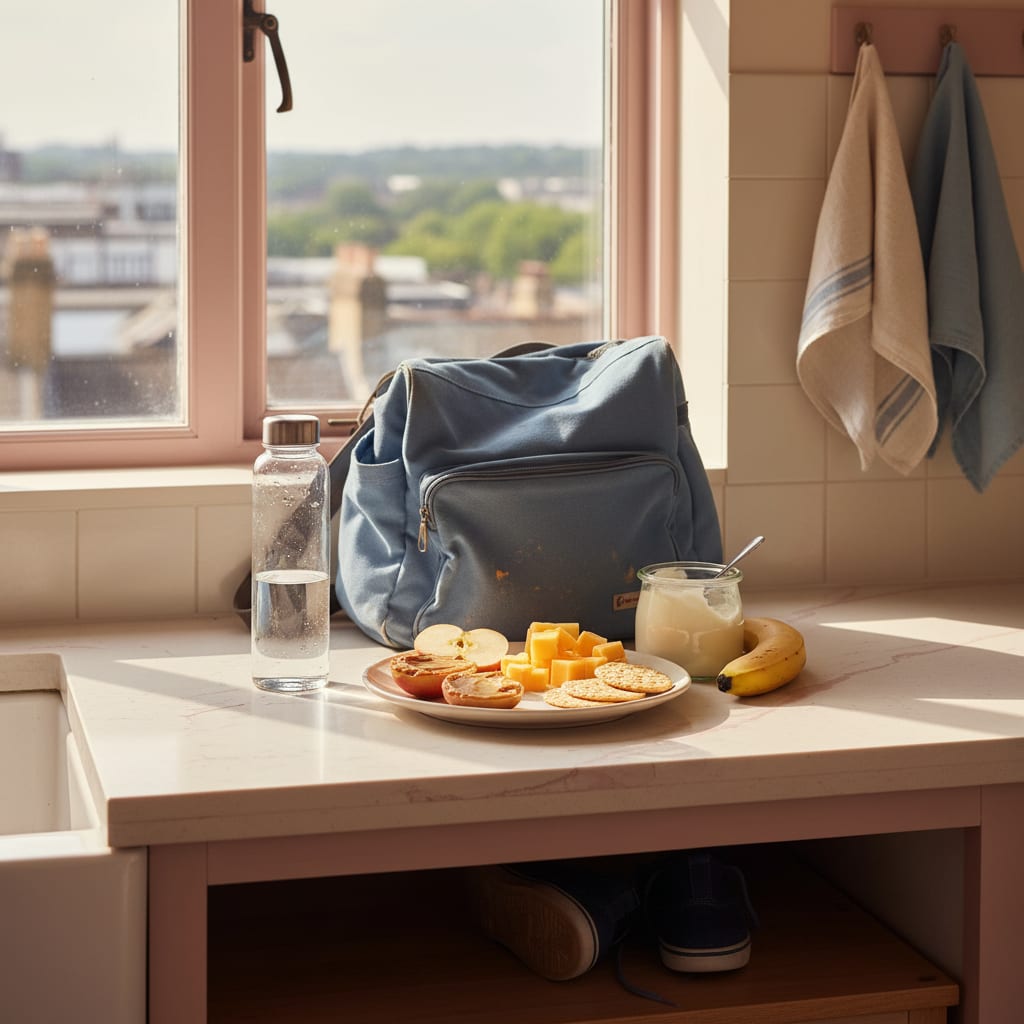
The after-school snack that actually works has three things in it: something with protein or fat, something with slow carbs, and something they’ll eat without negotiation. Cheese and crackers, toast with peanut butter, yoghurt with a banana, hummus and pitta. A snack that’s purely sugar buys you fifteen good minutes and then a worse meltdown than the one you were trying to prevent — which is a lesson I learnt the expensive way, in a supermarket, in front of an audience.
Because the 4pm collapse isn’t naughtiness. It’s a child who ate lunch at half twelve in a loud hall, ran around for six hours, held themselves together all day for other adults, and has now reached the person they feel safest falling apart in front of. Congratulations, that’s you. Food fixes about eighty per cent of it.
Why the 4pm meltdown happens
Three things stack up at once. They’re genuinely hungry — school lunch is early and often half-eaten. They’re depleted — a day of concentrating, queuing, sharing and behaving is enormous work for a small person. And they’re finally safe, which is when the mask comes off.
That last one matters, because it stops you taking it personally. The child who was “absolutely fine all day” and is now screaming about a sock hasn’t had a personality transplant. They’ve run out, and you’re the safe place to run out at. So the job of the snack isn’t nutrition admin — it’s a landing pad: food, quiet, no questions for ten minutes.
The formula that works
Same principle as the packed lunch formula that ended our lunchbox wars — a structure beats a menu, because a structure survives contact with a tired child.
Protein or fat + slow carb + something safe.
- Protein or fat keeps them full past the wobble: cheese, yoghurt, peanut butter, hummus, boiled egg, a slice of ham.
- Slow carbs give steady energy instead of a spike: oatcakes, wholemeal toast, pitta, a plain scone, crumpets, rice cakes with something on top.
- Something safe means at least one element they always eat, so the snack never becomes a negotiation at the exact moment nobody has the resources for one.
Sugar-only snacks — a biscuit and a squash — are the classic trap. They lift and drop inside half an hour, and the drop lands right when you’re trying to cook.
20 after-school snacks that get eaten
Ready in under two minutes
- Cheese cubes and crackers
- Yoghurt and a banana
- Apple slices with peanut butter
- Hummus with pitta strips and cucumber
- A boiled egg with a bit of salt (batch six on Sunday, they keep all week)
- Oatcakes with cream cheese
- A handful of grapes and a small cube of cheddar
- Breadsticks and a soft cheese triangle
- Malt loaf with butter
- Rice cakes with mashed banana
Worth the toaster
- Crumpets with butter
- Cheese on toast, cut into fingers
- Beans on toast (a full early tea on the days that need it)
- Toasted teacake
- Pitta pizza — pitta, a spoon of passata, grated cheese, five minutes under the grill
Made ahead
- Flapjack, cut small
- Banana muffins made with whatever’s gone brown in the bowl
- Cheese scones, frozen in ones and defrosted at pick-up
- Overnight oats in a small jar
- A picky-tea plate — a few bits from the fridge on one board, which is the picky tea idea scaled down to snack size and works brilliantly on the days dinner will be late
The pick-up box
The single change that made the most difference here was moving the snack out of the kitchen and into my bag. A hungry child at the school gate is a different proposition to a hungry child twenty-five minutes later at home, and those twenty-five minutes are where most of the shouting used to live.
So: a small tub, packed in the morning, in my bag every day. Usually a cheese portion, crackers or breadsticks, and a piece of fruit — plus a water bottle, because half of what looks like hunger at 3.15pm is thirst. Hand it over without commentary. No “how was your day?” until they’ve eaten; asking before food is how you get “fine” and a slammed door.
Doing it on a budget
After-school snacks are a place where costs creep quietly, because individually wrapped anything carries a convenience premium and you’re buying it five days a week, thirty-nine weeks a year. Small numbers, big total.
The swaps that save real money without anyone noticing:
- Buy the big yoghurt pot and decant into a small tub. Individual pots cost multiples of the same yoghurt in a big pot.
- Block cheese, not cheese portions. Cut a week’s worth on Sunday into a tub.
- Own-brand crackers, oatcakes and rice cakes. No child has ever detected the difference in a cracker with cheese on it.
- Bake one thing a week. A tray of flapjack or a batch of banana muffins costs pennies a portion against shop-bought cereal bars, and it uses up the fruit that was heading for the bin. Freeze half.
- Fruit in season, loose. Loose fruit is usually cheaper than packs, and you buy the amount you’ll actually use rather than the amount that’ll go soft.
- Cook the snack with the dinner. If you’re already batch cooking on a Sunday, an extra tray of something snackable takes ten minutes and covers the week.
A week of home-packed snacks for two children can sit comfortably around £5 (~$6.50); a week of wrapped bars, individual pots and pouches can be double that. Same food, different packaging, different price.
When the snack isn’t the problem
Sometimes you do everything right and it still goes sideways. When that happens:
- Move dinner earlier. On the really depleted days we skip the snack-then-dinner sequence entirely and eat at half four. Beans on toast at 4.30pm ends the day two hours of misery earlier.
- Give them quiet, not activities. No clubs, no questions, no screens with adverts in them. Twenty minutes of nothing does more than any snack.
- Expect Fridays to be worst. A whole week of holding it together comes due. Plan the easiest food of the week for Friday and stop being surprised by it.
- Feed yourself too. Solo, there’s no one to hand over to at the worst hour of the day, and doing the tea-time shift on low blood sugar makes you a worse version of yourself. Eat the crackers. There’s no medal.
FAQ
What are the best after-school snacks for kids?
Ones that pair protein or fat with a slow carbohydrate: cheese and crackers, toast with peanut butter, yoghurt with fruit, hummus with pitta. They fill the gap until dinner without the sugar spike and crash that makes the late afternoon worse.
What time should kids have an after-school snack?
As soon as possible after pick-up — at the gate is better than at home if the journey is more than about ten minutes. If dinner is more than a couple of hours away, keep the snack substantial. If dinner is close, keep it small, or skip it and simply serve dinner earlier.
Will an after-school snack ruin their dinner?
Not if it’s the right size and shape. A protein-and-carb snack takes the edge off without filling them up; a large sugary one or a snack eaten at half five will. If you’re consistently seeing untouched dinners, shrink the snack or move the mealtime rather than dropping it — a starving child at the table is not an easier child at the table.
How do I stop the after-school meltdown?
Food first, quiet second, questions last. Have a snack ready at the gate, keep the first twenty minutes low-demand, and save the how-was-your-day conversation until after they’ve eaten. Most of the 4pm meltdown is hunger plus the relief of finally being somewhere safe enough to let go.
What are cheap after-school snacks?
Toast with peanut butter, crumpets, cheese cut from a block with own-brand crackers, yoghurt decanted from a big pot, home-baked flapjack and banana muffins, and loose seasonal fruit. Avoiding individually wrapped snacks is the biggest single saving — it’s the same food at a packaging premium, bought five days a week.