Leftover Gammon Recipes That Aren't Sandwiches
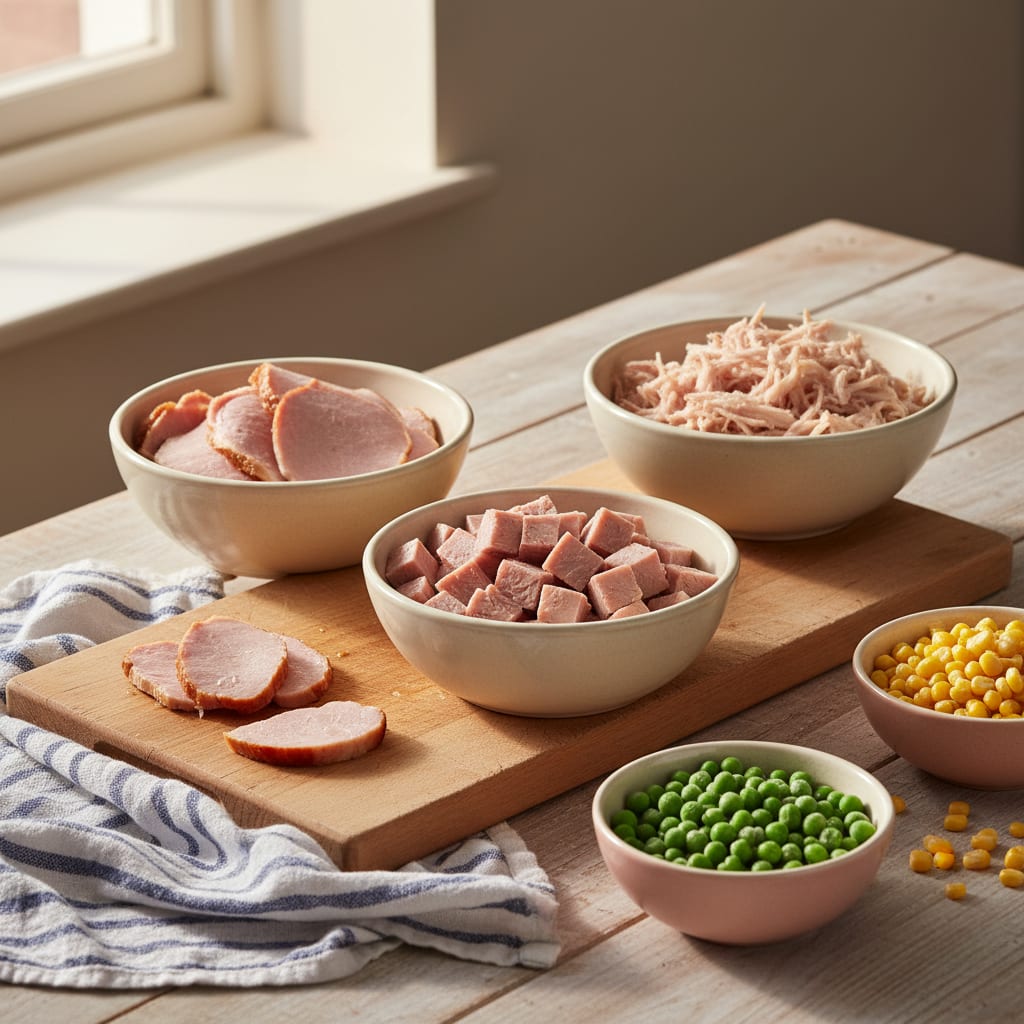
The best leftover gammon recipes are the ones that use it as a salty seasoning rather than the main event: creamy pasta, a fried hash, sweetcorn fritters, a bean stew, egg-fried rice or a leek-and-potato bake. Strip the joint while it is still warm, split it into slices, cubes and shreds, and get it in the fridge within two hours. Food Standards Agency guidance is to eat leftovers within 48 hours or freeze them — and gammon freezes very well, which is what turns one joint into three dinners.
A gammon joint is one of the few big lumps of meat still genuinely cheap, usually somewhere around £6–£10 (~$8–$13) for about a kilo, and I buy one specifically because of what happens afterwards.
Strip it into three shapes, not one lump
This is the whole trick and it takes five minutes. While the joint is still warm and soft, break it down into three separate tubs:
- Slices — the neat outside cuts. These are for eating cold and for anything where gammon is the point.
- Cubes — roughly 1cm, from the middle. These go in pasta, rice, stew and bake.
- Shreds and scraps — everything ragged, plus whatever you pick off the bone or the fat. This is the flavour bomb and it is the most useful tub of the three.
Store them separately, label them or don’t (I don’t), and you have already decided what this week’s dinners look like. A single lump shoved in a bag in the fridge becomes a chore. Three tubs become a plan, which is the same logic behind the whole family meal plan on a budget.
Six dinners from one joint
1. Creamy gammon and pea pasta. Soften an onion, add cubed gammon and frozen peas, splash in cream or crème fraîche (or a spoon of cream cheese loosened with pasta water), stir through pasta. Fifteen minutes, one pan, and reliably the most-eaten thing on this list in my house.
2. Gammon hash. Cubed gammon fried hard with leftover roast potatoes until both have crisp edges, then a fried egg on top. If you have mash rather than roasties, press it into a pan with the gammon and let it form a crust — the same principle as the potato cakes in leftover mashed potato recipes.
3. Gammon and sweetcorn fritters. Shredded gammon, tinned sweetcorn, an egg, a couple of spoons of flour, a splash of milk. Fry in blobs. Small children eat these without negotiation, and they are excellent cold in a lunchbox the next day.
4. Store-cupboard bean stew. Gammon scraps, a tin of chopped tomatoes, a tin of cannellini or butter beans, whatever soft veg needs using. Twenty minutes on the hob, bread on the side. This is the dinner for the day before payday and it does not taste like it.
5. Egg-fried rice. Cold cooked rice, cubed gammon, peas, sweetcorn, an egg stirred through at the end. A fakeaway that costs pennies and lands faster than a delivery app can load.
6. Leek and potato gammon bake. Sliced potatoes, softened leeks, gammon cubes, a cheese sauce, in the oven until the top browns. The one that feels like a Sunday, so it is a good use of the tail end of the joint.
Two things every one of these has in common: the gammon goes in already cooked and only needs heating through, and none of them need added salt.
Watch the salt, especially for small ones
Gammon is cured, which means salty by design. NHS guidance sets the daily maximum at no more than 2g of salt for 1 to 3 year olds and 3g for 4 to 6 year olds, and it lists cured meats among the foods to eat “less often or in small amounts”.
That does not mean gammon is off the menu — it means treat it as the seasoning. A handful of cubes stirred through a pan of pasta and veg for four is a completely different proposition from a plate of sliced gammon as the main protein. Every recipe above is built that way on purpose, and none of them ask you to add salt at any stage.
If your joint came in a very salty brine, soaking or simmering it before roasting draws some of it out. Once it is cooked, though, the salt is in — so the fix is portion size and what you serve alongside it, not anything you can do to the meat.
How long it keeps, and freezing it properly
The rules are short and worth following exactly:
- Cool it fast. FSA guidance is that leftovers should be cooled and in the fridge within two hours. Carving it up into small pieces makes it cool faster, which is a second reason to do the three-tub thing straight away.
- Eat within 48 hours in the fridge, or freeze it. That is the government’s leftovers guidance and it applies to a gammon joint like anything else.
- Reheat once only, and until steaming hot throughout. Not warm — steaming. Repeated reheating is where the risk lives.
- Freeze in dinner-sized portions, not one block. A bag of 200g of cubes is a meal you can grab; a frozen brick is a meal you will not bother defrosting.
Frozen portions go straight into the pasta, the rice or the stew from frozen if you are heating them thoroughly anyway. The fritters are the exception — those want the gammon defrosted so the batter holds together.
Why a gammon joint is good single-mum maths
Roughly a kilo of gammon, cooked once, gives me: one dinner as the roast itself, two or three dinners from the cubes and shreds, a couple of lunchbox portions, and a bag in the freezer. Per-portion that is well under what a pack of chicken breasts costs, and unlike chicken it does not need to be the star of anything.
It is the same shape as the argument for a roast dinner on a budget and for leftover roast chicken: the expensive part of the week is buying protein five separate times. Buying it once and being organised about the aftermath is where the money actually is — and nobody at my table has ever once said “this is leftovers again”, because a fritter does not look like a joint of meat.
FAQ
How long does leftover gammon last in the fridge?
Cool it and get it in the fridge within two hours of cooking, then eat it within 48 hours — that is the Food Standards Agency’s guidance for leftovers generally. If you know you will not use it in that time, freeze it instead of pushing your luck.
Can you freeze cooked gammon?
Yes, and it freezes well. Freeze it in meal-sized portions rather than one lump so you can take out exactly what a dinner needs. Cubes and shreds freeze better than thin slices, which can go a bit watery on defrosting.
What can I do with leftover gammon that isn’t sandwiches?
Use it as a salty seasoning in something else: creamy pasta with peas, a fried hash with leftover potatoes and an egg, sweetcorn fritters, a tomato-and-bean stew, egg-fried rice, or a leek and potato bake. All six heat the gammon through rather than cooking it again.
Is gammon too salty for toddlers?
It is a cured meat, so it is salty, and NHS guidance is no more than 2g of salt a day for 1 to 3 year olds. That makes it a small-amounts food rather than a banned one — a few cubes stirred through a pan of pasta and vegetables is fine, a plate of sliced gammon as the main protein is not the way to serve it.
Do you need to add salt to leftover gammon recipes?
No, and you should not. The gammon brings enough for the whole dish. Season with pepper, mustard, herbs or a squeeze of lemon instead, and taste before you reach for anything else.
Can you reheat gammon twice?
No. Reheat leftovers once only, and heat them until steaming hot all the way through. If you have a portion you know you will not finish, take out what you need and leave the rest in the fridge rather than heating the whole lot.