Tinned Potatoes in the Air Fryer (Yes, Really)
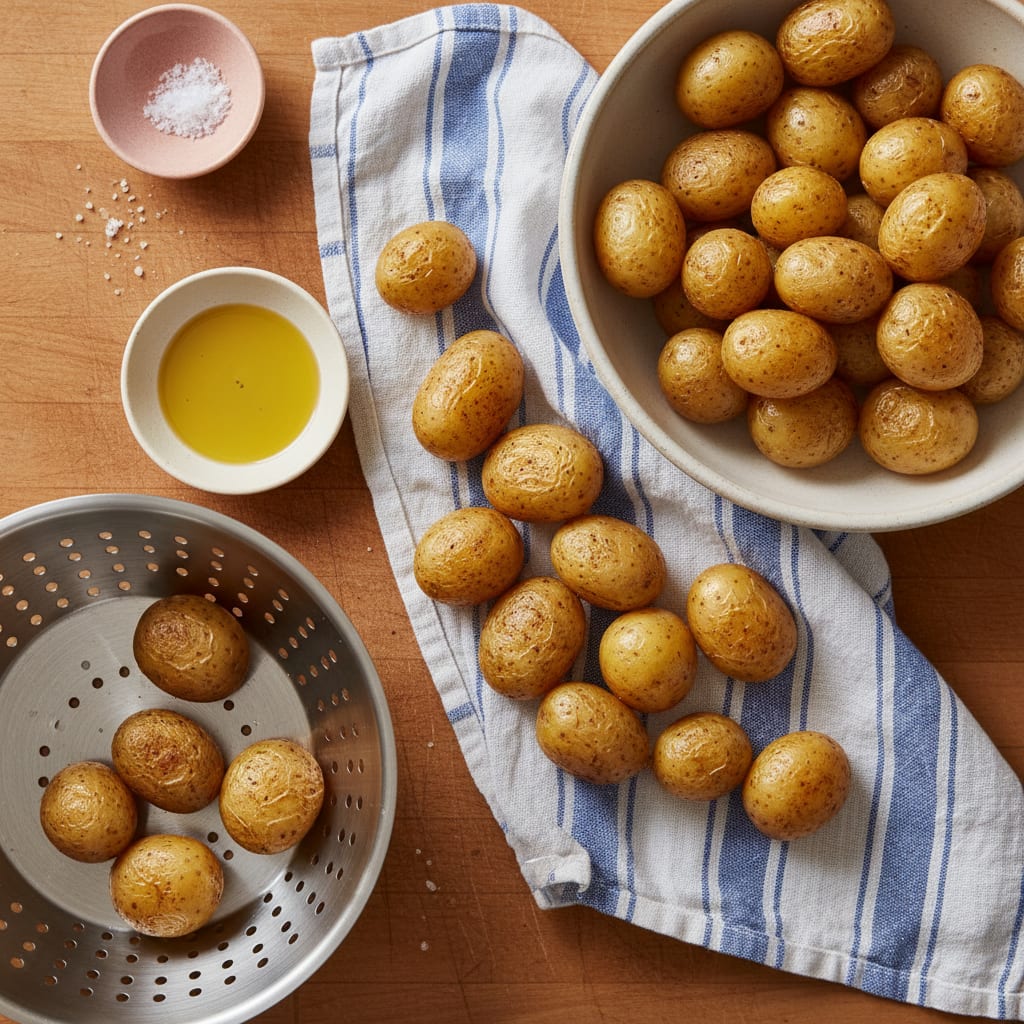
Drain a tin of small potatoes, pat them completely dry, toss them in a little oil and air fry at around 190°C for 20 to 25 minutes, shaking the basket a couple of times, until the outsides are properly crisp. They come out somewhere between a roast potato and a chip — golden and craggy outside, soft inside — and they take no peeling, no parboiling and no thinking. For a store-cupboard tin that usually costs somewhere around 50p to £1 (~$0.65–$1.30), that is the best return on effort in my kitchen.
I resisted this for ages because tinned potatoes have a reputation, and the reputation is earned if you eat them the way they come out of the tin: pale, damp and slightly squeaky. Everything that is wrong with them is a surface problem. The air fryer fixes surfaces for a living.
Why they live in my cupboard
I keep two or three tins in permanently, alongside the tinned tomatoes and the pasta, because they solve the specific problem of a Tuesday when the fresh potatoes have gone green in the bag and nobody has been to a shop. They keep for years, they are already cooked, and they go from cupboard to plate in under half an hour with no prep at all.
That makes them a proper safety net rather than a treat, which is why they earn their shelf space in my family meal plan on a budget. A fresh bag of potatoes is cheaper per kilo, no argument — but a bag you throw away is not cheap at all, and a tin never sprouts.
The method
- Open and drain. Tip the tin into a sieve and let the brine run off properly. Give it thirty seconds; it is wetter than it looks.
- Rinse, then dry. A quick rinse under the cold tap takes off the salty water they have been sitting in. Then tip them onto a clean tea towel or kitchen paper and pat them dry — really dry, all over.
- Oil, lightly. About a teaspoon of oil for a tin is plenty. Toss them in a bowl so every one gets a thin coat rather than pouring oil into the basket.
- Season. Salt, pepper, and if the audience allows it, garlic granules, smoked paprika or dried rosemary.
- Single layer. Spread them out in the basket with gaps. Two tins stacked on top of each other will steam.
- Around 190°C for 20 to 25 minutes, shaking the basket two or three times, until they are deep golden and the outsides sound hollow when you tap them. Liana’s Kitchen, a UK air fryer site, gives the same 190°C for 20 to 25 minutes and the same drain-and-pat-dry start, which matched what I got at home.
Machines vary enormously, so treat that as a starting point and look at them at the twenty-minute mark rather than trusting a timer. A small basket model with a full load will want the longer end; a big flatbed oven-style one is usually done sooner.
The drying step is the whole recipe
If you take one thing away, take this. Tinned potatoes are packed in water. Water on the surface has to boil off before anything can brown, and while it is boiling off the potato is steaming, not roasting. That is the squeaky-pale-potato experience in one sentence.
Pat them properly dry and you skip that entire phase — the hot air goes straight to work on the starch and you get a crust. It is exactly the same principle behind why air fryer chips want a dry surface before they go in, and why leftover roast potatoes need a hot dry pan rather than a gentle reheat.
A second, smaller trick: once they are dry, press each one gently with the back of a spoon so it cracks slightly. More surface area, more crust. It takes a minute and it makes them look homemade rather than tinned, which matters more than I would like to admit when a child is deciding whether to trust a plate.
The salt bit, honestly
Tinned potatoes sit in brine, so they arrive already salted. That is fine for adults and worth a thought for small children, whose limits are genuinely low: the NHS says no more than 2g of salt a day for ages 1 to 3, 3g for ages 4 to 6, 5g for ages 7 to 10 and 6g from 11 upwards, which is about a level teaspoon.
So rinse them, and hold back on adding more salt until you have tasted one. Herbs, paprika and garlic granules carry flavour without adding to that total, which is a useful habit anyway.
What to put them with
- Sausages and beans. The obvious one, and the reason the tin gets opened in the first place.
- Under a roast. They will not out-crisp a proper tray of roasties, but on a weeknight version of a roast dinner on a budget nobody is measuring.
- Breakfast-for-tea. Crisped potatoes, fried eggs, a tin of beans. Costs pennies and gets eaten.
- Smashed, with cheese. Crack them, air fry, then scatter grated cheese over for the last two minutes so it goes lacy and brown. This is the version my fussy one asks for by name.
- Cold, in a lunchbox. They are firm enough to survive being sliced into a potato salad the next day.
Are they as good as fresh?
No, and I would not pretend otherwise. A properly parboiled, roughed-up, hot-fat roast potato is a different food. Tinned ones are smaller, denser and slightly waxier, so you get a thinner crust and less of that floury inside.
What they are is good enough on a Tuesday, which is a category I have a lot of respect for. Nobody in my house has ever asked what kind of potato it was, and that is the only review that counts.
FAQ
Do you need to boil tinned potatoes first? No. They are cooked and canned, so the air fryer is only browning them. That is why the time is about crust, not about cooking through.
Can you cook them from the tin without oil? You can, and they will dry out and firm up, but they will not really brown or crisp. A teaspoon of oil is what makes the difference, and it is a teaspoon across a whole tin.
Should you rinse tinned potatoes? Yes, briefly. It takes off the brine, which improves both the taste and the salt content, and then you pat them dry — the rinse is only useful if the drying happens straight after.
What temperature is best for tinned potatoes in the air fryer? Around 190°C works well. Hotter and the outsides colour before the insides have warmed through; much cooler and you are back to steaming them.
Can you cook a whole tin at once? Only if it fits in a single layer with gaps. If your basket is small, do it in two goes and keep the first lot warm — crowding the basket is the second most common reason these come out disappointing, after not drying them.