Easy Fairy Cakes Recipe (Just Like the School Fair)
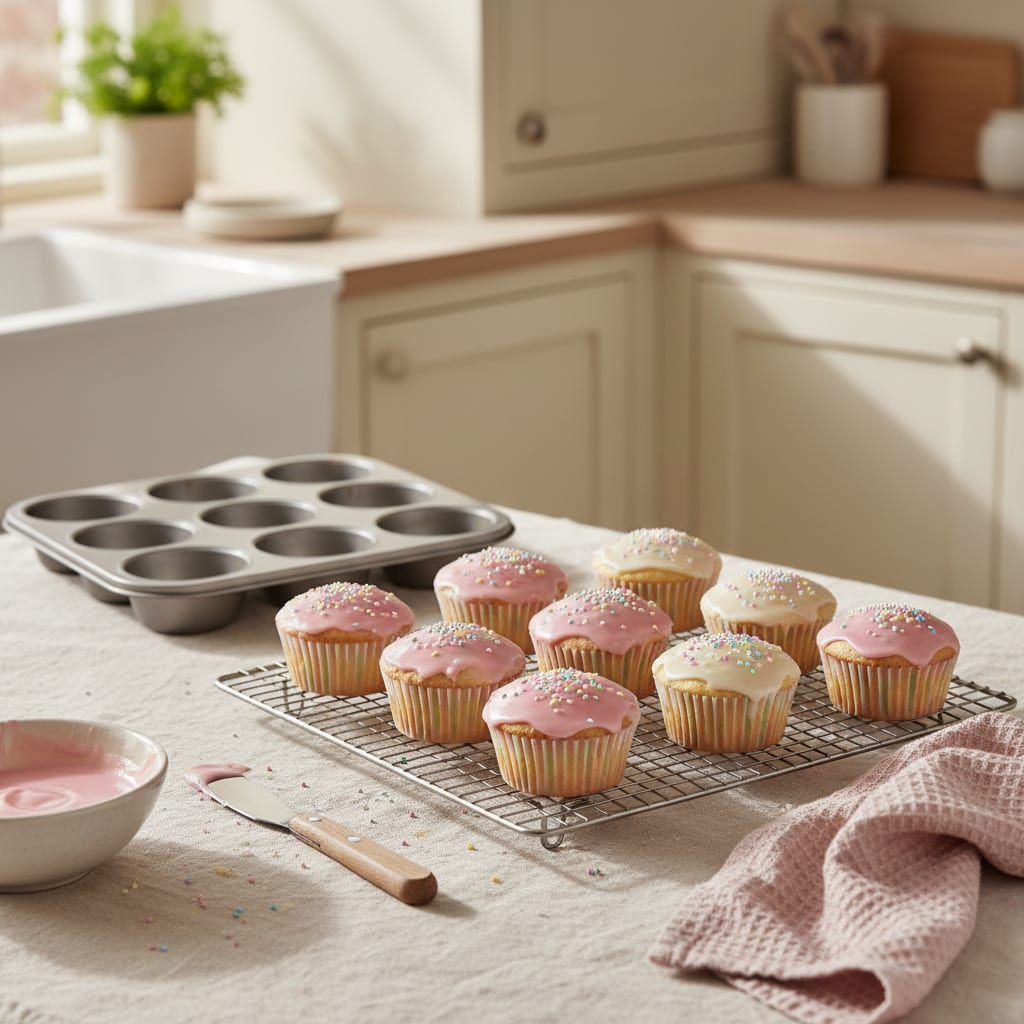
The classic fairy cake recipe is equal weights: 110g soft butter, 110g caster sugar, 110g self-raising flour and 2 medium eggs, beaten together all at once and baked at 180°C (160°C fan) for 12–15 minutes. That makes 12 cakes in paper cases, and the whole thing takes about 25 minutes including the baking. Ice them with icing sugar and water, add sprinkles, accept that half of them will be eaten before they’ve cooled.
Fairy cakes, not cupcakes. Smaller, lighter, a proper thin layer of icing rather than a buttercream turret — this is the school-fair, birthday-party, rainy-Tuesday bake that every British person over thirty has a muscle memory for. It is also the cheapest thing you can put on a cake stall table, which is why it appears in this house roughly every fortnight.
The recipe (makes 12)
You need: 110g soft butter or baking spread · 110g caster sugar · 110g self-raising flour · 2 medium eggs · 1 tsp vanilla extract (optional) · 12 paper cases.
- Heat the oven to 180°C / 160°C fan / gas 4 and line a bun tin with 12 cases.
- Put everything in one bowl — butter, sugar, flour, eggs, vanilla — and beat for about two minutes until smooth and pale. This is the all-in-one method and it is why this recipe is foolproof: no creaming stage to get wrong, no folding to overdo. An electric whisk takes a minute; a wooden spoon takes three and counts as exercise.
- Divide between the cases — roughly two teaspoons each, filling them about two-thirds. Resist filling them fuller. Overfilled cases give you mushroom tops that won’t ice neatly.
- Bake 12–15 minutes until risen, golden and springy when you press the top. A skewer should come out clean. Small cakes go from perfect to dry fast, so start checking at 12.
- Cool on a rack before icing. Ice a warm cake and you get translucent syrup running down the sides — an important lesson I have re-learnt several times.
The butter must be genuinely soft. Fridge-cold butter is the single most common reason an all-in-one sponge comes out dense. Twenty seconds in the microwave on a low setting, or cubed and left on the side while the oven heats.
The icing
Water icing, not buttercream — that’s what makes them fairy cakes. Sift roughly 150g icing sugar into a bowl and add cold water a teaspoon at a time, stirring, until it’s thick enough to coat the back of a spoon and slowly drop off it. It will look far too thick and then suddenly, one drop later, be far too runny; go slowly. Add a drop of food colouring if you want, spoon onto the cooled cakes, and add sprinkles immediately — icing skins over faster than you’d think.
Two upgrades worth knowing. Butterfly cakes: cut a shallow circle out of the top of each cooled cake, halve that disc, pipe or spoon a little buttercream or jam into the hole and stick the two halves in like wings. Same cake, ten times the drama, and it’s the version that makes small children gasp. Lemon: swap the vanilla for the zest of a lemon and mix the icing with lemon juice instead of water. This is the one the adults quietly finish off.
What it costs
The all-in-one four ingredients are storecupboard staples, and a batch of 12 comes in somewhere around 60–80p (~$0.80–$1.05) with own-brand ingredients — cases included. Compared to a supermarket pack of iced buns, or the eye-watering price of a coffee-shop cupcake, it’s not close. This is the same logic that runs through our budget meal planning: the things that feel like a treat are usually the cheapest ones to make, and the expensive stuff is mostly packaging.
Two genuine money notes. Baking spread works perfectly here and is cheaper than butter — you lose a little flavour and gain a slightly lighter crumb, and nobody at the school fair has ever detected it. And buy paper cases from the pound shop rather than the baking aisle, where the identical item somehow costs three times as much.
Why yours came out wrong
- Flat and dense: butter too cold, or the mixture under-beaten. Beat until it’s noticeably paler and lighter.
- Peaked and cracked: oven too hot, or too much mixture per case. Drop the temperature 10°C and fill only two-thirds.
- Dry: overbaked. Twelve minutes is often enough; small cakes are unforgiving.
- Sunk in the middle: oven door opened too early. Leave them alone for the first ten minutes, whatever anyone in the kitchen says.
- Icing slid off: cakes weren’t cold, or the icing was too thin. It should be reluctant to leave the spoon.
Baking this one with the kids
Fairy cakes are the ideal kids’ bake precisely because the all-in-one method removes every stage where technique matters. Mine crack the eggs (some shell is traditional), do the beating in shifts, and take total control of the sprinkles, which is where the artistic vision lives. The only jobs I keep are the oven and the icing consistency.
If you’re stacking up a proper rainy afternoon, these go in the oven while a batch of rice krispie cakes sets in the fridge — two bakes, one washing-up session, and a cake tin that looks like you’ve made an effort. And for the days when nobody wants to eat what they’ve made, the crumble topping is the same rubbing-in-and-waiting rhythm with a pudding at the end of it.
FAQ
What’s the difference between fairy cakes and cupcakes?
Size and topping, mostly. Fairy cakes are smaller, made in bun cases, and finished with a thin layer of water icing and sprinkles. Cupcakes are bigger, usually baked in muffin cases, and topped with a swirl of buttercream. Fairy cakes are the British school-fair original; cupcakes are the American bakery version that arrived later.
Can I make fairy cakes with plain flour?
Yes — add 1½ teaspoons of baking powder to 110g of plain flour and sift them together before mixing. It won’t rise quite as reliably as self-raising, but it works, and it saves a trip to the shop.
How long do fairy cakes keep?
Un-iced, around three days in an airtight tin, and they freeze beautifully for up to three months — I bake a double batch and freeze half un-iced, which turns “we need cakes for tomorrow” into a twenty-minute problem instead of a bakery bill. Iced, eat within a couple of days before the icing softens the sponge.
Why do my cases come away from the cake?
Usually greasy cases from a very soft baking spread, or cakes left to cool in the tin so steam gets trapped underneath. Move them to a rack as soon as they’re cool enough to handle.