Damp and Mould in a Child's Bedroom: What Actually Helps
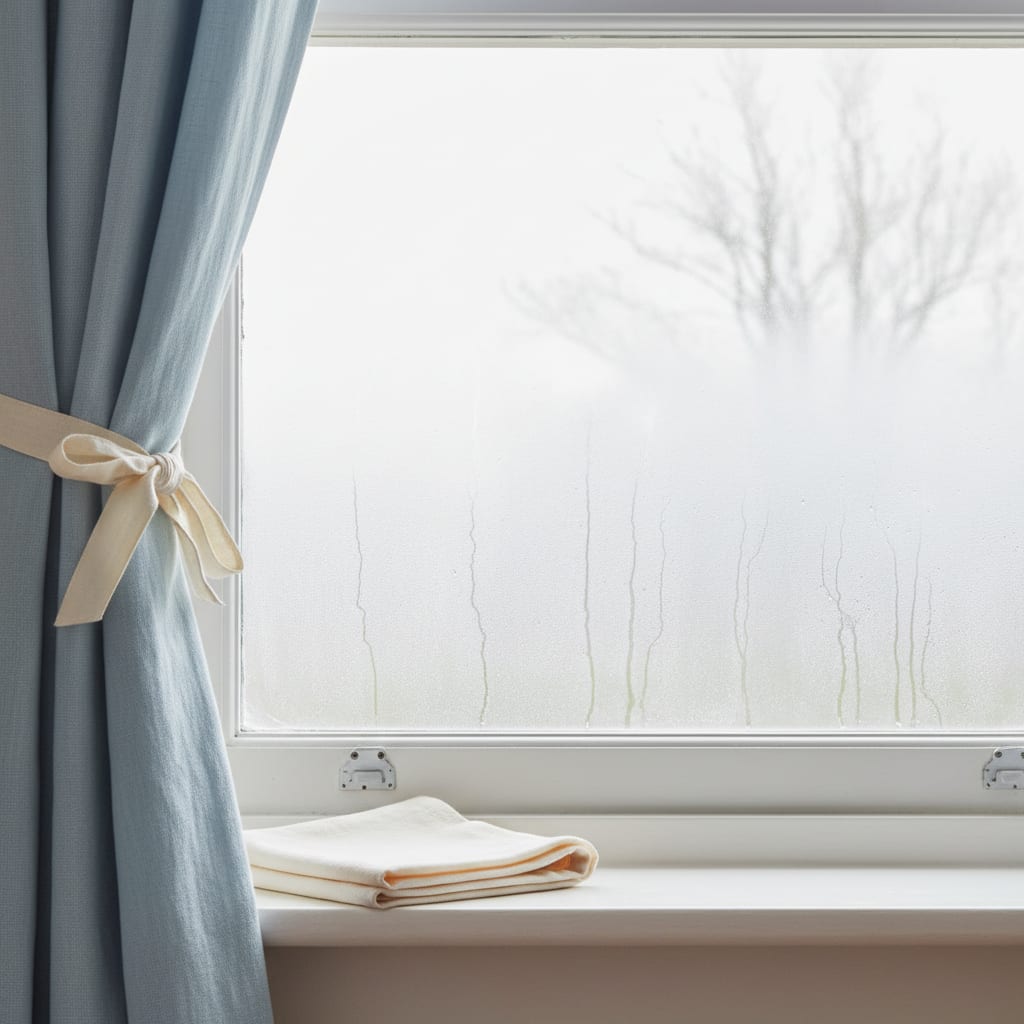
Damp and mould in a child’s bedroom usually start with condensation: warm, wet air from the home settles on the coldest surfaces overnight, like the window, the corners and the wall behind the wardrobe. What helps is a small daily routine. Wipe the windows dry every morning, air the room for a few minutes, keep trickle vents open, pull furniture a little away from outside walls and dry the washing anywhere but that room. Keep the room gently heated rather than cold. Clean off small patches with a mould and mildew product, not bleach. If you rent, report it to your landlord straight away, with photos. Government guidance says it is “totally unreasonable” to blame damp and mould on lifestyle choices. If the black dots are back by mid-November, you’re not a bad housekeeper. You’re in a British home in winter.
Why the bedroom window streams every morning
The government’s guidance on the health risks of damp and mould (updated 1 April 2026; read on 31 October 2026) calls condensation damp “the most common form of damp”. It describes moisture made inside the home that “cools and condenses onto colder parts of the buildings”, and names “window frames, corners and low points on walls behind sofas or wardrobes”.
A child’s bedroom is often the worst: small, door shut, a child breathing in it all night and the radiator turned down to save money.
It matters more for children. The same guidance says children, “whose organs are still developing”, are more likely to suffer respiratory problems from damp and mould.
The two-minute morning routine
Do this before the school run, while the kettle boils:
- Wipe the windows and sills dry. A cloth works; wring it out in the sink, not on the radiator. A window vac like the Kärcher WV 2 Plus N is quicker.
- Air the room. The guidance suggests opening windows “periodically”, or keeping them in “vent position” (partly open but locked) where that’s safe. Five minutes wide open at breakfast changes the air without chilling the room all day.
- Check the trickle vents, the slots along the top of many window frames. The guidance says to keep them “open and free from blockages”.
Stop making the moisture in the first place
The guidance names “showering, drying laundry and cooking” as normal activities. What helps is where that moisture goes:
- Dry washing outside if you can, and never in the child’s room. On a wet week, use one room with the door shut and a window cracked. A dehumidifier there, like the Pro Breeze 12L, pulls the water out of the air. Check the wattage on the listing and run it while the washing dries, not all day.
- Lids on pans, doors shut while cooking or in the shower, extractor fans on. The guidance lists all of these.
- Leave a gap between furniture and outside walls, as the guidance advises. That includes the bed and the wardrobe.
- Don’t dry clothes on a heater. It’s a fire risk too. My heater safety guide has the rules.
Where the cot or bed should go
Move it off the coldest wall. For a baby, the Lullaby Trust’s holiday sleep advice says a cot should be “away from any radiators, windows and or air conditioning”. Its cold weather page says to keep it away from radiators and other heat sources. Usually that means an inside wall.
If the room is bad, move a baby or toddler into your room while it’s sorted. For a baby under six months, the Lullaby Trust already advises sharing your room. Betteroo’s piece on whether a separate room really means better sleep sets out what the research shows, if you’re worried a few weeks back with you will undo anything. In a small flat, my one-bedroom flat sleep guide covers sharing without everyone waking everyone.
Warm enough, without the heating on all night
The guidance says homes that are “insufficiently insulated and heated” get more condensation. A freezing bedroom isn’t the thrifty choice it feels like, but it doesn’t need to be hot either:
- For babies, 16 to 20°C. That’s the Lullaby Trust’s room temperature advice. It says it’s “rarely necessary to keep your heating on all night”. If you do leave it on, keep it low and “certainly no higher than 20⁰C”.
- Put a thermo-hygrometer by the bed. A cheap one like the TempPro TP50 shows the temperature and the humidity, with highs and lows. The guidance lists “consistently high relative humidity” as a sign of damp, so a week of morning readings is useful evidence if you’re reporting it.
Cleaning off a small patch safely
The guidance says most people “could reasonably be expected to remove condensation and very small amounts of mould”. Larger areas “should only be addressed by qualified professionals”. For a small patch:
- Photograph it first, and draw round the edge if you can. The guidance suggests both, to keep a record.
- Take the children out of the room. Shut the bedroom door, but open the window during and after.
- Wear a mask, gloves and goggles. The guidance says this applies “regardless of the extent of mould”.
- Use a mould and mildew product rather than bleach. The guidance prefers them “for health and safety reasons”. Follow the label, and let the surface dry completely.
- Bag the cloth or sponge and bin it, or wash it.
The guidance says mouldy carpets and soft furnishings “may have to be thrown away”. If it comes back within weeks, cleaning was never the fix: “Simply removing surface mould will not prevent the damp and mould from reappearing.”
If you rent: who to tell (England)
Report it straight away, in writing, with photos, and keep a record of when and how. Then:
- Private renters: gov.uk’s private renting repairs page says to contact your landlord “if you think your property needs repairs or has mould”. It says to carry on paying rent while you wait. If repairs aren’t done, the council’s environmental health department “must take action if they think the problems could harm you”.
- Council and housing association tenants: under Awaab’s Law, in force since 27 October 2025 (tenant guidance updated 4 December 2025), significant damp and mould hazards “must be investigated within 10 working days”. Once the investigation is finished, the home must be made safe within 5 working days, and you must get a written summary within 3 working days. If it can’t be made safe in time, your landlord must offer you somewhere else to stay. In temporary accommodation, check: you may have a licence, not a tenancy.
For single parents with shared care: the Awaab’s Law guidance counts “children who stay in your home, even if they are not there every night”, so tell your landlord about every child who sleeps there. You “don’t need to give evidence from your doctor” either.
Scotland, Wales and Northern Ireland have their own rules, so check your own nation’s guidance.
When to talk to a GP
If your child has a cough, wheeze or a cold that never clears, especially with asthma, talk to your GP or call NHS 111 and mention the mould. Landlords “should not delay action to await medical evidence”, so report it at the same time.
 Moved the cot and lost the routine?
If a room swap this winter has knocked your baby or toddler's sleep off course, Betteroo builds a gentle plan for their age that you can run on your own.
Take the 2-minute sleep quiz →
FAQ
Is condensation on my child’s bedroom window dangerous?
Condensation is just water, but government guidance says that over time it “can lead to damp and mould growth”, which children are more vulnerable to. Wipe it daily and deal with the causes.
Should I use bleach on mould in a child’s bedroom?
Government guidance says mould and mildew products “should be used in preference to bleach, for health and safety reasons”. Wear a mask, gloves and goggles, keep the children out and open the window. Large areas need a professional.
What temperature should a baby’s bedroom be in winter?
The Lullaby Trust recommends 16 to 20°C and says heating rarely needs to be on all night. It suggests a room thermometer, because temperature is hard to guess.
Is mould in a rented flat my fault?
Government guidance says it is “totally unreasonable” to blame damp and mould on lifestyle choices. It says the root causes are building problems, poor ventilation, inadequate heating or poor energy efficiency. Report it to your landlord in writing.