Fireworks and Baby Sleep: Getting Through Bonfire Night
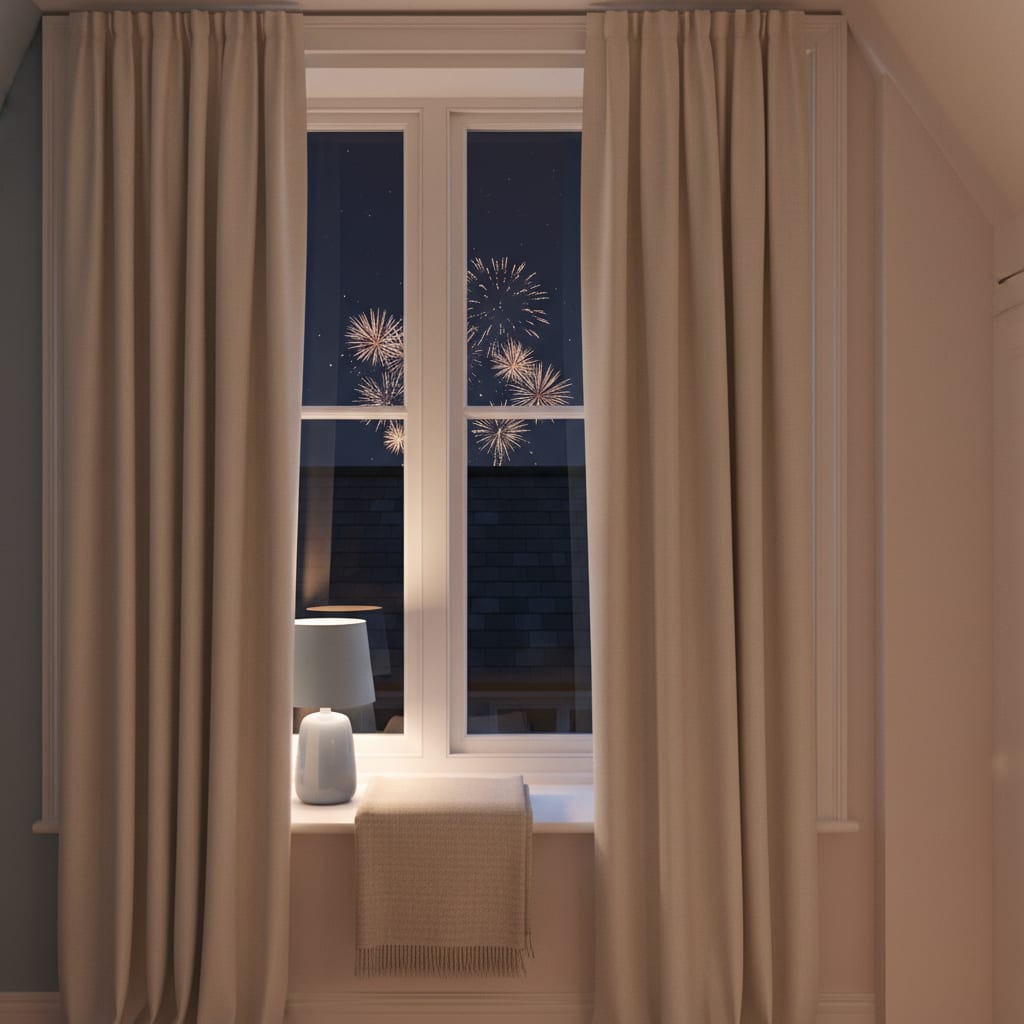
Fireworks season is a fortnight of random bangs, not one loud night, so plan for the stretch rather than the date. Keep your normal bedtime and have steady white noise running before the first rocket goes up. Black out the window so the flashes don’t reach the cot. If your baby wakes, go in with the same calm, dim response every time. The real decision is the display. A baby can go to one, but it’s you alone with a buggy in the cold and dark, so choose an early display, stand well back, and bring ear defenders made for babies.
Why it’s a fortnight, not a night
The GOV.UK page on fireworks and the law explains the problem. Registered sellers can sell fireworks for private use from 15 October to 10 November and again from 26 to 31 December. It’s against the law to set them off between 11pm and 7am, except on four nights. On Bonfire Night the cut-off is midnight. On New Year’s Eve, Diwali and Chinese New Year it’s 1am.
So from mid-October anyone on your street with a box of rockets can let them off on any evening up to 11pm. This year 5 November is a Thursday, so expect displays on the weekends either side, garden fireworks on the night and the leftovers after. That changes the job: you need a room set-up that works every night for three weeks, and a response to a startled wake you can repeat without thinking.
Find out when the loud nights are
Some of the bangs have a timetable, and knowing it takes the dread out of the evening:
- Council and school displays. Check your council’s events page and the leaflets that come home in book bags, and write down the start times.
- The neighbours. RoSPA’s fireworks safety advice asks people doing home fireworks to “give advance notice to neighbours”. That gives you a perfectly reasonable opening to ask the family two doors down what night they’re doing theirs.
- The two late nights. Bonfire Night (until midnight) and New Year’s Eve (until 1am) are when a late bang is legal, so expect them.
Don’t shift bedtime to dodge a display. An overtired baby wakes more easily, not less, so keep bedtime where it is and have the room ready early.
Set the room up before the first bang
White noise, on before bedtime and left on. A steady sound won’t cover a rocket. What it does is raise the background level in the room, so each bang stands out less against the silence. That contrast is what wakes a baby, which I explain properly in my post on outside noise waking a baby from naps. Keep it at a sensible level. The Betteroo guide on the volume-and-distance rule for white noise suggests about 50 decibels, with the machine roughly two metres from the cot and never on the maximum setting. A paediatric audiology leaflet from Manchester University NHS Foundation Trust gives the same advice for sleep machines and apps: test the output “to make sure that it isn’t excessively loud”.
Blackout for the flashes. An unexpected burst of green light on the ceiling can wake a baby in a light phase of sleep as easily as a bang. If you rent and can’t drill, my guide to blackout blinds without drilling has six no-fixings ways to do it. Seal the edges, because the gaps are where the light gets in.
Windows shut, curtains drawn, and the room still 16–20°C. The Lullaby Trust recommends that temperature range for a baby’s room. Shutting up the room for noise can make it warmer than you think, so check it.
If you have a choice, put the cot in the room facing away from the street or park. My post on noisy neighbours and baby sleep covers finding the quiet corner of a room, and it works the same way for outside noise.
When she wakes in fright
She probably will, at least once. A sudden scream in the dark sounds worse than it is. The Betteroo guide on why babies wake up screaming describes this kind of screaming as “a startle, not a message with fixed meaning”. It suggests a calm, low-key response with the lights down. A steady parent settles a startled baby faster.
Do the same thing each time: go in, keep the light very dim, pick her up or put a hand on her, and wait for the next few bangs to pass before you put her down. Don’t bring her into the bright living room to watch from the window. It’s lovely once, and after that she wakes at every bang expecting a party.
With a toddler, explaining the sound helps. A Gloucestershire Hospitals NHS leaflet on sound sensitivity in children recommends that you “comfort them” and “explain where the sound came from”. Something like “that’s fireworks in the sky, far away, they’re finished soon” is plenty. If the fright lingers into bedtimes for the next week, my post on bedtime after a fright explains how to add reassurance for a short while and then take it away again.
Should you take a baby to a fireworks display?
You can, if you’re honest about what it involves when you’re the only adult there.
Hearing. The Manchester leaflet lists “firework displays” among the hearing hazards for children. It explains that children’s ear canals are smaller, so the sound pressure is greater than for an adult: “loud sounds are even louder for children”. The Gloucestershire leaflet says ear defenders should generally be avoided, “except in short-term situations such as fireworks displays”. A display is exactly the situation they’re meant for. Buy ear defenders made for babies, not a grown-up pair that slides off. Alpine’s Muffy Baby is one widely sold example, made for babies and toddlers up to four years. Put them on before the first rocket, not halfway through.
Distance. RoSPA says the safest place to watch fireworks is “a professionally organised public display”. Children should watch “from a safe distance”. Stand at the back: further from the noise, and quick to leave when she’s had enough.
Sparklers. RoSPA says don’t give sparklers to under-5s and “never hold a baby while using a sparkler”. If your older one wants a sparkler, you can’t hold both, so hand the baby to a friend first.
Cold and a late finish. Wrap her up well for outside, then unwrap her afterwards. The Lullaby Trust’s cold weather guidance says to remove hats and hoods “when indoors or in a car”, and to take off outdoor clothes before a baby sleeps indoors. If she falls asleep in the buggy on the way back, take off the snowsuit and hat before you transfer her to her cot, even though it might wake her.
An early 6pm display, home by her usual bedtime, costs you very little. A 9pm one on a school night, walking home alone with a buggy and a tired older child, is a different evening. Watching from the kitchen window is a perfectly good call.
New Year’s Eve on your own
The bangs come at midnight, and they’re legal until 1am. Keep bedtime normal, have the white noise on from bedtime, and expect her to wake around midnight. If you’re staying in on your own, which plenty of us are, have a drink ready and your slippers by the bedroom door. That way, settling her at 12.05am is a two-minute job and not a crisis.

FAQ
How late can fireworks legally go on in the UK?
Until 11pm on most nights. On Bonfire Night the cut-off is midnight, and on New Year’s Eve, Diwali and Chinese New Year it’s 1am, according to GOV.UK. Your council may also have local rules.
Can fireworks outside damage my baby’s hearing indoors?
The hospital leaflets quoted above are about displays, where you’re close to the noise and outdoors. A baby asleep indoors with the windows shut is much further from it. For a baby indoors, the problem you’ll actually meet is waking, which is what the white noise and blackout are for.
Should my baby wear ear defenders to sleep through fireworks?
No. Ear defenders are for short spells at a display. The Lullaby Trust’s safer sleep advice is to keep a baby’s sleep space clear, so settle her with white noise instead.