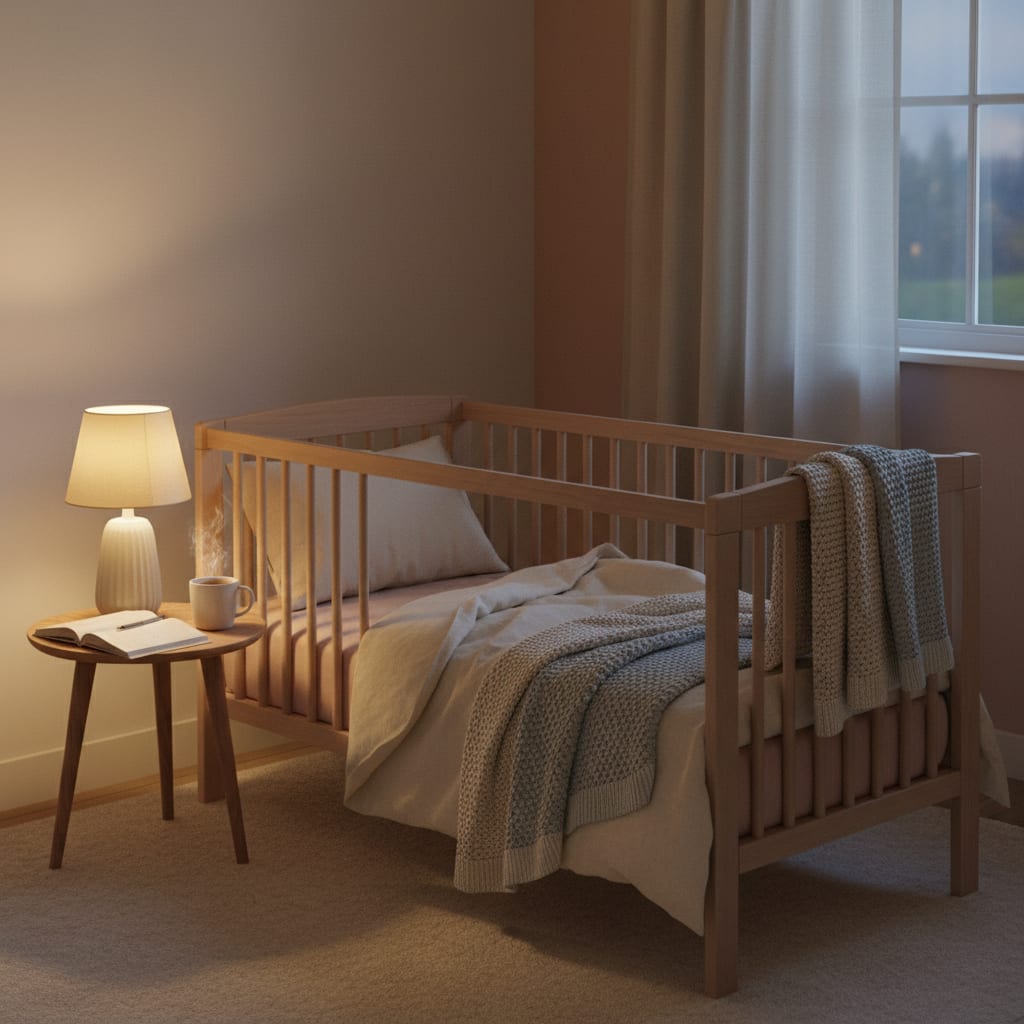
Outside Noise Waking Baby From Naps: What Helps
Street noise is not random, and that is the whole solution. You cannot make a bin lorry quieter, but you can find out which morning it comes, run a steady masking sound through that window, and put the nap somewhere the noise isn’t. Two moves, in this order: raise the baseline sound in the room so the lorry stops standing out against silence, then shift the nap around the noises you already know are coming. Everything else — blinds, cot position, keeping the window shut for an hour — is worth doing but smaller.
When you are on your own there is nobody to hand the baby to, so the nap is not a nice-to-have — it is the hour the washing gets done, or the hour you sit down. Losing it to a lorry at 9.40 twice a week is a real dent in the week.
The noise gets blamed for a wake-up that was already happening
Babies very often surface at around the 40-minute mark, at the seam between one sleep cycle and the next, and that is precisely when a small noise tips them from “stirring” into “awake and delighted about it”. The lorry did not wake a deeply sleeping baby — it arrived at the one moment in the nap when a baby is easiest to wake.
That is worth knowing because it changes what you fix. If your baby is doing 40 minutes on a silent Sunday too, the street is not your problem — Betteroo’s rundown of how long a nap should actually run at their age is the better place to start, because a short nap that ends at the same point every day is usually about sleep cycles, not lorries.
Test it for three days: note when the nap ends and what you could hear. If the wake-ups cluster around bin day, deliveries and the school run, this post is for you. If they land at 40 minutes regardless, you have a different job.
Find the timetable, because there is one
This is the step almost nobody takes and it is free. Sit down for ten minutes and write out what your street actually does:
- Bin day. Same day every week, in a fairly narrow window. Look up your collection day by postcode on gov.uk rather than guessing — and note recycling separately if your council splits them.
- The school run. Two fixed twenty-minute surges, term time only, and louder than anything else all day if you are near a gate.
- Deliveries. Less predictable, but a doorbell at nap time is worth turning off entirely.
- Roadworks and building work. A neighbour having an extension done is a phase with an end date, and most people will tell you their working hours if you ask nicely.
- Street cleaning and grass cutting. Usually monthly-ish and the loudest thing on the list.
Once it is written down, half the mystery goes. “The nap keeps getting ruined” becomes “Tuesday mornings are a write-off” — something you can plan around instead of something that keeps happening to you.
Move the nap, not the street
With the timetable in front of you, the fixes get obvious and mostly cost nothing.
Shift the nap by twenty minutes. If the lorry does your road at 9.40, aim for asleep by 9.00 so the noise lands after the vulnerable seam, or push to 10.15 and let it come and go first. Watch how long they have been awake when you shuffle things — the new time still has to fit the wake windows for their age, or you have swapped a noise problem for an overtired one.
Go out on purpose. A buggy or sling nap during the noisy hour is a workaround, not a failure. On bin day we walked — it solved the nap and got me out of the flat.
Nap at the back of the home. If there is a room away from the road, use it for the daytime nap even if nights happen elsewhere. Daytime sleep does not have to be in the same place as night sleep.
Shut the window for one hour. Not all day — a stuffy room is its own problem — just across the known window.
What actually reduces street noise in a rented flat
Some of this overlaps with fixing a party wall, and if the noise is coming through the wall rather than the window, noisy neighbours and baby sleep covers that side properly. For street noise specifically:
- Steady masking sound, continuous, across the room from the cot. Same principle: the lorry is only startling because the room was silent. Something boring running the whole nap removes the contrast. Not on a timer, and not beside the cot.
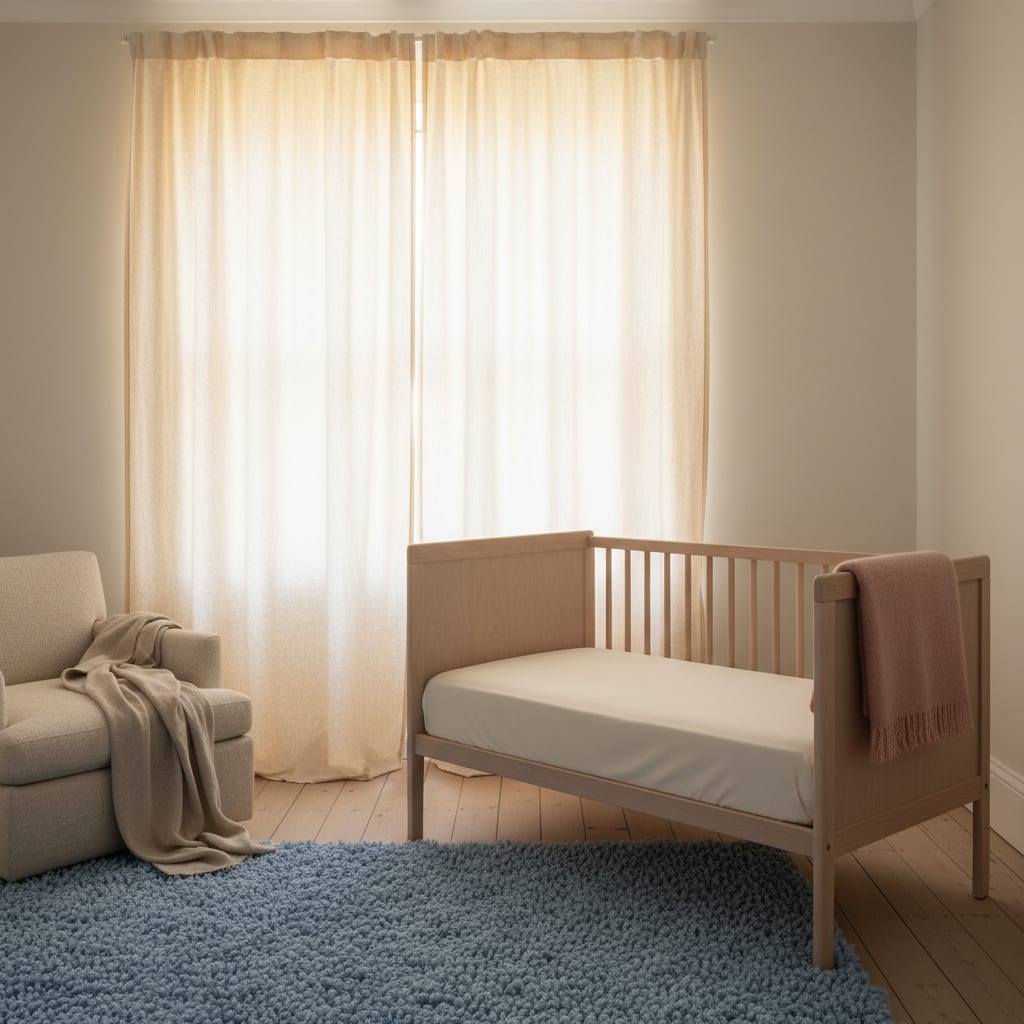
- Heavy curtains, floor length. Thick fabric across a window is the most useful physical thing in a rented flat and does double duty for light — if you are hanging something anyway, blackout options that need no drilling are the same shopping trip.
- Cot away from the window wall, and a hand’s width off it. Glass is the weak point in any room.
- A draught brush on the front door in a converted house — the communal hallway and the buzzer often carry more than the street does.
What I would not buy: acoustic foam, “soundproof” window film, or anything sold on a decibel-reduction figure with no independent testing. None of it beats curtains and a fan.
The thing nobody tells you: stop tiptoeing
The instinct when the nap is fragile is to make the flat silent — no hoover, no telly, whispering on the phone. It backfires. NHS guidance on helping your baby to sleep says plainly that “it’s good to get your baby used to sleeping through a certain amount of noise”, and to not worry too much about everyday noises during daytime sleep.
A baby used to a normal, moderately noisy flat learns that noise is background. And practically, if you are the only adult in the house, a nap that requires silence costs you the entire hour — no washing up, no machine on, no phone call. That is the opposite of what the nap is for.
Hoover during the nap. Genuinely. It is masking sound with a job.

If you are doing all of this solo and the days are running on one short nap, baby sleep as a single mum is the wider version of this — the bit about what to do when the nap is the only break you get.
FAQ
How do I stop outside noise waking my baby from a nap?
Run a steady masking sound across the room from the cot for the whole nap, hang heavy floor-length curtains, move the cot off the window wall, and — the part most people skip — work out which noises are on a timetable and shift the nap twenty minutes either side of them.
Why does my baby always wake after 40 minutes?
Because that is roughly where one sleep cycle ends and the next begins, and it is the point in the nap when a baby is easiest to disturb. A passing lorry at that moment gets the blame for a wake-up that was already half-happening. If the nap ends at 40 minutes on quiet days too, the cause is the sleep cycle rather than the street.
Should I keep the house silent while the baby naps?
No. NHS advice is that it’s good for a baby to get used to sleeping through a certain amount of noise, and not to worry too much about everyday sounds during daytime sleep. A silent house teaches a baby that any noise is an event — and if you are parenting alone, a nap that requires silence costs you the whole hour.
Can I find out when my bin collection is?
Yes — enter your postcode on the gov.uk rubbish collection page and it points you to your council’s schedule. It takes a minute and it turns a recurring mystery wake-up into a fixed appointment you can plan the nap around.
Is a buggy nap on a noisy day cheating?
Not remotely. A nap on the move during the loudest hour of the morning is a sensible workaround, not a compromise. Motion naps tend to be lighter, so if every nap is happening in the buggy it is worth working back towards the cot — but using one to get past bin day is just good planning.