Easy Playdough Recipe: Soft, No-Cook and Lasts Ages
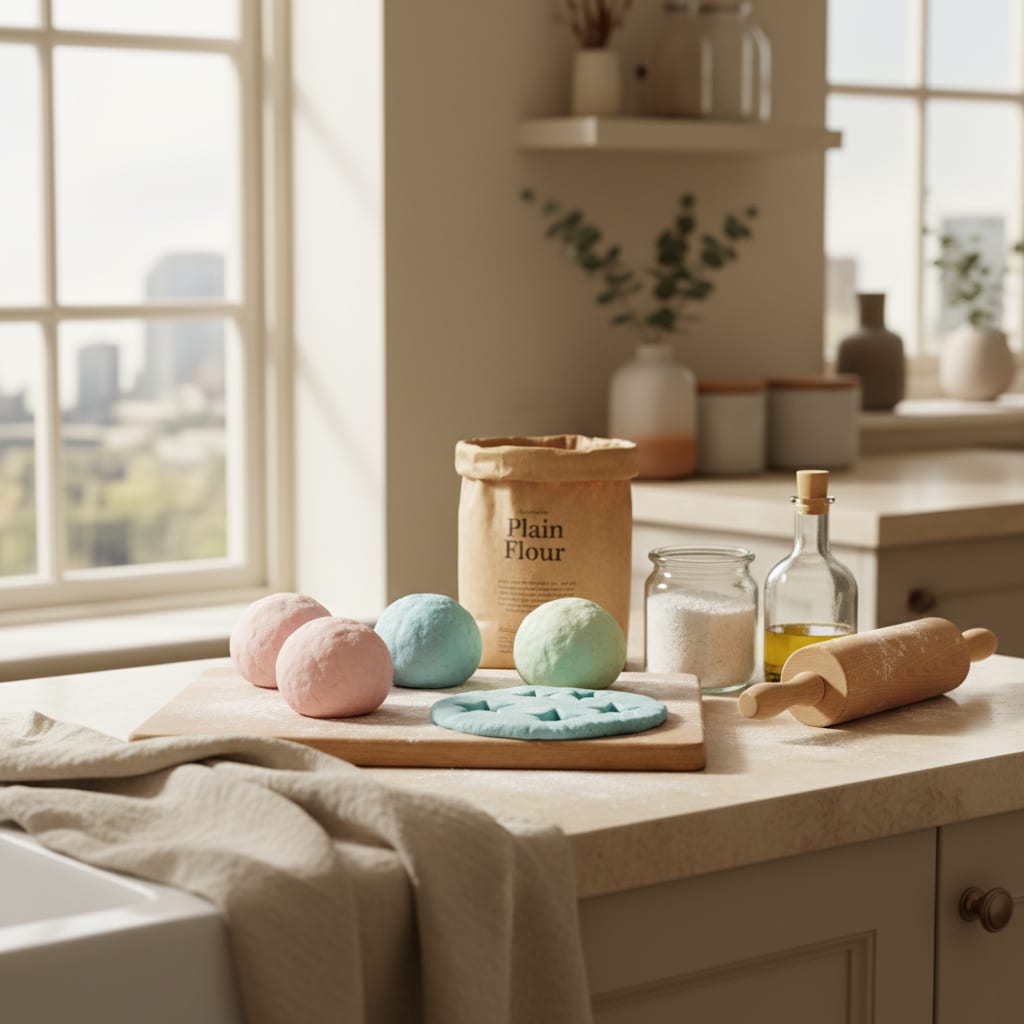
The easiest playdough recipe is no-cook: 250g plain flour, 100g fine salt, one tablespoon of vegetable oil and roughly 200ml of just-boiled water, mixed to a dough and kneaded smooth once cool enough to handle. No cream of tartar, no saucepan, no special ingredients — everything is already in your cupboard, the whole thing takes ten minutes, and stored in a tub it keeps for weeks. That’s the recipe. Below: the method in proper detail, the colour tricks, the rescue moves for sticky or crumbly dough, and why I stopped buying the branded pots entirely.
Because that’s the money bit: a four-pack of branded dough runs a few pounds and mysteriously becomes one merged brown lump within days. This homemade batch costs pennies in flour and salt — realistically under 50p (~$0.65) — makes about twice as much, and when it finally dies you just make more. It’s the bubble mixture economics all over again: the homemade version is cheaper and better.
The recipe
You need: 250g plain flour · 100g fine table salt · 1 tbsp vegetable oil · about 200ml just-boiled water · food colouring (optional but transformative).
- Mix the flour and salt in a big bowl.
- Add the oil, then the just-boiled water a splash at a time, stirring with a wooden spoon. Add your food colouring to the water first if you want one solid colour — it blends far more evenly than kneading it in later.
- Stop adding water when it comes together into a shaggy dough that’s soft but not sticky. You may not need all the water; flour varies.
- Once it’s cool enough to touch — give it a few minutes, the boiling water is the grown-up-only part — tip it onto the worktop and knead for three or four minutes. It transforms from lumpy mess to smooth, warm, genuinely lovely dough. This bit is weirdly therapeutic and I recommend not delegating it.
The boiling water is also the secret to skipping cream of tartar: the heat does the job of making the dough stretchy and smooth, which is why cold-water versions disappoint and why this one doesn’t need a special-trip ingredient no normal kitchen stocks.
Colours and upgrades (still pennies)
Split the dough before colouring and knead a few drops into each piece for a rainbow batch — gel colours give the boldest results, but the cheap liquid bottles work fine. A drop of vanilla or a spoonful of cocoa makes bakery dough; a glug of glitter turns it princess-grade; a teaspoon of dried lavender makes the calm-down version. In autumn we press conkers, acorns and leaves into it — the same foraged haul from our autumn crafts walks — and it becomes a free texture-printing kit.
Rescue moves
- Too sticky: knead in flour a tablespoon at a time. Ten seconds of work.
- Too crumbly: wet your hands and knead — repeat until it comes back. A drop more oil helps if it’s persistently dry.
- Gone slimy or smelling odd after weeks: that’s the end. Bin it, make a new batch, mourn briefly.
Storage — the “lasts ages” part
Airtight is everything: a lidded tub or a zip bag with the air pressed out, cupboard not fridge. Kept properly sealed it lasts for weeks — often a couple of months — and a quick knead revives it each time. The dough only really dies from being left out overnight (dries to a crust) or from enthusiastic mixing with water mid-play. One tub per colour if you have dreams of the rainbow surviving; one big tub if you’ve accepted that all playdough tends toward brown, as all playdough does.
Worth knowing the difference from its cousin: playdough is for squishing and re-using; salt dough is the one you bake hard and keep. Same cupboard ingredients, different missions — handprint keepsakes are a salt dough job, rainy Tuesday is playdough’s.
FAQ
Can I make playdough without cream of tartar?
Yes — this whole recipe is built on skipping it. Cream of tartar’s job is elasticity and shelf life, and just-boiled water achieves much the same, so flour, salt, oil and hot water make a soft, stretchy dough with nothing extra. If you happen to own cream of tartar, a couple of teaspoons makes the dough slightly silkier and longer-lasting, but it’s genuinely optional.
How long does homemade playdough last?
Stored airtight in a tub or sealed bag, several weeks easily and often a couple of months — knead it for a minute to revive it each session. Left out overnight it dries out, though a wet-hands knead can rescue a mild crust. If it ever smells odd or goes slimy, that batch is done.
Is homemade playdough safe for toddlers?
It’s made of kitchen ingredients, but it’s a no-eating toy: the salt content is high enough that you should discourage tasting, and the just-boiled water stage is strictly a grown-up job. For babies and determined dough-eaters, stick to supervised play, and check with your pharmacist or GP if a serious amount ever gets eaten — a nibble of this salty dough mostly just produces a disgusted face.
Why is my playdough sticky or crumbly?
Flour absorbs water differently batch to batch, so the fix is always adjustment, not a new recipe: knead in extra flour a spoonful at a time for sticky dough, or knead with wet hands (plus a drop of oil) for crumbly dough. Thirty seconds of kneading either way brings it back to soft.