✳ Days Out
Peppa Pig World With a Toddler: Is It Worth It?
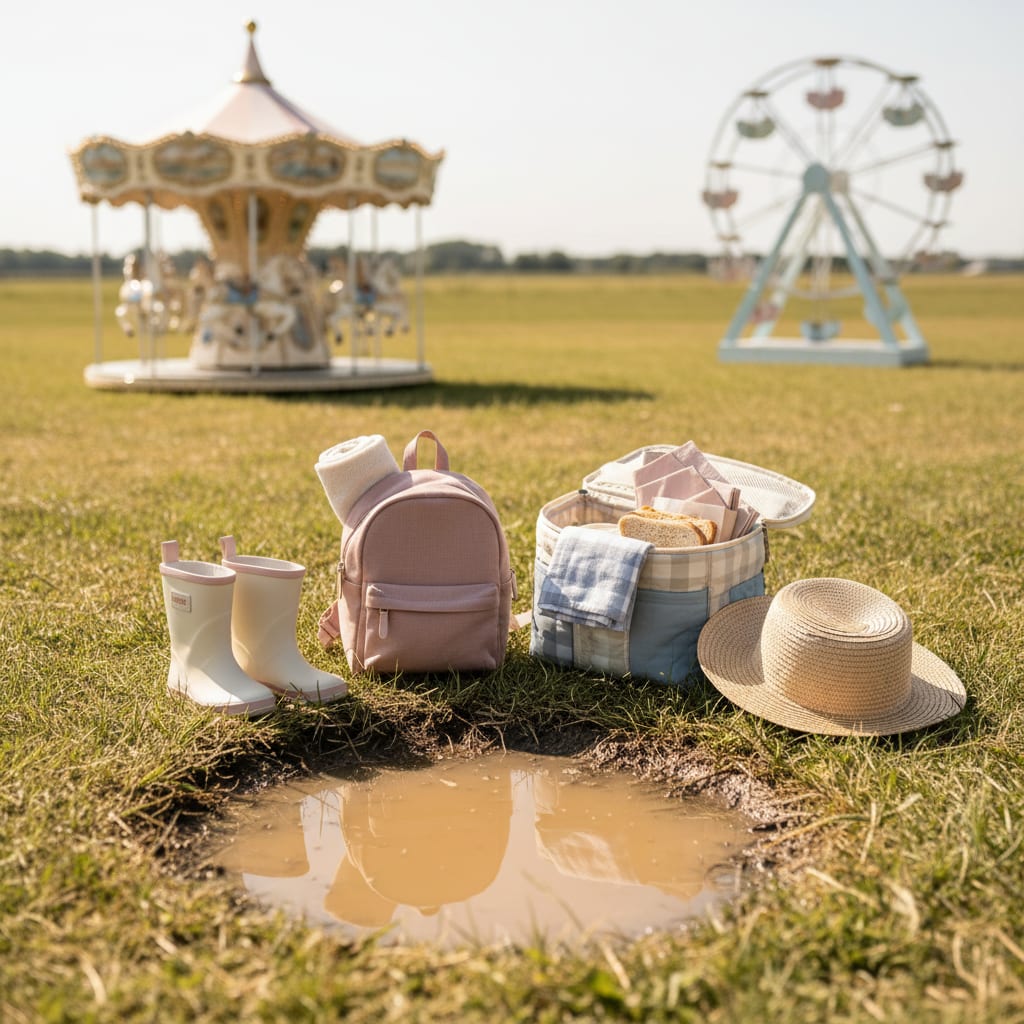
Yes — Peppa Pig World is one of the few big UK attractions genuinely built for two-year-olds, because almost every ride in it is gentle, short and designed for an adult to sit alongside a small child. It sits inside Paultons Park in Hampshire, so your ticket buys the whole park, not just the Peppa bit. The catch is cost: booked badly, a day here is one of the most expensive things a one-income family will do all year. Booked properly, it’s manageable. Here’s the honest version.
I’m writing this as someone who does days out on one wage and treats a theme park as the single big treat of the summer, not a casual Saturday. So this is less “look at the lovely rides” and more “what will this actually cost me, and will a toddler get anything out of it”.
What Peppa Pig World actually is
Peppa Pig World is a themed land inside Paultons Park, near Romsey in Hampshire — roughly half an hour from Southampton, and doable in a couple of hours from London, Bristol or the south coast. You buy a Paultons Park ticket; Peppa Pig World is included, along with the rest of the park.
That matters more than it sounds. Peppa Pig World on its own is a couple of hours for a toddler. The rest of Paultons — the dinosaur area, the animal enclosures, the smaller rides, the playgrounds — is what turns it into a full day. Families who report being disappointed are almost always the ones who did Peppa and left.
What a two-year-old can actually do
The Peppa rides are the gentle sort: little cars on a track, a small train, tea-cup-style spinners, a low balloon ride, a boat ride, a helicopter carousel. Names you’ll see include Peppa’s Big Balloon Ride, Daddy Pig’s Car Ride, Grandpa Pig’s Little Train, Miss Rabbit’s Helicopter Flight, Grampy Rabbit’s Sailing Club, George’s Dinosaur Adventure, Windy Castle and The Queen’s Flying Coach Ride.
On heights, check the park’s own ride guide before you go and do not take my word for it. The pattern at Peppa Pig World is that most rides admit very small children when accompanied by an adult, with a few needing a minimum height — but height rules get revised, and a rule you read on a blog is worth nothing at the gate. Paultons publishes a height chart; measure your child at home in bare feet and read it properly. It takes five minutes and prevents the worst possible conversation in the queue.
Beyond the rides, the bits that genuinely land with the under-3s:
- The water play area. Muddy-puddle splash play is the single most reliable toddler hit in the place. Bring swim nappies (such as Huggies Little Swimmers), a towel and a full change of clothes even if the forecast says otherwise. Especially if the forecast says otherwise.
- Character appearances. For a Peppa-obsessed two-year-old this is the actual point of the day. Check appearance times when you arrive, because they’re scheduled and they’re busy.
- The playgrounds. Free-to-use, no queue, and after four hours of ride queues a toddler often wants a slide more than another ride.
- The animals elsewhere in Paultons. A calm, no-queue interlude when everyone has had enough of a themed land.
The honest limitation: a two-year-old’s stamina is roughly four to five hours, and queues are the enemy. Plan a half-day of intent, and treat anything beyond that as a bonus.
The real cost of the day
Paultons prices its tickets dynamically, cheaper in advance and cheaper on quieter dates, so I’m not going to quote you a figure that’ll be wrong by the time you read this. What I can give you is the shape of the budget, so nothing ambushes you.
| Line | What to expect | How to cut it |
|---|---|---|
| Entry, adult | The biggest single line by a long way; on-the-day gate prices are materially higher than pre-booked | Book online, pick a term-time or shoulder-season date |
| Entry, small children | Paultons has long admitted children under a metre tall free — verify on the booking page, because it can be the biggest saving of your day | Measure at home in bare feet before you book |
| Parking | Traditionally included rather than charged, which is rare and worth confirming when you book | — |
| Food for three | Easily £30–£45 (~$39–$59) if you buy lunch and snacks inside | Take a picnic — Paultons has picnic areas, and packed lunches are the single biggest saving available |
| Gift shop | However much you let it be | Set a pocket-money ceiling out loud, in the car, before you arrive |
| Fuel or train | Varies wildly by where you start | Off-peak advance rail, or split the drive with another family |
Two rules make the difference on one income. First, never buy on the gate — walk-up pricing at big UK parks is punishing, and pre-booking a specific date is where the discount lives. Second, go outside the school holidays if your child isn’t in school yet. A term-time weekday in May or September is a different park to the third week of August: shorter queues, lower prices, and a toddler who isn’t melting in a two-hour line.
The picnic point deserves emphasis. Three people eating inside any UK theme park is comfortably the price of a week’s dinners at home — the maths in my budget meal plan puts that in perspective sharply. A cool bag in the boot and a proper picnic stop is not tight-fisted, it’s the reason the day is affordable at all.
Should you stay over?
The pitch for an overnight is real: you get two half-days instead of one long one, which fits toddler stamina much better than a single marathon. The pitch against is equally real: accommodation plus a second day’s food can double the trip cost.
My honest read for a one-income household:
- Within two hours’ drive? Day trip. Arrive at opening, leave when they flag, don’t be a hero.
- Three hours or more? Either stay over or don’t go yet. A five-hour round trip plus a theme park with a two-year-old is a day nobody enjoys, and the money is wasted on a child asleep in the car by three o’clock.
- Staying over? Compare a nearby Premier Inn or Travelodge with a family room against any official package before booking. Sometimes the package genuinely wins on the second-day ticket; sometimes it’s just a hotel with a mark-up. Do the sum both ways.
Timing, queues and the practical bits
Go for opening. The first ninety minutes are the quietest of the day, and with a toddler that ninety minutes is worth the entire afternoon. Do the two rides they most want first, immediately.
Take the buggy. It’s a big park, and a buggy is the difference between walking back to the car and carrying a sleeping toddler back to the car. There are buggy parks by the rides.
Bring layers and a full change of clothes. Water play, weather, and the standard toddler incident rate. All three will happen.
Plan a quiet hour. Around lunchtime, get out of the themed land and go and look at animals or sit in a playground. Toddlers hit a wall around then, and the wall is much softer somewhere calm.
Set the pocket-money rule before you arrive. Ours is a fixed amount, stated in the car, spent whenever they like. It converts a whole day of “can I have” into one decision they get to make themselves.
Is it worth it on one income? My verdict
Yes — once. Not as a habit. Peppa Pig World is the best big-ticket toddler attraction I’ve paid for, because unlike most theme parks a two-year-old can genuinely go on nearly everything rather than watching from a fence. That’s rare and it’s worth paying for.
But it’s a treat-of-the-year purchase, and the honest comparison is against a whole summer of free days. One Peppa Pig World day costs roughly what a season of free and cheap UK days out costs, and a two-year-old is genuinely thrilled by a city farm. So we do it once, we book it early and cheap, we take the picnic, and I don’t pretend it’s anything other than the big one. If you want a nearer, lower-stakes version first, days out with toddlers around London covers the rehearsal options — and if you’re comparing big-park options, my Chessington with a toddler rundown is the other side of the same decision.
FAQ
Is Peppa Pig World suitable for a 2-year-old?
It’s one of the best UK attractions for that exact age. The rides are gentle and short, most allow an adult to ride alongside a small child, and there’s water play and a playground for when the queuing runs out. Check the official height guide before booking, since a few rides do carry a minimum height.
Is Peppa Pig World a full day out?
Peppa Pig World alone is roughly a half-day for a toddler. Your ticket includes the whole of Paultons Park, and it’s the rest of the park — dinosaurs, animals, smaller rides and playgrounds — that fills the day. Families who plan only for the Peppa land are the ones who leave feeling short-changed.
How much does a day at Peppa Pig World cost for a family?
Ticket prices are dynamic and change by date, so check the official booking page. Budget for entry (much cheaper pre-booked than on the gate), travel and food. Children under a metre tall have traditionally gone free — verify that on the booking page, because it’s often the largest saving available. Taking a picnic instead of buying lunch typically saves a family of three around £30–£45 (~$39–$59).
When is the cheapest and quietest time to go?
Term-time weekdays outside the school holidays, in the shoulder seasons — roughly late spring and early autumn. If your child isn’t at school yet, this is the single biggest advantage you have: lower prices, shorter queues, and a much happier toddler.
Do you need to stay overnight?
Only if you’re more than about two or three hours away. Within two hours, a day trip beats an overnight comfortably on cost. Further out, an overnight turns one exhausting day into two manageable half-days — just price a nearby budget hotel against any official package before you commit, because the package doesn’t always win.
What should I pack?
Swim nappies or spare pants and a full change of clothes for the water play, a towel, sun cream and a waterproof (it’s Britain, you’ll want both), the buggy, a picnic and a cool bag, and any comforter that gets used at nap time. The picnic is the money one; the change of clothes is the sanity one.