School Morning Routine for Solo Parents (No Yelling)
Move as much of the morning into the night before as it will physically hold, run the same short sequence in the same order every single day, feed them before you dress them, and set a shoes-on time rather than a leaving time. That’s the whole system. It works because it removes decisions, and decisions are the thing one adult runs out of at 7:40am.
The yelling, in my experience, almost never comes from being late. It comes from being the only person who knows what happens next.
What the night before has to do
Every job you do at 8am costs roughly three times what it costs at 8pm, because at 8pm nobody is standing on one leg crying about a sock.
- Uniform out, in a pile, in the order it goes on. Pants and socks on top.
- Bag packed and by the door, with reading book, homework and anything signed already in it.
- PE kit in the bag on PE days. Check the day now, not at breakfast.
- Water bottle filled and in the fridge.
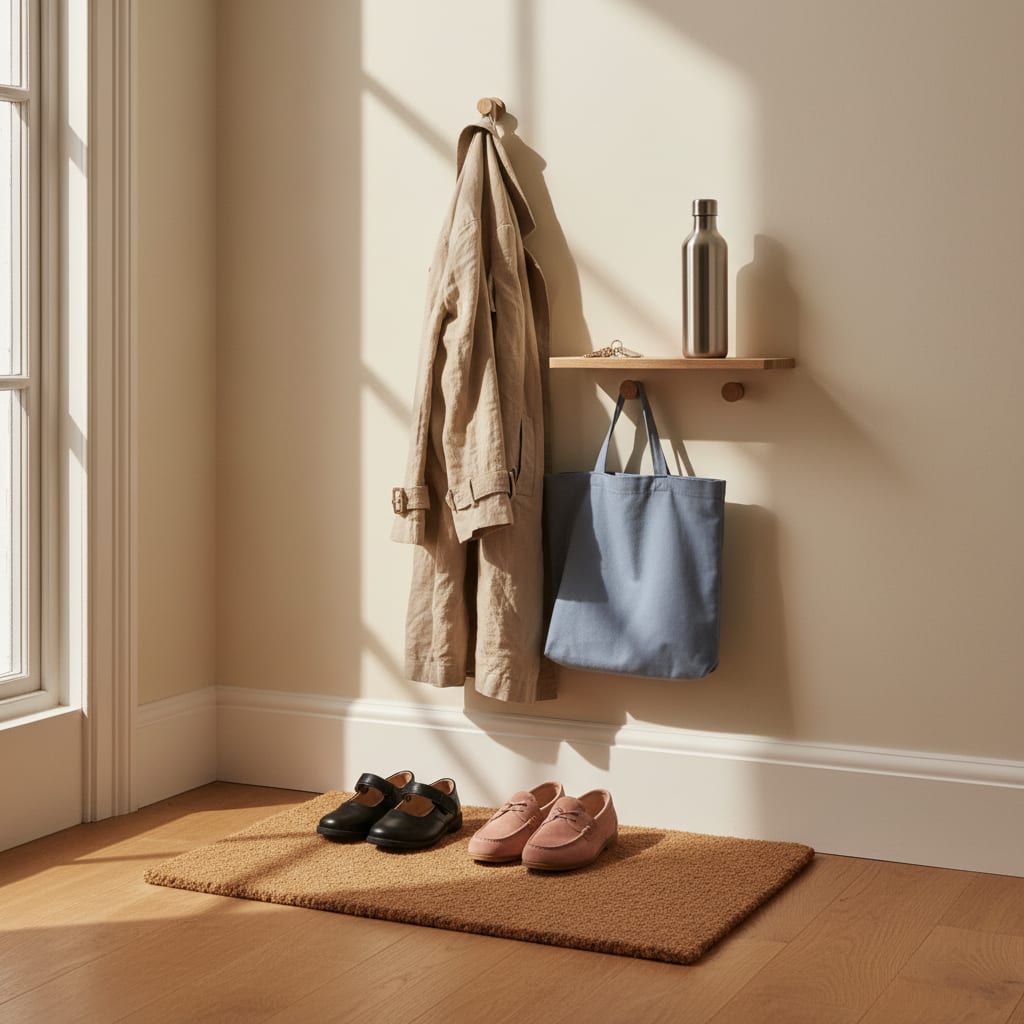
- Shoes together, by the door. Both of them. Facing the same way.
- Lunch made or the money on the app.
- Your own things done. Keys, bag, work shoes, coat. Solo mornings fail on the adult’s stuff more often than the child’s.
Ten minutes, after they’re in bed, with something on in the background. It is the single highest-return ten minutes of the school week.
The order that actually works
Same sequence, same order, every day, until nobody has to be told:
- Curtains open, lights on. Light does the waking; nagging doesn’t.
- Loo, then downstairs.
- Breakfast, still in pyjamas. This is the one most people have backwards. Uniform goes on after food, and a Weetabix-free jumper is worth the extra two minutes.
- Dressed. From the pile that’s already out.
- Teeth and face.
- Shoes and coat.
- Out.
The order matters more than the timings. A child who knows there are seven steps and can see where they are in them argues considerably less than one being issued fresh instructions every ninety seconds.
Get up fifteen minutes before them, too, if you possibly can. Not to be productive — to be dressed and holding a cup of tea when the day starts, which changes the tone of the entire morning.
Find your bottleneck and fix that one thing
Every household has exactly one thing that eats the morning, and it’s almost never what you’d guess. Ours was hair. Every single time.
Watch three mornings and note where the clock jumps. Then attack that one thing:
- Hair? Plait it damp the night before, or accept a ponytail as a permanent policy.
- One slow child? Wake that one ten minutes earlier than the other and let them have the quiet house to themselves. It isn’t unfair; it’s the fix.
- Socks and shoes? They’re always at the end of the morning when everyone’s patience has gone. Move shoes to right after breakfast and put the coat by the door.
- You, doing everything? Give jobs away earlier than feels right. A four-year-old can carry their own bag to the door. A seven-year-old can make a sandwich badly.
Fixing the bottleneck buys back more time than getting up earlier does, and costs nothing.
Set a shoes-on time, not a leaving time
“We leave at 8:20” is a target nobody can act on, because putting shoes on takes an unknown length of time. “Shoes on by 8:12” is an instruction with a clear pass or fail, and it builds in the eight minutes that always evaporate at the door.
Put a clock where they can see it — an analogue one in the kitchen is better than your phone, because it doesn’t require you to be the announcer. Then say the time, once, rather than counting down. Constant countdowns just teach everyone to wait for the last one.
The bit nobody writes about: no second adult
The specific solo problems, and what actually helps:
Nobody can hold the fort while you nip out. So the school run has to include everyone, every time. Buggy or scooter for the little one, and leave earlier than the older child needs.
There’s nobody to hand a meltdown to. Which means the only workable response is to stop pushing and lower the target — school in a jumper over pyjama bottoms is still school. Nobody has ever been told off for it.
You are the entire backup plan. Have one friend or neighbour who could, at a push, take yours to the gate. Ask before you need it, not on the morning you do.
Screens stay off until shoes are on. Not a moral position, a practical one. Nothing on earth removes eight minutes faster.
When the mornings are hard because the nights are
If getting them up is the problem rather than getting them out, the morning isn’t where the fix lives. A child who is genuinely difficult to wake is usually a child who went to bed too late for their age, and that’s the bedtime routine for school nights job rather than an alarm-clock one.
The same goes for the after-school crash that turns into a 7pm meltdown that turns into a late bedtime that turns into a horrible Tuesday — after-school snacks exist to break that loop at the earliest point. And if term hasn’t started yet, the ten-day bedtime shift in my back to school checklist is worth doing before you need any of this at all.
FAQ
What time should we get up for school?
Work back from your shoes-on time and allow about an hour for a primary-age child — longer if breakfast is slow or there’s more than one of them. Then add fifteen minutes for yourself before anyone else is up. Getting up earlier only helps if the extra time goes to the adult; a child woken earlier usually just moves at the same speed.
How do I stop shouting in the mornings?
Take the decisions out. The shouting is usually the sound of one adult holding the whole plan in their head, so put the plan somewhere everyone can see it — a fixed order of steps, a visible clock and a shoes-on time — and let the routine do the instructing. Moving jobs to the night before does more than any amount of patience.
Should children get dressed before or after breakfast?
After, in most households. Uniform goes on clean, spills stay on pyjamas, and there’s no argument about a jumper at the exact moment everyone is hungriest. The exception is a child who genuinely wakes up faster once they’re dressed — in that case, do it their way and keep it consistent.
How do I manage the school run with a toddler as well?
Get the toddler dressed first, while the older one eats, and put them in a buggy or on a scooter you can steer. Leave earlier than the older child strictly needs, because the toddler sets the pace whatever you do. Keep a snack in your coat pocket for the walk home — the pick-up meltdown is real and it’s usually hunger.