Rainy Day Activities for Kids That Cost Next to Nothing
The best rainy day activities for kids are the ones already in your cupboards: a kitchen make, a game that burns energy indoors, a quiet hour, and one free trip out if you can face the coats. Homemade playdough, a no-bake bake, a sofa-cushion obstacle course, a den, a library trip. None of it needs a craft cupboard or a booking. The trick on a long wet day isn’t finding one brilliant idea. It’s having four ordinary ones to rotate before anyone goes feral.
Here’s the list I keep for a British weekend when the forecast is rain from nine till six. It’s sorted by what the day needs at that moment, not by age.
Plan the day in four blocks
A rainy day goes wrong when it’s one long stretch of “what now?”. Break it up:
- Morning: a make. Kids have the most patience early, so do the messy kitchen job first, while you have the energy to clean up.
- Late morning: burn energy. Before lunch, before the bounce turns into fighting.
- After lunch: quiet. Books, a film, building. Everyone, including you, needs it.
- Late afternoon: out, or something new. Even twenty minutes in the rain resets everyone before tea.
The NHS says children aged 5 to 18 should aim for an average of at least 60 minutes of moderate or vigorous activity a day “across the week”, and to “break up long periods of not moving with some activity”. That’s why the energy block isn’t optional, even in a small flat.
Kitchen makes (morning)
These use flour, salt, oil and whatever’s in the cupboard.
- Playdough. Flour, salt, water, oil and a few drops of food colouring, and it lasts for weeks in a tub. My no-cook playdough recipe needs no cream of tartar.
- Salt dough. Make shapes, bake them low and slow, then paint them on the next wet day. That gets you two activities from one batch. Here’s my salt dough recipe.
- No-bake bakes. Chocolate cornflake cakes need a grown-up only for the melting, and a three-year-old can do the rest.
- Pasta threading. Dry penne and a shoelace. It’s good for little hands and costs one portion of tea.
- Kitchen science. Bicarbonate of soda and vinegar in a tray, with a squeeze of washing-up liquid for extra foam. Do it in the bath or sink and the clean-up is a rinse.
Active games for a small space (late morning)
You don’t need a garden. You need to move the coffee table.
- Sofa-cushion obstacle course. Cushions to jump between, a blanket to crawl under, a line of masking tape to walk along. Let them redesign it every round.
- Indoor bowling. Empty plastic bottles with a little water in them, and a rolled-up pair of socks as the ball.
- Musical statues. Your phone and any playlist. Free, and it works from age two to ten.
- Balloon keepy-uppy. One balloon, and the rule is it can’t touch the floor. Nothing gets broken.
- Hide the toy. One child hides a small toy, and the others hunt while you say “warmer” or “colder” from the sofa. Good for the tired parent.
If you live in a flat, put a rug or folded duvet down for jumping. Neighbours will thank you.
Quiet afternoon (after lunch)
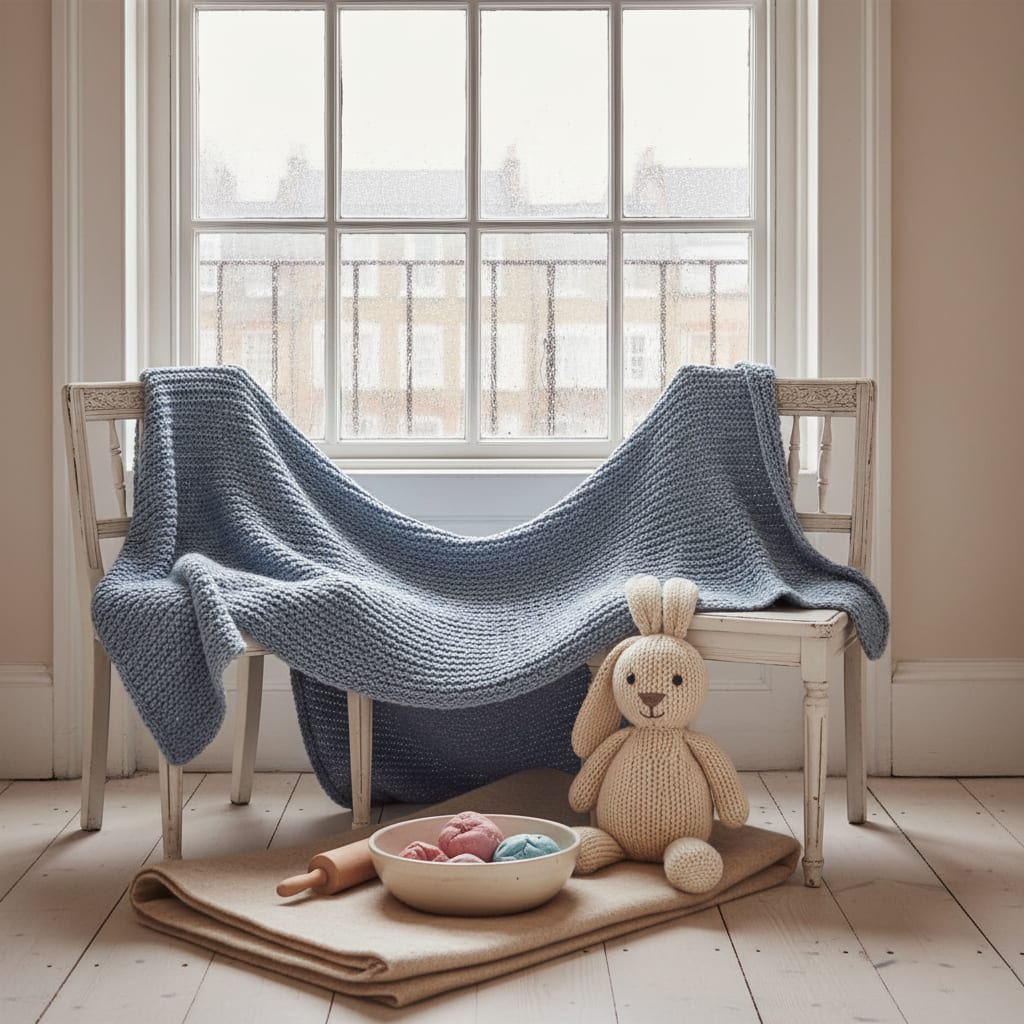
- Build a den. Blankets over two chairs, clothes pegs to hold them, a torch inside. Leave it up for the rest of the day and it becomes the reading corner.
- A box of junk modelling. Cereal boxes, toilet roll tubes, tape. Saving packaging for a week before a wet weekend costs nothing.
- Picture book swap. Older child reads to younger one. It’s quieter than you’d think.
- A film, on purpose. Choose it at breakfast so it’s a treat to look forward to, not a defeat at 3pm.
- Puzzles and board games. Charity shops sell them cheaply. Count the pieces at home before the first game.
If you can get out of the house (late afternoon)
Sometimes the answer is to put the coats on. These are free or nearly free:
- The library. Joining is free, and many libraries run rhyme times and story sessions. Ask at the desk.
- A free museum. In London, many of the big museums are free. My list of free museums kids actually enjoy has which ones work best with young children.
- Puddle walk. Wellies and waterproofs, a loop round the block, and permission to jump in every puddle. Then a warm bath.
- Indoor shopping centre lap. Not to buy anything. Just to walk somewhere dry, look at things and come home.
- Soft play. Not free, but sometimes the only way to get the wiggles out. Go when it opens, when it’s quieter.
The rainy day box
The cheapest thing you can do is prepare before the rain. Keep one box on top of the wardrobe that only comes down on wet days: playdough in a tub, a pack of balloons, masking tape, a torch, some junk modelling bits and one new-to-them charity shop puzzle. Because it’s only out on rainy days, it feels like a treat every time.
The single-parent version
With one adult and two or more children, the hardest bit is that you can’t run two activities at once. Pick things that work for both ages: playdough, dens, musical statues and puddle walks all do. Set the older one up as the “helper” or “judge”, and they’ll often take on the role happily.
And give yourself a quiet block too. Sit in the den with a cup of tea and call it supervision.
FAQ
What can kids do on a rainy day at home for free?
Make playdough or salt dough, build a den, set up a cushion obstacle course, play musical statues or indoor bowling with plastic bottles, and do junk modelling with packaging. All of these use things most homes already have.
How do I keep kids active indoors when it’s raining?
Move the furniture and make space for an obstacle course, a balloon game or musical statues. The NHS recommends children aged 5 to 18 average at least 60 minutes of activity a day across the week, and short bursts indoors count.
Where can I take kids on a rainy day for free?
Your local library, a free museum, or a covered shopping centre for a walk. Or go out in the rain in wellies for a puddle walk and come home to a warm bath.
How do I stop a rainy day turning into screen time all day?
Plan it in blocks: a make, an active game, a quiet hour, then out or something new. Choose one film on purpose rather than letting the TV fill every gap.