Staying Up Late at Grandparents': The Treat and the Day After
If your child stays up late at their grandparents’, let it be the treat it’s meant to be. One late night at Nan’s won’t undo a good routine. What matters is three things. Agree a few non-negotiables before you drop them off, with safe sleep at the top for babies and toddlers. Book the sleepover for a Friday or Saturday, not a school night. And manage the day after: a wake-up close to normal, a quiet afternoon, and an early bedtime with the full routine. A child who stays up until ten on Saturday is back on track by Monday. The thing that does the damage is a lie-in on Sunday followed by a late Sunday night.
For a lot of single mums, the grandparents’ sleepover is the only night off in the month. You shouldn’t spend it texting bedtime rules from the pub.
Why one late night isn’t the problem
The Sleep Charity’s bedtime routine advice is to “do the same thing at the same time each day, including having a set wake up time each morning”. It adds: “We know this is difficult at the weekend”. That’s the useful part. Their advice is built on what happens most nights, and on the wake-up time. It isn’t about one evening of hot chocolate and a film with Grandad.
So the late night itself is fine. A run of late nights is what shifts a child’s body clock, and so does a long lie-in to make up for one. That’s why the day after matters more than the night.
Before the drop-off: pick two or three non-negotiables
Grandparents raised children their own way, and arguing about every detail is the quickest way to lose free childcare. Betteroo’s guide to getting every carer onto one sleep plan suggests choosing “two or three” rules, such as safe sleep and the order of the bedtime steps. Everything else, “which song, which pajamas, a later snack”, can be theirs.
For a grandparent sleepover, I’d pick these:
- Safe sleep, if they’re under two. This one isn’t up for negotiation. See below.
- The bedtime steps, in roughly the usual order. Pyjamas, teeth, story, lights out. The time can move; the steps help a child settle in a strange bed.
- A rough latest time. Not a curfew, just a number. “Not much after nine” is easier to agree than “seven sharp”.
Everything else is the treat: the extra biscuit, the film, the late chat. Let it go.
If you’d like it written down, my babysitter bedtime routine has a one-page sleep plan. Handing it over means nobody has to debate it at the door.
Babies and toddlers: safe sleep at Nan’s house
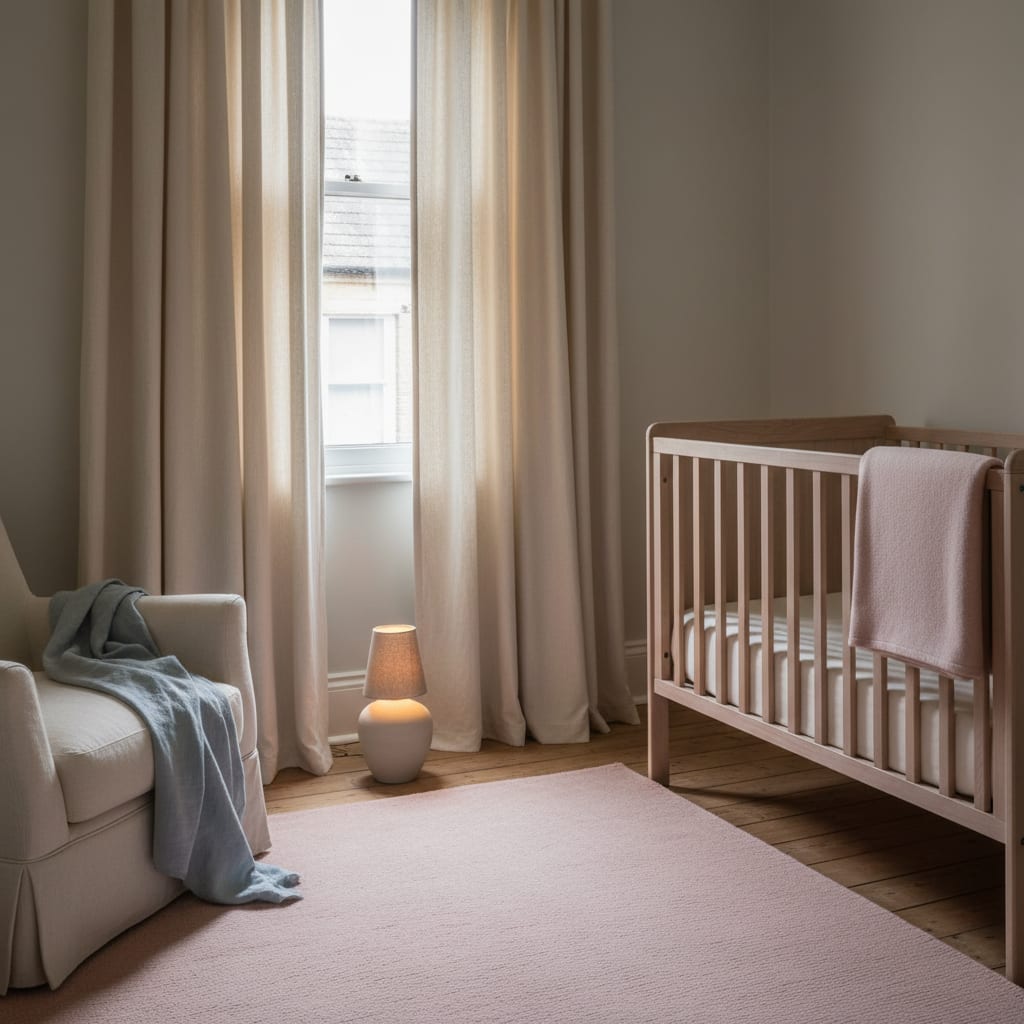
Older children can stay up late in a borrowed bed. For babies, the setup at the grandparents’ needs to follow the same safer sleep rules as at home. The advice has changed since our parents had us, so it’s worth a kind word rather than an assumption. From The Lullaby Trust’s safer sleep advice:
- On their back for every sleep. The Lullaby Trust calls it “the best and safest baby sleep position” for “every sleep, day or night”.
- A clear cot. Nothing in it that could cover the baby’s face or head. Its advice for sleeping away from home adds no extra items, toys or pillows.
- In the same room as the grown-up for the first six months. At Nan’s, that means in Nan’s room.
- A travel cot is fine, as it comes. The Lullaby Trust’s safer sleep on holiday page says travel cot mattresses are thinner than normal ones, but are suitable “as long as they are firm, flat, in good condition and meet British Safety Standards”. If anyone wants to add a replacement mattress, check the cot maker’s guidance first. The charity warns that some can leave a gap between the mesh sides and the base. A folded duvet underneath “to make it comfier” is the thing to gently head off.
- A cool room. The Lullaby Trust’s room temperature guidance is 16-20°C, and it recommends a room thermometer because temperature is hard to guess. Grandparents’ houses are often warmer than ours. The charity says babies “do not need to wear hats indoors”, and that you should feel the baby’s chest or the back of their neck to check: if it’s hot or sweaty, take off a layer.
Pack their own sleeping bag and comforter. They help with sleep, and the sleeping bag means nobody reaches for a spare blanket.
The day after: the bit that actually matters
Collect them by late morning if you can. A child handed back at teatime has had a long, exciting day at the end of a short night. That’s when the meltdowns happen.
Don’t plan a lie-in to make up for it. If they’re with you overnight after a late night out, wake them close to their normal time. If Nan’s had them overnight, ask her to open the curtains at about the usual time. One late night is easier to recover from than a late night plus a shifted morning.
Expect a wobble in the afternoon. Tired children are teary. Lower the bar: a walk, a bath, toast for tea. Don’t book the big birthday party for the day after a sleepover.
Toddlers who still nap may take an early or long nap. Let them have it, but don’t let it run so late that bedtime turns into a battle.
Then an early night, with the whole routine. Start a little earlier than usual and do every step. Don’t cut it short because “they’re exhausted anyway”. The full routine is what tells their body it’s back to normal. My single-parent bedtime routine is the version that works with one grown-up and more than one child.
When it’s every weekend
If the grandparent sleepover is every Saturday, it isn’t a one-off treat any more. It’s part of your child’s week, and a 10pm Saturday plus a long Sunday lie-in every week can make Monday mornings hard.
You don’t have to stop it. Ask for one change, not five: “Could they be in bed by nine on Saturdays, so Mondays aren’t awful?” The Betteroo guide’s tip works here too. Describe the effect on your child, not the grandparent’s choices: say what a late Saturday does to Monday morning. That lands better than a list.
If the late nights have spread across a school holiday, my half-term bedtime routine has a reset that starts a few days before school goes back.
 Sleepovers knocking bedtime off course?
If weekends away keep scrambling a baby or toddler's sleep, Betteroo builds a gentle plan for their age that you can hand to Nan and run on your own.
Take the 2-minute sleep quiz →
FAQ
Is it OK for grandparents to let kids stay up late?
Yes, once in a while. One late night doesn’t undo a routine. What matters is getting back to the usual wake-up time and having an early night the next day, rather than a lie-in.
What time should kids go to bed at their grandparents’?
There’s no single right answer. Agree a rough latest time before the drop-off, and avoid sleepovers the night before school.
Should my child have a lie-in after a late night?
It’s better not to. A lie-in shifts the next bedtime later, too. The Sleep Charity recommends a set wake-up time each morning, even though it says that is difficult at the weekend. Make up the sleep with an earlier bedtime instead.
Can my baby sleep in a travel cot at their grandparents’?
Yes. The Lullaby Trust says travel cot mattresses are suitable if they’re firm, flat, in good condition and meet British Safety Standards. Check the cot maker’s guidance before using a replacement mattress. Keep the cot clear, put the baby on their back, and keep the room at 16-20°C.
How do I ask grandparents to follow my bedtime routine without upsetting them?
Pick two or three things that matter, such as safe sleep and the bedtime steps, and let the rest go. Writing them down helps, and so does explaining why rather than listing rules.