Baby Sleep Above a Pub or on a Bus Route
If you live above a pub or on a bus route, the noise is lawful, permanent and not going anywhere — so stop trying to make the room quiet and start making it consistent. A steady sound floor all night, gaps sealed, cot moved to the furthest wall, and bedtime placed around the building’s own rhythm will do more than any amount of complaining. And the two halves of that sentence are not the same problem legally: a pub is premises the council can act on, while traffic noise is explicitly outside statutory nuisance law altogether.
That distinction is worth knowing before you spend a fortnight emailing the wrong department.
This is a different problem from a noisy neighbour
A neighbour’s party is an event: it happens, it ends, and if it keeps happening there is a route. Living above a pub or on a bus route is not an event — it is the acoustic address of the flat. The 11pm doors, the air brakes at the stop outside, the first bus at ten to six: all of it is somebody doing their job, legally, on a timetable identical to next Tuesday’s.
So the fixes differ. With noisy neighbours and a party wall the play is mapping a specific source and escalating; with outside noise waking a baby from naps it is moving the nap around a predictable daytime event. This is neither. There is no source to remove and no gap in the day to move into. The only variable you own is the room.
The legal split nobody explains
Here is the thing that surprised me most.
Traffic is out of scope. Councils must investigate noise that could be a statutory nuisance under the Environmental Protection Act 1990, but gov.uk’s guidance is blunt that those laws don’t apply to noise from traffic or planes. A bus route, however loud, is not something environmental health can serve a notice about. Nobody tells renters this, and people spend months chasing it.
A pub is in scope, twice over. A pub is premises, and premises noise — loud music, for instance — is exactly what the statutory nuisance route covers. Noise qualifies if it would “unreasonably and substantially interfere with the use or enjoyment of a home” or “injure health or be likely to injure health”, and if the council agrees it must serve an abatement notice requiring whoever is responsible to stop or restrict it.
A licensed pub also holds a premises licence, and one of the four licensing objectives is the prevention of public nuisance. Gov.uk’s alcohol licensing guidance says you “can also call for an existing licence to be reviewed by the council if you have concerns relating to the licensing objectives.” Anyone can ask — you do not have to be a business or own your home.
But be honest about it. A pub trading inside its licensed hours is not breaching anything, and a licence review is a slow, neighbour-souring step — right for a venue running lock-ins at 2am, wrong for one simply below your bedroom. If you do go either route, Citizens Advice’s guidance on complaining about a neighbour applies: “make a note whenever the problem happens”, with times and effect, because a diary is the only evidence anyone acts on.
The genuinely useful move is smaller and comes earlier. A premises licence is a public document and the licensed hours sit on the council’s licensing register. Look them up. Knowing that music must stop at 11 and the doors shut at half past turns bedtime planning from guesswork into a schedule.
Raise the floor, don’t chase the silence
Babies wake on contrast far more than on volume. A bedroom that is silent until 11.20pm and then fills with fifty people saying goodbye on the pavement is worse than one that has hummed gently all evening. The aim is not quiet — quiet is unavailable — it is sameness.
- A steady sound floor. Continuous and unchanging, on all night rather than on a timer that switches off and hands the room back to the street. Loud enough to soften the peaks, not loud enough to be a second noise. A fan on low does it for nothing if you own one; the NHS notes that “it’s good to get your baby used to sleeping through a certain amount of noise”, which is permission a lot of us need.
- Seal the gaps before you buy mass. Sound leaks through holes long before it goes through walls. A letterbox brush strip, a draught excluder at the bottom of the flat door and the gap under the bedroom door are the cheapest wins in the building — a letterbox brush runs around £5 to £10 (~$6–$13).
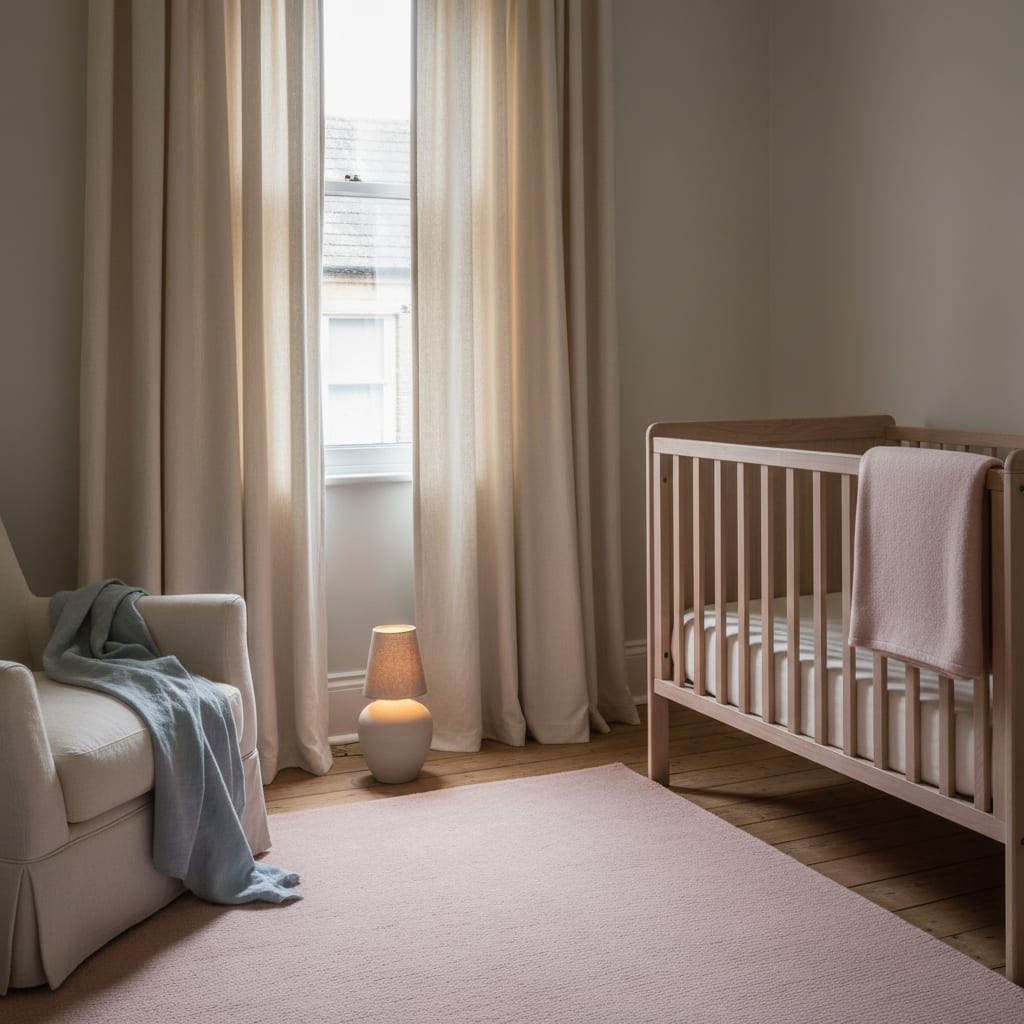
- Heavy curtains, closed properly. Lined curtains wider than the window and overlapping in the middle beat expensive ones hung flat. Second-hand pairs turn up constantly on local selling pages.
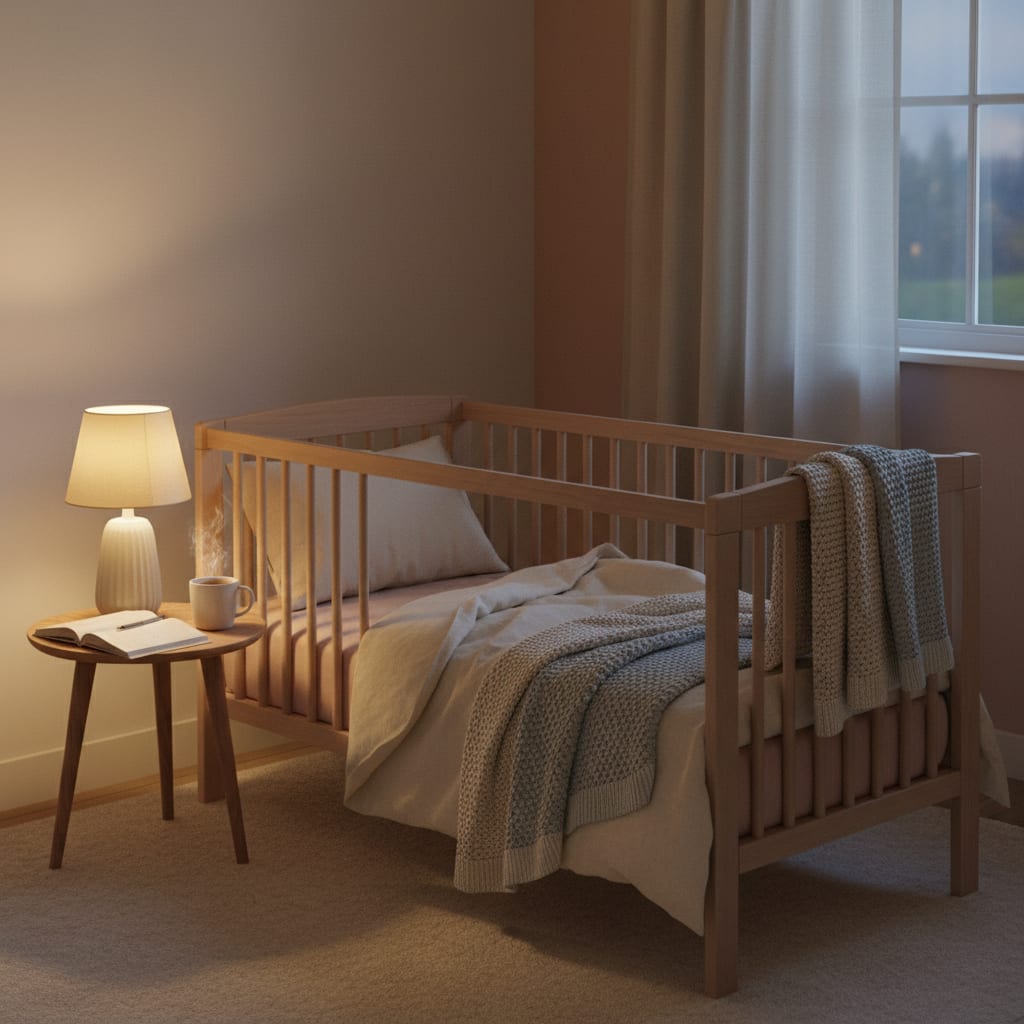
- Move the cot. Furthest wall from the street or the pub’s speaker wall, and not against the window. Keep the safer sleep basics intact — on the back, flat surface, in your room for the first six months.
Be realistic about bass
The one thing I would not oversell: you cannot mask bass. A sound system’s low frequencies travel through the structure of the building — joists, walls, the floor you are standing on — not through the air gap you just sealed. Soft furnishings and a sound machine work on airborne noise: the crowd, the doors, the traffic. They do very little to a bassline coming up through the floorboards.
What helps: a thick rug with felt underlay, the cot away from the wall backing the sound system, and — the honest one — accepting that Friday and Saturday are different nights.
Bedtime placed around the building
Once you know the hours you can aim. Above a pub, get the baby down and deeply asleep before the room fills downstairs rather than during it. On a bus route the opposite matters: frequency drops off late and picks up early, so the fragile end is the morning, not bedtime.
If you are getting a baby down at 7 and then a full wake-up at 8.30 as the pub fills, that is a false start rather than a night waking — Betteroo’s guide to why a baby wakes 45 minutes after bedtime is the right thing to read, because chasing the noise when the cause is an over-long wake window gets you nowhere. If instead you are up hourly all night, that pattern is almost never the street.

The money bit, said out loud
Flats above pubs and on bus routes are cheaper, and that is why a lot of us are in them. On one income that is not a bad decision badly made — it bought a second bedroom, or a postcode near the school, or a rent you can pay in January. It comes with something nobody counts, too: a bus stop outside is a real asset when you are solo with a pram.
I have written before about sleep in a one-bedroom flat and about doing all of this on your own, and the conclusion is the same: the housing is the housing, and the useful energy goes into twenty pounds of fixes rather than into resenting the address.
FAQ
Can the council do anything about noise from a pub below my flat? Potentially. Premises noise can be a statutory nuisance, and the council must serve an abatement notice if it agrees one exists. You can also ask it to review the pub’s premises licence on public nuisance grounds. Keep a dated diary first — every route relies on one.
Can I complain about traffic or bus noise outside my flat? Not through statutory nuisance law — gov.uk is explicit that it doesn’t apply to noise from traffic. Highways and transport authorities deal with road matters separately, but there is no environmental health route for the noise itself.
Will a white noise machine block a pub’s music? It softens crowd noise, doors and street noise, which all travel through the air. It does little about deep bass, which travels through the building structure. Expect partial help, not a solution.
Should I check licensed hours before renting a flat above a pub? It is one of the best five minutes you can spend. Premises licences are public and sit on the council’s licensing register, so you can find out when music must stop before you sign anything.