How Long Off Nursery With Chickenpox (and the Itchy Nights)
A child with chickenpox stays off nursery, the childminder or school until every spot has formed a scab, which the NHS says is usually 5 days after the spots first appeared. Plan for about a week at home, and longer if a sibling catches it next. At night, the NHS advice is cut nails short, socks over their hands, cooling gel from the pharmacy, a cool bath and loose clothes. Use paracetamol for pain, never ibuprofen unless a doctor tells you to. Don’t try to keep the normal sleep routine perfect this week. Just keep the order of bedtime the same.
The exclusion rule, in black and white
There are two official sources and they agree. The NHS chickenpox page says you’ll “need to stay off school, nursery or work until all the spots have formed a scab. This is usually 5 days after the spots first appeared.”
The UK Health Security Agency’s A to Z for children’s settings, which is the guidance nurseries and schools work from, says the same: stay away “until the spots have formed a scab. This is usually 5 days after the spots first appears.” This is England’s guidance, so if you’re in Scotland, Wales or Northern Ireland, ask your nursery what they follow.
So the answer to “can she go back on Monday?” is to look at her skin, not the calendar. If there are still fresh blisters on day five, she’s still off.
A few nurseries set their own stricter rules. Read your contract or ask the manager on day one, so you can plan the week.
Itchy nights: the NHS list, used at bedtime
Nights are the worst bit. Kids are tired, the house is quiet, and the itching takes over. The NHS self-care list is short and it’s all cheap:
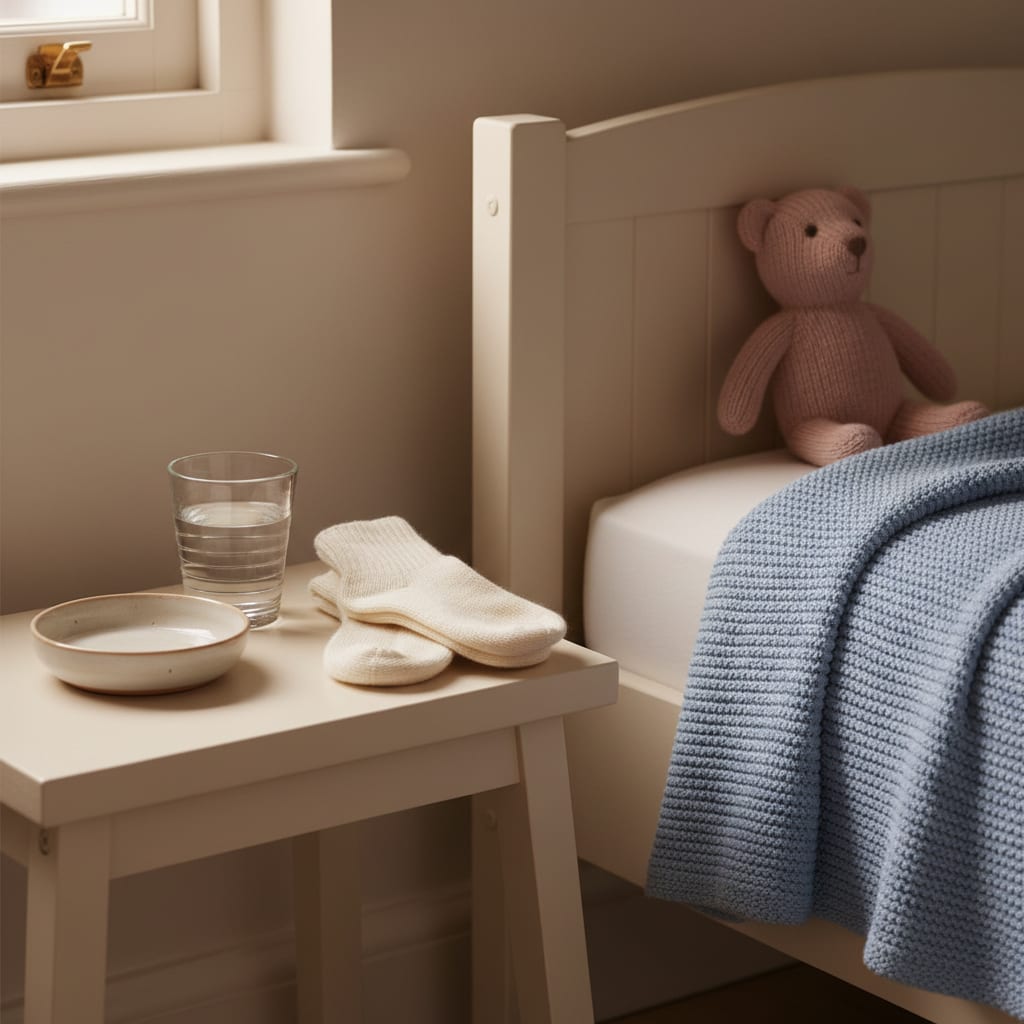
- Cut fingernails short before bed, and “put socks on their hands at night to stop them scratching”. Any clean pair of your own socks works.
- Cool bath, then pat dry. The NHS says “bathe in cool water and pat the skin dry (do not rub)”. It makes a good, calming start to bedtime.
- Cooling creams or gels from a pharmacy. Put them on after the bath. Ask the pharmacist which suits your child’s age.
- Ask the pharmacist about antihistamine for the itching. It’s their call for your child’s age and weight, not mine.
- Loose clothes. Soft, roomy pyjamas, or just a vest and nappy for little ones if the room is warm.
- Drinks. The NHS suggests “ice lollies if your child is not drinking”. A lolly on the sofa at 4pm counts as medicine this week.
And the three NHS “don’ts”, written on a sticky note on the fridge:
- Don’t use ibuprofen “unless you’re told to by a doctor, as it may cause serious skin infections”. Use paracetamol for pain and discomfort, following the packet.
- Don’t give aspirin to children under 16.
- Don’t let them scratch, because “scratching can cause scarring”. Easier said than done at 2am, which is what the socks are for.
Keep the routine’s order, not its timing
A child who is poorly and itchy will wake more and want you more. That’s fine for a week. What helps is keeping the steps of bedtime the same, even if they happen later: bath, cream, pyjamas, story, lights out. The order tells them it’s night.
If you have a baby or toddler, my post on baby sleep when sick covers the extra cuddles, safe sleep and why one rough week won’t undo a routine. When the scabs are gone, Betteroo has a useful guide to easing back to normal naps and bedtime over a few days rather than all at once.
If you’re alone with two children, don’t move your own bedtime later. Go to bed when they do for the first few nights. My single parent bedtime routine has the stacked bedtime for two ages.
When to stop managing it at home
Chickenpox is usually mild, but the NHS says get help from NHS 111 now if:
- the skin around the blisters becomes red, hot or painful (redness can be harder to see on brown or black skin)
- your child shows signs of dehydration, such as fewer wet nappies
- you think your newborn has chickenpox or has been near someone with it
- you or your child have any other symptoms you’re worried about
The NHS also says to call 111 if you need advice for a child under 5. And keep your child away from newborns, anyone pregnant and anyone with a weakened immune system. That rules out the baby group, the pregnant friend and the trip to Nan’s if she’s having treatment.
The work week: what you’re entitled to
For a single parent, the illness is often easier than the week off work. GOV.UK’s time off for dependants page says employees are “allowed a reasonable amount of time off” for an emergency involving a child, “but there’s no set amount of time”. Its own example is a child falling ill: you can take time “to go to the doctor and make care arrangements”. After that, your employer “may then ask you to take annual leave or parental leave if you want to look after your child for longer.”
The money part: your employer “may pay you for time off to look after dependants but they do not have to”. Check your contract or staff handbook before you phone in. Chickenpox is a whole week, not one day, so a realistic plan looks like this:
- Day one: call your manager, use emergency time off, and say clearly how long the NHS exclusion is.
- Days two to five: ask about annual leave or working from home. Book any family or friend cover now for when the scabs form.
- Ask the nursery whether missed sessions are charged, so it doesn’t surprise you on the invoice.
Plan for round two
The NHS says you’re infectious “from 2 days before your spots appear until they have all formed scabs”, and spots appear “around 1 to 3 weeks after you caught chickenpox”. So if you have two children, the second one often starts just as the first goes back. Don’t use all your annual leave in week one.
For the long days indoors, salt dough or homemade playdough will fill an afternoon for almost nothing.
Looking ahead, the NHS says children are now offered the MMRV vaccine, which includes chickenpox, at 12 and 18 months, and some older children born on or after 1 January 2020 are offered it too. Ask your GP surgery if you’re unsure.

FAQ
Can my child go to nursery with chickenpox if the spots are covered?
No. NHS and UKHSA guidance says stay away until all the spots have formed a scab, usually 5 days after they first appeared. Covering them doesn’t change that.
Can I take my child to the GP with chickenpox?
The NHS says contact the surgery before you go in and tell the receptionist you think it might be chickenpox. For urgent worries, use NHS 111.
Why can’t I give ibuprofen for chickenpox?
The NHS says not to use ibuprofen unless a doctor tells you to, “as it may cause serious skin infections”. Paracetamol is the NHS option for pain and discomfort. Ask a pharmacist if you’re unsure what suits your child.
Do I get paid if I stay home with my child’s chickenpox?
Not necessarily. You’re entitled to reasonable time off for an emergency, but GOV.UK says your employer doesn’t have to pay you for it. Check your contract, and ask about annual leave for the rest of the week.